


China’s central bank signaled possible easing measures to aid the economy’s recovery after a sharp downturn in the past few months fueled by a property slump.
In its latest quarterly monetary policy report published on Friday, the People’s Bank of China (PBOC) removed from its policy outlook a few key phrases cited in previous reports, including sticking with “normal monetary policy.”
That suggests a shift in stance toward more supportive measures, several major banks like Citigroup Inc, Nomura Holdings Inc and Goldman Sachs Group Inc said.
The report dropped previous phrases to “control the valve on money supply” and vowing not to “flood the economy with stimulus,” signaling more credit support in coming months.
“We expect Beijing to soon significantly step up its monetary easing and fiscal stimulus to counteract the increasing downward pressure,” Nomura lead China economist Lu Ting (陸挺) wrote in a note on Sunday.
The PBOC’s more dovish outlook follows growing concerns about the economy’s outlook flagged by several officials recently.
Chinese Premier Li Keqiang (李克強) told a seminar on Friday that China still faces “many challenges” in keeping the economy stable, although this year’s goals would likely be achieved.
Liu Shijin (劉世錦), who sits on the central bank’s monetary policy committee, said in an online forum on Sunday that the economy could enter a period of “quasi-stagflation,” which needs close attention if it happens.
“The concern for growth slowdown is clearly rising among technocrats at different government agencies,” said Macquarie Group Ltd’s head of greater China economics Larry Hu (胡偉俊) said. “But the key is whether the top leaders share such a view.”
The politburo meeting next month and the Chinese Communist Party’s Central Economic Work Conference, due in the same month, would provide more clues, he said.
Growth could weaken to below 5 percent next year, according to some forecasts, testing authorities’ resolve to cut the economy’s reliance on the highly leveraged property sector.
In the quarterly report, the PBOC said the economic recovery faces restrictions from “temporary, structural and cyclical factors,” and it has become more difficult to maintain a stable economy.
Any easing steps would likely be targeted toward small businesses and green finance, according to economists, similar to measures the PBOC has already taken in the past few weeks, including 200 billion yuan (US$31 billion) of financing for coal projects announced last week.
It is also likely to allow credit growth to accelerate next year, said Guotai Junan Holdings Ltd (國泰君安) analysts led by Qin Han (覃漢).
Goldman Sachs Group Inc chief China economist Hui Shan (閃輝) and colleagues said that policy interest rates would likely remain unchanged, while Lu said the chance of a reduction in the reserve requirement ratio will rise in coming months.
The PBOC reiterated that it would not use the property market to stimulate growth, adding that it would work with local governments to maintain the “stable and healthy development” of the market and protect consumers’ rights.
That suggests marginal structural easing in coming months, Oversea-Chinese Banking Corp Ltd (華僑銀行) head of greater China research Tommy Xie (謝東明) said.
There are signs Beijing is becoming more uncomfortable with the rally in the yuan, the best performer in emerging markets this year, with warnings to banks to cap speculation in the foreign exchange market.
The PBOC might gradually allow a more flexible currency, Xie said in a report yesterday.
The PBOC said the normalization of monetary policy in overseas countries, including the US, would have limited effect on China, partly because of its cross-cyclical policies and increasing flexibility in the exchange rate.
It would continue to base its policy on domestic conditions and strengthen its autonomy, it said.
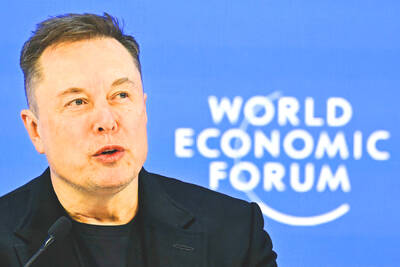
Elon Musk’s lieutenants have reached out to chip industry suppliers, including Applied Materials Inc, Tokyo Electron Ltd and Lam Research Corp, for his envisioned Terafab, early steps in an audacious and likely arduous attempt to break into the production of cutting-edge chips. Staff working for the joint venture between Tesla Inc and Space Exploration Technologies Corp (SpaceX) have sought price quotes and delivery times for an array of chipmaking gear, people familiar with the matter said. In past weeks, they’ve contacted makers of photomasks, substrates, etchers, depositors, cleaning devices, testers and other tools, according to the people, who asked not to
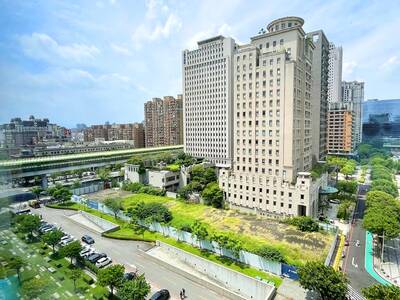
Taichung reported the steepest fall in completed home prices among the six special municipalities in the first quarter of this year, data compiled by Taiwan Realty Co (台灣房屋) showed yesterday. From January through last month, the average transaction price for completed homes in Taichung fell 8 percent from a year earlier to NT$299,000 (US$9,483) per ping (3.3m²), said Taiwan Realty, which compiled the data based on the government’s price registration platform. The decline could be attributed to many home buyers choosing relatively affordable used homes to live in themselves, instead of newly built homes in the city’s prime property market, Taiwan Realty
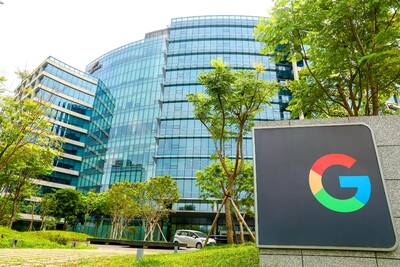
The government yesterday approved applications by Alphabet Inc’s Google to invest NT$27.08 billion (US$859.98 million) in Taiwan, the Ministry of Economic Affairs said in a statement. The Department of Investment Review approved two investments proposed by Google, with much of the funds to be used for data processing and electronic information supply services, as well as inventory procurement businesses in the semiconductor field, the ministry said. It marks the second consecutive year that Google has applied to increase its investment in Taiwan. Google plans to infuse NT$25.34 billion into Charter Investments Ltd (特許投資顧問) through its Singapore-based subsidiary Fructan Holdings Singapore Pte Ltd, and

JET JUICE: The war on Iran’s secondary effects have seen fuel prices skyrocket, knocking flight schedules down to earth in return as airlines struggle with costs Airline passengers should brace for more irritation in the next few months as carriers worldwide cancel flights and ground planes to cope with stratospheric increases in jet-fuel prices. Dutch flag carrier KLM is the latest company to cut its schedule, saying on Thursday that it would scrap 80 return flights at Amsterdam’s Schiphol Airport in the coming month. That puts it in the same league as United Airlines Holdings Inc, Deutsche Lufthansa AG and Cathay Pacific Airways Ltd, which have all pruned itineraries to mitigate costs. Global capacity for next month has been reduced by about 3 percentage points, with all


 RSS
RSS