


Linear-motion component supplier Hiwin Technologies Co on Thursday (上銀科技) said that profit and revenue jumped in the second quarter of this year as all of its major business lines recovered from a COVID-19 pandemic-induced downturn a year earlier.
Net profit in the April-to-June quarter rose 85.5 percent from a year earlier to NT$1.05 billion (US$37.8 million), the highest in nearly 11 quarters.
The figure was also 98 percent higher than the previous quarter on the back of rising orders and price hikes, the company said.
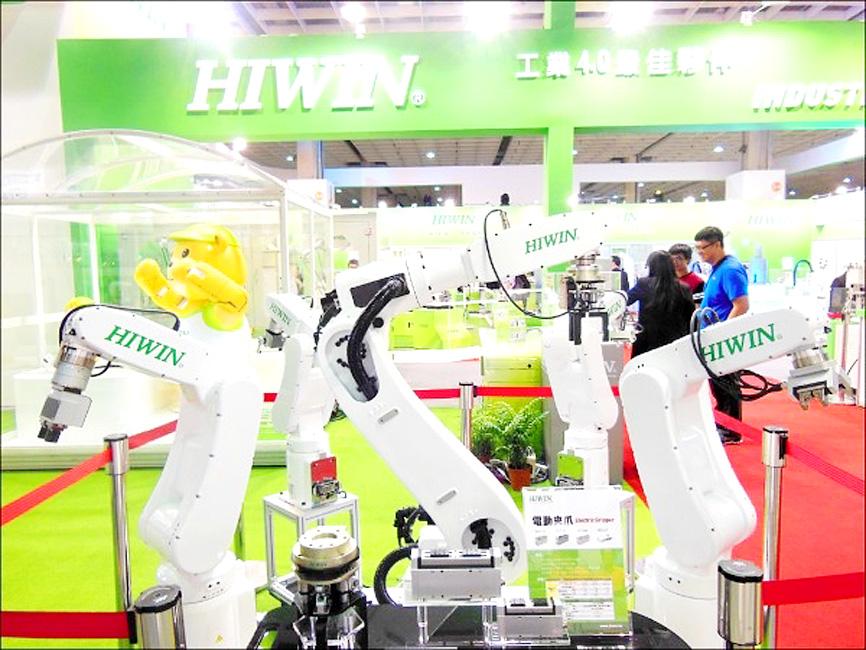
Photo: Lin Jing-hua, Taipei Times
Earnings per share were NT$3.18 for last quarter, it said.
Consolidated revenue rose 25.2 percent annually to NT$7.05 billion, while operating income expanded 107.6 percent to NT$1.43 billion on improved margins.
Gross margin and operating margin both increased by about 8 percentage points from a year earlier to 36.12 percent and 20.25 percent respectively, the company said.
Yuanta Securities Investment Consulting Co (元大投顧) said Hiwin’s financial results were better than expected, mainly due to a larger sales scale and margin improvement on sustained price hikes.
Hiwin said the effect of price increases started to emerge in the second quarter.
That, coupled with higher shipments to European and US markets, helped boost the company’s gross margin, it said in a statement.
The unfavorable foreign exchange rates led to NT$37 million in foreign exchange losses last quarter, but the losses were lower than NT$128 million in the first quarter.
Asia remained the company’s biggest market in the second quarter, accounting for 65 percent of total sales, followed by Europe with 22 percent, Taiwan with 9 percent and the US with 4 percent, the company said.
Hiwin, the world’s No. 2 linear motion component vendor, manufactures ball screws, linear guides and industrial robots, among other products.
Linear guides contributed 64 percent to the company’s sales last quarter, while ball screws and industrial robots made up 20 percent and 8 percent respectively, it said.
In the first half of this year, net profit totaled NT$1.58 billion, up 264 percent from a year earlier, and earnings per share were NT$4.79, higher than the previous year’s NT$1.37.
Revenue grew 41.08 percent to NT$13.04 billion in the first six months, while gross margin increased 7.52 percentage points to 34.13 percent and operating margin rose 10.64 percentage points to 17.16 percent.
Order visibility is good going forward, but a shortage of materials remains an issue, Hiwin said.
Ball screws and roller-type linear guideways have clear order visibility for about six months, while orders are to persist throughout this year for wafer robot products and about three to four months for other linear rail products, it said.
European orders are good, with shipments to Italy last month exceeding the 2018 peak and those to Germany recovering to 80 percent of the peak, the company said.
Hiwin started to raise product prices in the first quarter of this year in response to rising prices of raw materials.
The company plans to raise prices for some products again in the third quarter if raw material prices continue to soar, it said.
As the automation sector would benefit from demand for semiconductors, electric vehicles and 5G infrastructure, Hiwin’s operating profit is forecast to grow 206 percent year-on-year this year and 33 percent next year, Yuanta said in a note on Friday.
“We expect industry demand to be supported by semiconductor and production equipment migration as well as infrastructure construction, with the industry upcycle continuing into the first half of 2022,” Yuanta said.
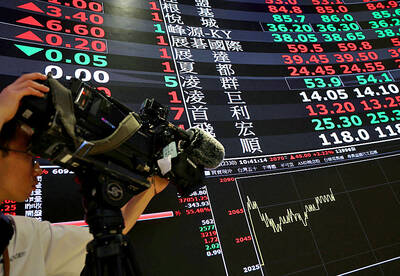
After several years flying high as Asia’s best Nvidia Corp proxy, Taiwan Semiconductor Manufacturing Co (TSMC, 台積電) is increasingly vying with other artificial intelligence (AI) stocks for investor attention. Stock traders are chasing a wider array of beneficiaries as mainstream usage of AI creates demand for hardware beyond the most-advanced chips TSMC makes for Nvidia. Subthemes from the deepening memory crunch to advances in robotics are also luring bids. At the same time, investment caps on single stocks are pushing funds to diversify, while retail investors long familiar with TSMC through its US depositary receipts are being offered a broader set of
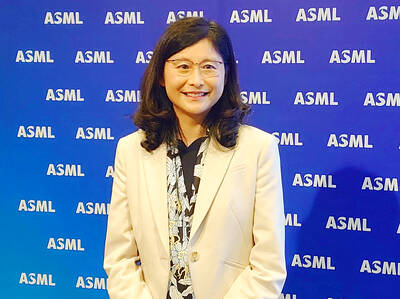
Netherlands-based semiconductor equipment supplier ASML Holding NV yesterday said that it is planning to hire an additional 1,000 people in Taiwan this year in response to growing demand from clients. ASML had previously planned to recruit 600 people this year, but that the plan has been adjusted upward, ASML vice president and ASML Taiwan general manager Grace Wang (汪佳慧) told reporters. ASML has a workforce of more than 4,500 in Taiwan, accounting for about 10 percent of its global total, Wang said. This year’s recruitment campaign would focus on adding people in the customer support, manufacturing and supply chain domains to assist ASML
UNDER MICROSCOPE: Taiwan detained three people who allegedly conspired to buy servers in Taiwan and export them using fraudulent documentation, prosecutors said Nvidia Corp chief executive officer Jensen Huang (黃仁勳) on Saturday urged Super Micro Computer Inc to tighten up on compliance after Taiwan detained three people this week for allegedly making fraudulent declarations about artificial intelligence (AI) servers made by its US partner. The development marked the nation’s first crackdown on semiconductor smuggling, which grew after the US slapped restrictions on exports of high-end chips such as Nvidia AI accelerators to China. Nvidia is “rigorous” in explaining regulations to all of its partners, Huang told reporters after arriving in Taipei. “Ultimately Super Micro has to run their own company,” he said in response to
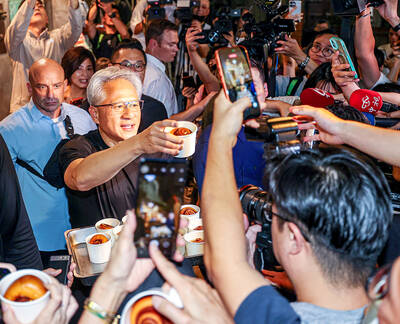
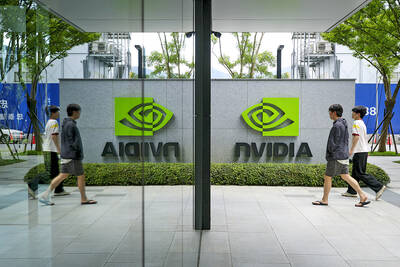
Nvidia Corp yesterday announced that CEO Jensen Huang (黃仁勳) would attend an employee meeting in Taipei tomorrow to celebrate the launch of the company’s Taiwan headquarters project. Huang would attend a gathering at the site of Nvidia’s planned headquarters in Beitou Shilin Technology Park (北投士林科技園區), the company said in a statement. After arriving in Taiwan on Saturday last week, Huang told reporters that he plans to meet with Quanta Computer Inc (廣達) chairman Barry Lam (林百里) and Taiwan Semiconductor Manufacturing Co (TSMC, 台積電) chairman C.C. Wei (魏哲家), and would attend the groundbreaking ceremony for Nvidia’s Taiwan headquarters tomorrow. Nvidia has not yet applied


 RSS
RSS