


A slew of crypto-related accounts in China’s Weibo (微博) platform were blocked over the weekend, as Beijing stepped up a crackdown on bitcoin trading and mining.
More actions are expected, including linking illegal cryptoactivities in China more directly with the nation’s criminal law, analysts and a financial regulator said.
Last month, the Chinese State Council vowed to crack down on bitcoin mining and trading, escalating a campaign against cryptocurrencies days after three industry bodies banned crypto-related financial and payment services.
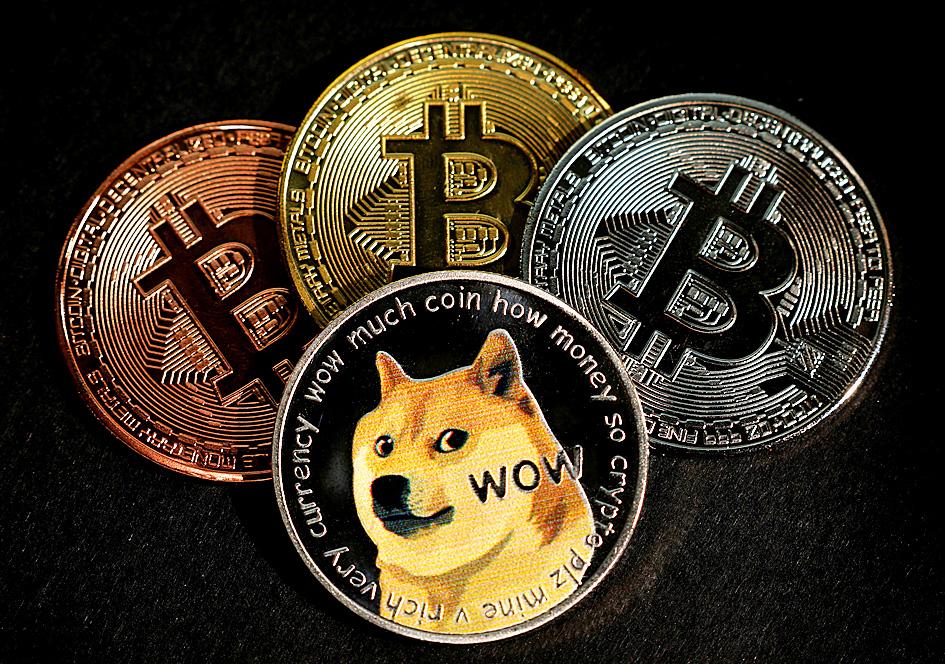
Photo: Reuters
Over the weekend, access to several of widely followed crypto-related Weibo accounts was denied, with a message saying each account “violates laws and rules.”
“It’s a Judgement Day for crypto KOL,” wrote a Weibo bitcoin commentator, or key opinion leader (KOL), who calls herself “Woman Dr. bitcoin mini.”
Her main account was also blocked on Saturday.
“The government makes it clear that no Chinese version of Elon Musk can exist in the Chinese crypto market,” New York University Law School adjunct professor Winston Ma (馬文彥) said, referring to the Tesla Inc founder and cryptocurrency enthusiast.
Ma, author of the book The Digital War, also expects the Chinese Supreme Court to publish a judicial interpretation soon that may link cryptomining and trading businesses with China’s body of criminal law.
The view was echoed by a financial regulator, who said that such an interpretation would address the legal ambiguity that has failed to clearly identify bitcoin trading businesses as “illegal operations.” All the rules against cryptocurrencies so far in China have been published by administrative bodies.
The Weibo freeze comes as Chinese media have stepped up reporting against cryptotrading.
Xinhua news agency has published articles that exposed a series of crypto-related scams. State broadcaster China Central Television has said cryptocurrency is a lightly regulated asset often used in black market trade, money laundering, arms smuggling, gambling and drug dealings.
The stepped-up crackdown also comes as China’s central bank is accelerating testing of its own digital currency.
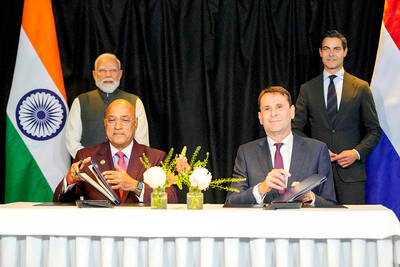
NEW MARKET: The partnership opens up India to the Dutch company, which already has a strong hold in the semiconductor market of South Korea, Taiwan and China ASML Holding NV entered into a partnership agreement with Tata Electronics Pvt Ltd aimed at ramping up India’s goal to develop domestic chip-manufacturing capabilities. The Dutch company’s technology would help power Tata Electronics’ planned 300 millimeter (mm) semiconductor foundry in Gujarat, according to a joint statement from the two companies on Saturday. The signing of a memorandum of understanding coincides with a visit by Indian Prime Minister Narendra Modi to the Netherlands, which is looking to deepen bilateral relations with New Delhi. ASML, whose top customers include Taiwan Semiconductor Manufacturing Co (台積電) and Samsung Electronics Co, makes lithography machines that can print

TECH RELIANCE: Growth is increasingly reflecting an unequal K-shaped distribution, where technology sectors outperform and other industries struggle, an expert said Standard Chartered Bank has significantly raised its forecast for Taiwan’s economic growth to 9.5 percent this year, up from 7.6 percent previously, citing surging artificial intelligence (AI) demand driving exports, semiconductor production and investment. The upgrade reflects a sustained AI supercycle that continues to fuel demand for advanced chips and technology infrastructure, which form the backbone of Taiwan’s exports, the bank said in a report this week. “We raise our 2026 growth forecast to reflect a much stronger-than-expected first-quarter GDP figure,” Standard Chartered senior economist for greater China and Asia Tommy Wu (胡東安) said in the report. Driven largely by a 35.3 percent
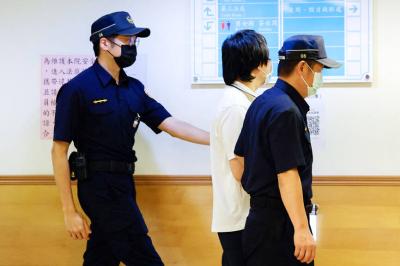
Tokyo Electron's Taiwan unit today said in a written response that it respects the judicial process, takes the court ruling seriously and would not appeal in the Taiwan Semiconductor Manufacturing Co (TSMC, 台積電) trade secrets case. Last month, a court fined the Taiwan unit of Japan's Tokyo Electron NT$150 million (US$4.74 million) in a case involving trade secrets related to TSMC's sensitive chip technology.

Two of Taiwan’s international carriers, Starlux Airlines Co (星宇航空) and EVA Airways Corp (長榮航空), have retained the five-star airline rating awarded by international airline review organization Skytrax. Starlux was awarded the distinction for a second consecutive year, while EVA Air received it for the 11th straight year, Skytrax said in statements released yesterday and on Thursday last week, respectively. The five-star rating is considered one of the airline industry's highest honors and is awarded following professional audits of airline product and frontline service standards, Skytrax said. The ratings are based on in-depth assessments using unified global quality standards rather than customer review scores


 RSS
RSS