


The US remained the largest debtor nation to Taiwan’s banking sector for the 41st consecutive quarter at the end of September, after local banks’ exposure to the US market rose more than 2 percent from three months earlier, the central bank said.
Exposure to the US increased to US$198.896 billion, up US$4.026 billion, or 2.07 percent, from US$194.87 billion in the previous quarter, data released by the central bank showed on Friday.
Of the increase, about US$1.4 billion came from banks’ investments in securitized products and interbank loans in the US, while another US$2.6 billion stemmed from trust assets, including mutual funds, the central bank said.
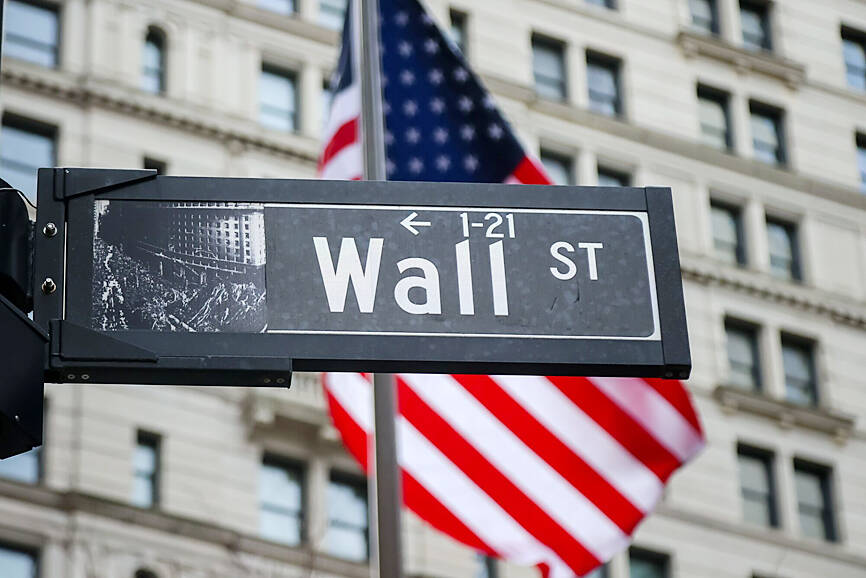
Photo: Bloomberg
Luxembourg, known as a leader in providing global cross-border fund registration services, rose a spot to become the second largest debtor nation, with Taiwanese banks’ exposure increasing US$2.706 billion to US$50.767 billion, a record high, the central bank said.
China slipped one spot from a quarter earlier down to third-largest debtor nation, despite Taiwanese banks’ exposure growing US$1.065 billion to US$49.561 billion last quarter, central bank data showed.
While banks’ exposure to China increased 2.2 percent sequentially last quarter, their exposure to Luxembourg grew faster at 5.63 percent and lifted the European country’s ranking ahead from third to second place from the previous quarter, the central bank said.
The mild increase in Taiwanese banks’ exposure to China primarily reflected the market’s cautious sentiment toward China’s economic prospects, it said.
The Financial Supervisory Commission’s restrictions on Taiwanese banks’ investments and interbank loans in China led their exposure figure to range between US$40 billion and US$50 billion for quite a long time, it added.
The gap between Taiwanese banks’ exposure to the US and China widened further, reaching a fresh record of US$149.3 billion at the end of September, the central bank said.
The gap between banks’ exposure to the US and China has remained above the US$100 billion mark for 10 consecutive quarters after the figure first exceeded US$100 billion in June 2023, it added.
After the top three, Australia followed with US$42.137 billion and Japan with US$41.167 billion, up 4.76 percent and 10.5 percent from the previous quarter respectively, data showed.
Rounding out the top 10 debtor areas were Hong Kong with exposure of US$32.68 billion, the UK with US$23.195 billion, Singapore with US$20.617 billion, France with US$19.422 billion and Vietnam with US$17.579 billion, with sequential increases from 1.21 percent to 8.42 percent, the data showed.
Taiwanese banks’ exposure to the top 10 debtors totaled US$496.021 billion at the end of September, up 3.77 percent from the previous quarter and accounting for 73.95 percent of Taiwan’s total international claims of US$670.75 billion, which rose 3.48 percent from a quarter earlier due to an increase in lending to nonbank firms, the central bank said.
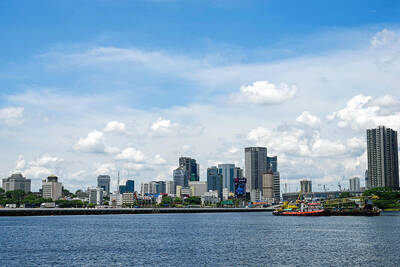
Vincent Wei led fellow Singaporean farmers around an empty Malaysian plot, laying out plans for a greenhouse and rows of leafy vegetables. What he pitched was not just space for crops, but a lifeline for growers struggling to make ends meet in a city-state with high prices and little vacant land. The future agriculture hub is part of a joint special economic zone launched last year by the two neighbors, expected to cost US$123 million and produce 10,000 tonnes of fresh produce annually. It is attracting Singaporean farmers with promises of cheaper land, labor and energy just over the border.

US actor Matthew McConaughey has filed recordings of his image and voice with US patent authorities to protect them from unauthorized usage by artificial intelligence (AI) platforms, a representative said earlier this week. Several video clips and audio recordings were registered by the commercial arm of the Just Keep Livin’ Foundation, a non-profit created by the Oscar-winning actor and his wife, Camila, according to the US Patent and Trademark Office database. Many artists are increasingly concerned about the uncontrolled use of their image via generative AI since the rollout of ChatGPT and other AI-powered tools. Several US states have adopted

A proposed billionaires’ tax in California has ignited a political uproar in Silicon Valley, with tech titans threatening to leave the state while California Governor Gavin Newsom of the Democratic Party maneuvers to defeat a levy that he fears would lead to an exodus of wealth. A technology mecca, California has more billionaires than any other US state — a few hundred, by some estimates. About half its personal income tax revenue, a financial backbone in the nearly US$350 billion budget, comes from the top 1 percent of earners. A large healthcare union is attempting to place a proposal before

KEEPING UP: The acquisition of a cleanroom in Taiwan would enable Micron to increase production in a market where demand continues to outpace supply, a Micron official said Micron Technology Inc has signed a letter of intent to buy a fabrication site in Taiwan from Powerchip Semiconductor Manufacturing Corp (力積電) for US$1.8 billion to expand its production of memory chips. Micron would take control of the P5 site in Miaoli County’s Tongluo Township (銅鑼) and plans to ramp up DRAM production in phases after the transaction closes in the second quarter, the company said in a statement on Saturday. The acquisition includes an existing 12 inch fab cleanroom of 27,871m2 and would further position Micron to address growing global demand for memory solutions, the company said. Micron expects the transaction to


 RSS
RSS