


Nintendo Co plans to begin assembly of its new Switch as soon as July and release the upgraded replacement for its four-year-old game console in September or October, people familiar with the matter said.
The new console, likely to be priced higher than the US$299 original, might be announced ahead of the E3 conference starting on June 12 to allow publishers to showcase their full range of Switch games at the global event, the people said, asking not to be named because the plans are not yet public.
It would be sold alongside the US$199 Switch Lite, with the standard Switch phased out over time.
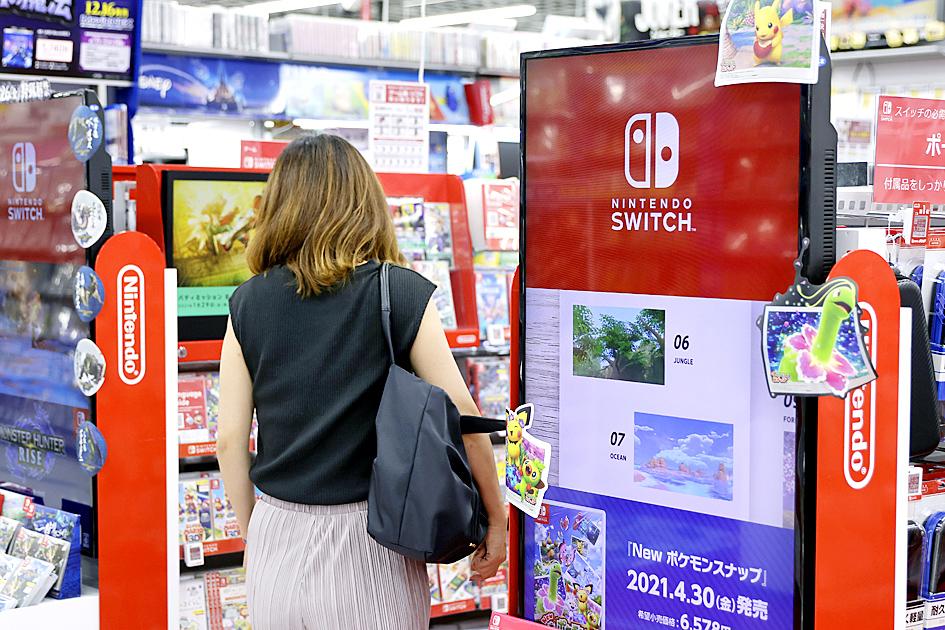
Photo: Bloomberg
Assemblers would start shipping the new model — whose commercial name is known only to a handful of people within the Kyoto-based company — as early as July, with production expected to ramp up to a peak in the October-December quarter.
CHIP SHORTAGE
This is despite widespread semiconductor shortages that have affected the supply of everything from automobiles to TVs, headphones and games consoles, including the Switch itself.
Suppliers are confident they can fulfill Nintendo’s orders, despite the ongoing chip shortages. Its production lines are better prepared for the potential component shakeup and the parts Nintendo is using are subject to less competition than those in its rivals’ more powerful consoles.
Still, the company’s ability to meet consumer demand would not be guaranteed, as a dearth of display driver ICs and Bluetooth chips have led to production of the incumbent Switch stopping and starting several times, the people said.
Nintendo president Shuntaro Furukawa said at its earnings conference earlier this month that demand for the Switch remains high and the company was not able to produce as many units as it wanted.
Pricier components and rising labor costs in China are likely to push up the new Switch’s price from the US$299 that the console has been at since its launch in March 2017.
REVENUE BOOST
Although the final retail price is not yet known, suppliers expect their per-unit revenue from business with Nintendo to increase.
A Nintendo spokesman declined to comment.
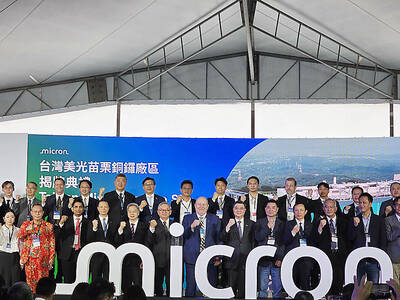
UNPRECEDENTED PACE: Micron Technology has announced plans to expand manufacturing capabilities with the acquisition of a new chip plant in Miaoli Micron Technology Inc unveiled a newly acquired chip plant in Miaoli County yesterday, as the company expands capacity to meet growing demand for advanced DRAM chips, including high-bandwidth memory chips amid the artificial intelligence boom. The plant in Miaoli County’s Tongluo Township (銅鑼), which Micron acquired from Powerchip Semiconductor Manufacturing Corp (力積電) for US$1.8 billion, is expected to make a sizeable capacity contribution to the company from fiscal 2028, the company said in a statement. It would be an extended production site of Micron’s large-scale manufacturing hub in Taichung, the company said. As the global semiconductor industry is racing to reach US$1 trillion

Singapore-based ride-hailing and delivery giant Grab Holdings Ltd has applied for regulatory approval to acquire the Taiwan operations of Germany-based Delivery Hero SE's Foodpanda in a deal valued at about US$600 million. Grab submitted the filing to the Fair Trade Commission on Friday last week, with the transaction subject to regulatory review and approval, the company said in a statement yesterday. Its independent governance structure would help foster a healthy and competitive market in Taiwan if the deal is approved, Grab said. Grab, which is listed on the NASDAQ, said in the filing that US-based Uber Technologies Inc holds about 13 percent of
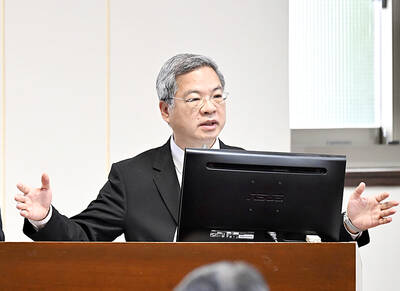
ABOVE LEGAL REQUIREMENT: The Ministry of Economic Affairs is prepared if LNG supply is disrupted, with more than the legal requirement of 11 days of inventory Taiwan has largely secured liquefied natural gas (LNG) supplies through May and arranged about half of June’s supply, Minister of Economic Affairs Kung Ming-hsin (龔明鑫) said yesterday. Since the Middle East conflict began on Feb. 28, Taiwan’s LNG inventories have remained more than 12 days, exceeding the legal requirement of 11 days, indicating no major supply concerns for domestic gas and electricity, Kung said at a meeting of the legislature’s Economics Committee in Taipei. The ministry aims to increase the figure to 14 days by the end of next year, he said. While one or two LNG or crude oil shipments for May

Taiwan’s food delivery market could undergo a major shift if Singapore-based Grab Holdings Ltd completes its planned acquisition of Delivery Hero SE’s Foodpanda business in Taiwan, industry experts said. Grab on Monday last week announced it would acquire Foodpanda’s Taiwan operations for US$600 million. The deal is expected to be finalized in the second half of this year, with Grab aiming to complete user migration to its platform by the first half of next year. A duopoly between Uber Eats and Foodpanda dominates Taiwan’s delivery market, a structure that has remained intact since the Fair Trade Commission (FTC) blocked Uber Technologies Inc’s


 RSS
RSS