


South Korea last year recorded its worst growth in more than two decades, the central bank said yesterday, but it is expected to be among the best-performing Organisation for Economic Co-operation and Development (OECD) economies in the wake of the COVID-19 pandemic.
The country’s GDP contracted 1 percent from a year earlier, the Bank of Korea (BOK) said, citing weak private spending and exports.
It marked the worst annual growth since 1998, when the South Korean economy shrank 5.1 percent in the aftermath of the Asian financial crisis.
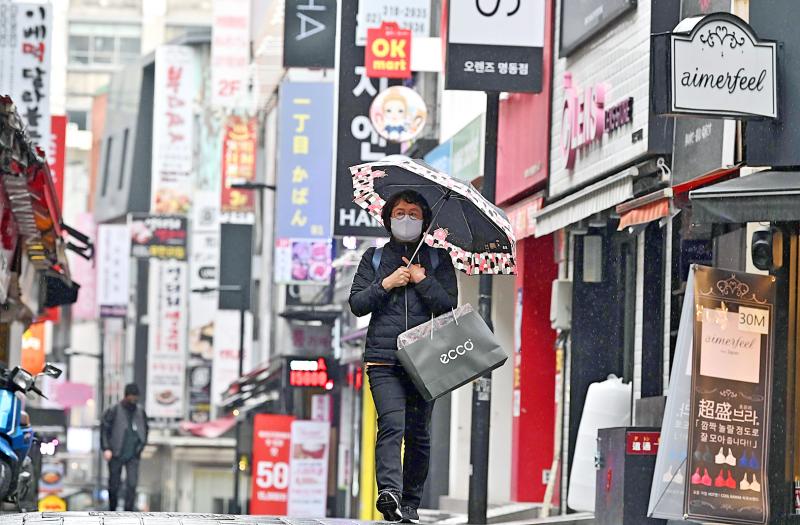
Photo: AFP
Still, South Korea is expected to be among the countries in the OECD group of developed economies least affected by the pandemic.
In the fourth quarter of last year, South Korea’s economy — the world’s 12th-largest — grew 1.1 percent from the previous quarter, data showed, marking a second consecutive quarter of growth amid the pandemic.
The central bank said exports expanded 5.2 percent in the fourth quarter from three months earlier, offsetting a slump in private consumption due to toughened social distancing rules in the past few weeks.
South Korea has shown signs of recovery from the virus downturn and the central bank in November last year forecast the economy to grow 3 percent this year.
“Recovery momentum should gather pace from the second quarter onwards, led by strong export prospects as global growth and 5G deployment pick up speed,” Oxford Economics economist Lloyd Chan said.
“A vaccine rollout around February should also stimulate domestic demand, as it would reduce the need for stringent containment measures,” he said.
Last year, the South Korean government pledged fiscal stimulus of about 310 trillion won (US$280 billion), while the BOK cut interest rates by 75 basis points to 0.5 percent.
Most analysts expect the central bank to retain its accommodative policy stance this year.
“BOK will keep emphasizing financial stability, but that does not mean any unwinding of easier monetary policy adopted after COVID-19,” Meritz Securities Co economist Lee Seung-hoon said.
Additional reporting by Reuters
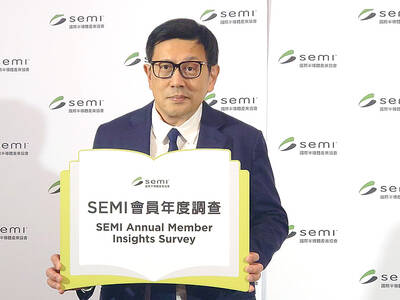
PRICE HIKES: The war in the Middle East would not significantly disrupt supply in the short term, but semiconductor companies are facing price surges for materials Taiwan’s semiconductor companies are not facing imminent supply disruptions of essential chemicals or raw materials due to the war in the Middle East, but surges in material costs loom large, industry association SEMI Taiwan said yesterday. The association’s comments came amid growing concerns that supplies of helium and other key raw materials used in semiconductor production could become a choke point after Qatar shut down its liquefied natural gas (LNG) production and helium output earlier this month due to the conflict. Qatar is the second-largest LNG supplier in the world and accounts for about 33 percent of global helium output. Helium is
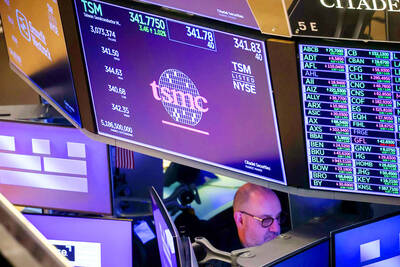
STRONG INTEREST: Analysts have pointed to optimism in TSMC’s growth prospects in the artificial intelligence era as the cause of the rising number of shareholders The number of people holding shares of chipmaker Taiwan Semiconductor Manufacturing Co (TSMC, 台積電) hit a new high last week despite a decline in its stock price, the Taiwan Depository and Clearing Corp (TDCC, 台灣集保) said. The number of TSMC shareholders rose to 2.46 million as of Friday, up 75,536 from a week earlier, TDCC data showed. The stock price fell 1.34 percent during the same week to close at NT$1,840 (US$57.55). The decline in TSMC’s share price resulted from volatility in global tech stocks, driven by rising international crude oil prices as the war against Iran continues. Dealers said
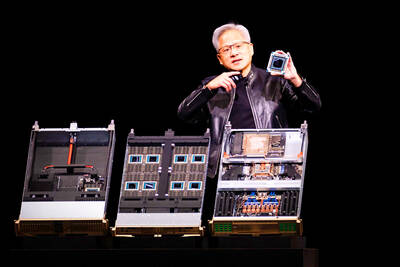
DOMESTIC COMPONENT: Huang identified several Taiwanese partners to be a key part of Nvidia’s Vera Rubin supply chain, including Asustek, Hon Hai and Wistron Nvidia Corp chief executive officer Jensen Huang (黃仁勳), addressing crowds at the company’s biggest annual event, unveiled a variety of new products while predicting that its flagship artificial intelligence (AI) processors would help generate US$1 trillion in sales through next year. During a two-and-a-half-hour keynote address, Huang announced plans to push deeper into central processing units (CPUs) — Intel Corp’s home turf — and introduced semiconductors made with technology acquired from start-up Groq Inc. The company even said it was developing chips for data centers in outer space. At the heart of Huang’s speech was the message that demand for computing power
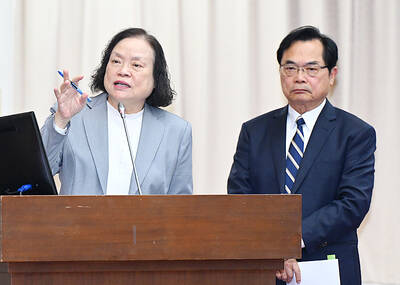
OPTIMISTIC: Inflation still has a chance of remaining below the central bank’s 2 percent alert level, as Taiwan’s economy is resilient with healthy exports, the NDC minister said Taiwan’s inflation could exceed 2 percent this year if oil prices continue to surge amid escalating tensions in the Middle East, prompting the government to reassess its economic outlook, the Directorate-General of Budget, Accounting and Statistics (DGBAS) said yesterday. DGBAS Minister Chen Shu-tzu (陳淑姿) told lawmakers at a meeting of the legislature’s Finance Committee that the agency’s earlier growth forecast of 1.68 percent in the consumer price index (CPI) and 7.71 percent for GDP this year did not account for the ongoing Middle East conflict and would need revision, if tensions persist. The previous forecast assumed an average international crude price of


 RSS
RSS