


EQUITIES
TAIEX breaches 12,700
The TAIEX yesterday moved higher to close above 12,700, as Apple Inc suppliers and other tech shares attracted buying ahead of the expected release of new iPhone models. However, turnover was low as investors waited on the sidelines to see what decisions would be made by major central banks later this week amid the COVID-19 pandemic, dealers said. The TAIEX closed up 111.87 points, or 0.88 percent, at 12,787.82. Turnover was NT$178.884 billion (US$6.07 billion), falling short of the NT$197.3 billion average over the previous five sessions, they said. Foreign institutional investors bought a net NT$9.58 billion of shares, Taiwan Stock Exchange data showed.
ELECTRONICS
VLI application approved
The Securities Listing Review Committee of the Taiwan Stock Exchange yesterday approved an initial listing application from VIA Labs Inc (VLI, 威鋒電子), the exchange said in a statement. VLI, which is 66.22 percent owned by chip designer VIA Technologies Inc (威盛電子), is a supplier of USB and USB power delivery controllers for multifunctional devices and platforms. With paid-in capital of NT$600 million, the company reported earnings per share of NT$2.1, NT$2.07 and NT$4.05 from 2017 to last year respectively. In the first six months of this year, the company posted net income of NT$156 million, up 49 percent year-on-year, or earnings per share of NT$2.61. Revenue totaled NT$933 million in the first six months, up 35 percent year-on-year. VLI shares closed up 10 percent at NT$351 on the Emerging Stock Board.
RESTAURANTS
Kura Sushi Asia set to debut
Kura Sushi Asia Co Ltd (亞洲藏壽司), the Taiwanese subsidiary of Japanese sushi chain Kura Sushi Inc, is to list on the Taipei Exchange on Thursday, with chairman Kentaro Nishikawa saying that the debut is motivated by the idea of boosting its stronghold in Taiwan before expanding into other Asian nations. Established in 2014, Kura Sushi Asia operates 27 outlets in Taiwan. The group has 477 outlets in Japan, while its US subsidiary, established in 2009, operates 25 outlets.
PROPERTY
Hotel project scrapped
Formosa International Hotels Corp (晶華酒店) yesterday said that it has terminated a plan to develop an office building into a new hotel with Chunghwa Post Co (中華郵政), as the work schedule — including urban design and urban renewal reviews, and applications for building permits — would take longer than expected. The company said that as it does not expect to start work on the project before the end of this year, the two sides have agreed to terminate it. The plan had been to convert an office building into a hotel under the Silks Place (晶英酒店) brand.
CHIPMAKERS
TSMC to pay Sports bonus
Taiwan Semiconductor Manufacturing Co (TSMC, 台積電) is to pay NT$504 million of special Sports Day bonuses to its employees, even though the event has been postponed due to the COVID-19 pandemic. TSMC said that it would issue a bonus of NT$12,000 to each of its employees in Taiwan who joined the company before May 31. About 42,000 employees are eligible for the bonus, meaning that NT$504 million would be paid out in employees’ salaries next month, the company said. While this year’s payment per employee is the same as last year, each employee is also to receive a NT$1,000 merchandise voucher, TSMC said.

DAMAGE REPORT: Global central banks are assessing war-driven inflation risks as the law of unintended consequences careens around the world, spiking oil prices Central banks from Washington to London and from Jakarta to Taipei are about to make their first assessments of economic damage after more than two weeks of conflict between the US and Iran. Decisions this week encompassing every member of the G7 and eight of the world’s 10 most-traded currency jurisdictions are likely to confirm to investors that the specter of a new inflation shock is already worrying enough to prompt heightened caution. The US Federal Reserve is widely expected to do exactly what everyone anticipated weeks ahead of its March 17-18 policy gathering: hold rates steady. The narrative surrounding that
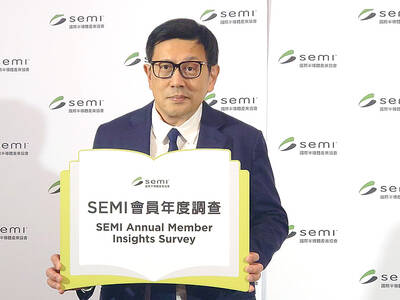
PRICE HIKES: The war in the Middle East would not significantly disrupt supply in the short term, but semiconductor companies are facing price surges for materials Taiwan’s semiconductor companies are not facing imminent supply disruptions of essential chemicals or raw materials due to the war in the Middle East, but surges in material costs loom large, industry association SEMI Taiwan said yesterday. The association’s comments came amid growing concerns that supplies of helium and other key raw materials used in semiconductor production could become a choke point after Qatar shut down its liquefied natural gas (LNG) production and helium output earlier this month due to the conflict. Qatar is the second-largest LNG supplier in the world and accounts for about 33 percent of global helium output. Helium is
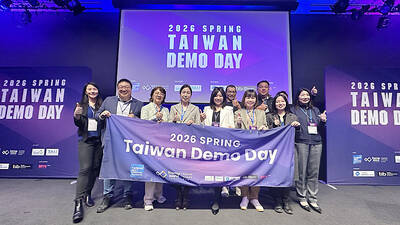
About 1,000 participants, including more than 200 venture capitalists, joined the Taiwan Demo Day in Silicon Valley on Saturday, the largest iteration to date of the event held ahead of Nvidia Corp’s annual GPU Technology Conference which runs from today to Thursday. Taiwan Demo Day, co-organized by the Taiwan Next Foundation and the Startup Island Taiwan Silicon Valley Hub, took place at the Computer History Museum in California, showcasing 12 teams focused on physical artificial intelligence (AI) and agentic AI technologies. Katie Hsieh (謝凱婷), founder of the Taiwan Next Foundation, said the event highlighted the strength of the Taiwan-US start-up ecosystem, with
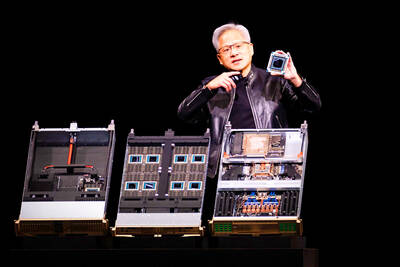
DOMESTIC COMPONENT: Huang identified several Taiwanese partners to be a key part of Nvidia’s Vera Rubin supply chain, including Asustek, Hon Hai and Wistron Nvidia Corp chief executive officer Jensen Huang (黃仁勳), addressing crowds at the company’s biggest annual event, unveiled a variety of new products while predicting that its flagship artificial intelligence (AI) processors would help generate US$1 trillion in sales through next year. During a two-and-a-half-hour keynote address, Huang announced plans to push deeper into central processing units (CPUs) — Intel Corp’s home turf — and introduced semiconductors made with technology acquired from start-up Groq Inc. The company even said it was developing chips for data centers in outer space. At the heart of Huang’s speech was the message that demand for computing power


 RSS
RSS