


Spot gold on Friday topped US$1,900 an ounce for the first time since 2011 and edged closer to an all-time high, with flaring geopolitical tensions and concern over global growth driving demand for haven assets.
Increasing signs that the COVID-19 pandemic is stalling an economic recovery and a spat between China and the US are underpinning bullion’s appeal.
The metal is also getting support from a confluence of low or negative real rates and a slipping US dollar amid massive liquidity injections from governments and central banks worldwide.
The weaker US dollar and plunging yields on government bonds lower the opportunity cost of owning gold.
Gold posted its seventh weekly gain with a 5 percent increase, the longest stretch since 2011, while silver capped its biggest weekly advance in about four decades.
Gold might reach the all-time high by early next week, according to a trader at RJO Futures Inc in Chicago.
“The pace of this thing is unbelievable,” RJO senior market strategist Bob Haberkorn said by telephone. “People just want to buy, buy, buy, they just want to be in — they don’t want to miss it. People are preparing for more money printing, lower dollar in the future and hedging. And there’s no yield on Treasuries right now, so gold is a safe spot given the circumstances of the central banks and the coronavirus.”
Spot gold rose 0.7 percent to US$1,900.19 an ounce in New York. Prices are nearing the record US$1,921.17 reached in September 2011. Comex gold futures for August delivery rose 0.4 percent to settle at US$1,897.50 an ounce.
Spot silver also advanced, bringing gains this week to more than 17 percent, the most since 1980.
Gold’s rally might extend into next year “on dollar wobbles amid rising geopolitical risks in a lower-for-longer interest-rate environment,” Bloomberg Intelligence analyst Eily Ong wrote in a note.
UBS Group AG raised its near-term forecast for bullion to US$2,000 by the end of September.
“When interest rates are zero or near zero, then gold is an attractive medium to have, because you don’t have to worry about not getting interest on your gold and you see the gold price will rise as uncertainty in the markets are rising,” Mobius Capital Partners LLP cofounder Mark Mobius said in a Bloomberg TV interview. “I would be buying now and continue to buy.”
Precious metals funds saw investment inflows of US$3.8 billion in the week to Wednesday, the second-largest weekly amount ever, Bank of America Corp strategists said, citing EPFR Global data.
Fresh Highs
While spot gold prices are about US$20 away from the all-time high, some futures contracts on the Comex are already trading even higher. December, which overtook August as the contract with the highest open interest according to data released when Friday’s Asian trading session was already under way, touched US$1,927.10 an ounce on Thursday. That is above the record for the most-active contract of US$1,923.70 reached in 2011.
US Secretary of State Mike Pompeo cast China’s leaders as tyrants bent on global hegemony.
His comments came after the US unexpectedly ordered China to close its consulate in Houston, Texas, following what it said were years of espionage directed from the diplomatic compound.
Beijing has rejected the accusations and on Friday ordered the US to close its consulate in Chengdu.
Also on investors’ radars is the prospect for fresh fiscal and monetary policy measures as the path to recovery remains uncertain.
Europe’s private-sector activity data for this month showed a return to growth.
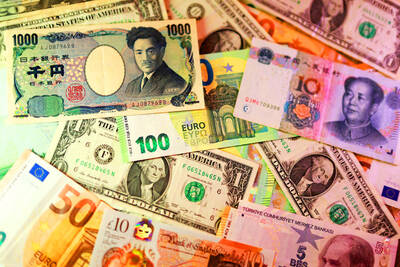
Taiwan’s foreign exchange reserves fell below the US$600 billion mark at the end of last month, with the central bank reporting a total of US$596.89 billion — a decline of US$8.6 billion from February — ending a three-month streak of increases. The central bank attributed the drop to a combination of factors such as outflows by foreign institutional investors, currency fluctuations and its own market interventions. “The large-scale outflows disrupted the balance of supply and demand in the foreign exchange market, prompting the central bank to intervene repeatedly by selling US dollars to stabilize the local currency,” Department of Foreign

ENERGY ISSUES: The TSIA urged the government to increase natural gas and helium reserves to reduce the impact of the Middle East war on semiconductor supply stability Chip testing and packaging service provider ASE Technology Holding Co (日月光投控) yesterday said it planned to invest more than NT$100 billion (US$3.15 billion) in building a new advanced chip testing facility in Kaohsiung to keep up with customer demand driven by the artificial intelligence (AI) boom. That would be included in the company’s capital expenditure budget next year, ASE said. There is also room to raise this year’s capital spending budget from a record-high US$7 billion estimated three months ago, it added. ASE would have six factories under construction this year, another record-breaking number, ASE chief operating officer Tien Wu

For weeks now, the global tech industry has been waiting for a major artificial intelligence (AI) launch from DeepSeek (深度求索), seen as a benchmark for China’s progress in the fast-moving field. More than a year has passed since the start-up put Chinese AI on the map in early last year with a low-cost chatbot that performed at a similar level to US rivals. However, despite reports and rumors about its imminent release, DeepSeek’s next-generation “V4” model is nowhere in sight. Speculation is also swirling over the geopolitical implications of which computer chips were chosen to train and power the new

Intel Corp is joining Elon Musk’s long-shot effort to develop semiconductors for Tesla Inc, Space Exploration Technologies Corp and xAI, marking a surprising twist in the chipmaker’s comeback bid. Intel would help the Terafab project “refactor” the technology in a chip factory, the company said on Tuesday in a post on X, Musk’s social media platform. That is a stage in the development process that typically helps make chips more powerful or reliable. The chipmaker’s shares jumped 4.2 percent to US$52.91 in New York trading on Tuesday. The Terafab project is a grand plan by Musk to eventually manufacture his own chips for


 RSS
RSS