


As Taiwan’s relations with the US are better than ever, President Tsai Ing-wen (蔡英文) has a chance to make progress on a US-Taiwan free-trade agreement (FTA) this year, American Chamber of Commerce in Taipei (AmCham) chairman C.W. Chin (金奇偉) said yesterday.
US-Taiwan relations are at their best ever, as Taiwan earned respect and goodwill through its handling of the COVID-19 outbreak, while there is a high chance of seeing a breakthrough with the US as Washington seeks trusted allies in the Indo-Pacific region, Chin told a news conference in Taipei.
“We are optimistic that both governments are more likely to make progress in starting FTA negotiations this year, despite the restrictions on international air travel amid the pandemic, which has posed a challenge to US Trade Representative officials for the US-China trade talks,” Chin told the Taipei Times at the event.
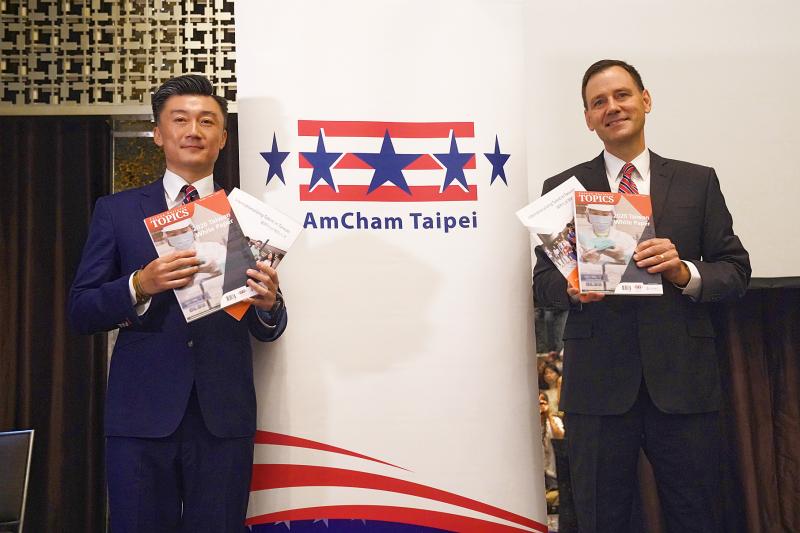
Photo: CNA
As Tsai, who began her second term last month, is under no re-election pressure, she is expected to more proactively address the issue of a ban on imports of US pork and some beef products, which has been regarded as the main obstacle to an FTA between the US and Taiwan, Chin said.
In its annual white paper released yesterday, AmCham for the second consecutive year urged the US government to enter into negotiations with Taiwan for a bilateral trade agreement.
Despite the US’ displeasure with Taiwan’s import restrictions on certain US beef and pork products, “Washington’s position that resolution of those issues must be a precondition for starting FTA negotiations has not achieved positive results,” AmCham wrote in its “Message to Washington” section of the white paper.
“The chamber believes a different strategy would be more practical — begin talks with the clear understanding that these issues would need to be resolved as part of the negotiations,” the paper said.
“We urge the US and Taiwan to handle their disagreements in a more practical and flexible way,” AmCham president William Foreman told reporters.
Another obstacle to an FTA is China’s opposition, but in the current political environment, Beijing’s opposition might carry less weight than it did in the past and the US administration would likely have to expend less political capital to cope with it, AmCham said.
AmCham also suggested that the US bring the Trade and Investment Framework Agreement process back on track as soon as the travel situation permits.
It also urged Washington to help Taiwan gain participation in international organizations such as the WHO, Interpol and the International Civil Aviation Organization, which have a direct impact on the safety and well-being of its citizens.
AmCham said 11 of the 82 issues raised in last year’s white paper have been resolved, and that it is looking forward to continuing to partner with Taipei to resolve other issues, such as insufficient budget for new drugs and a lack of communication with firms in the digital economy sector.
Taiwan has done a great job of containing COVID-19, and it can leverage its success in fighting the pandemic to show that it is an outstanding place to do business and invest, the chamber said.
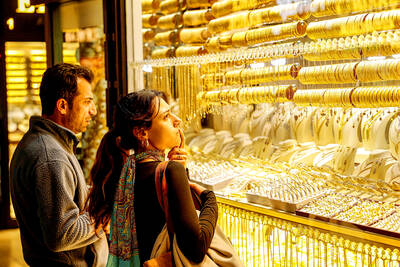
In Italy’s storied gold-making hubs, jewelers are reworking their designs to trim gold content as they race to blunt the effect of record prices and appeal to shoppers watching their budgets. Gold prices hit a record high on Thursday, surging near US$5,600 an ounce, more than double a year ago as geopolitical concerns and jitters over trade pushed investors toward the safe-haven asset. The rally is putting undue pressure on small artisans as they face mounting demands from customers, including international brands, to produce cheaper items, from signature pieces to wedding rings, according to interviews with four independent jewelers in Italy’s main
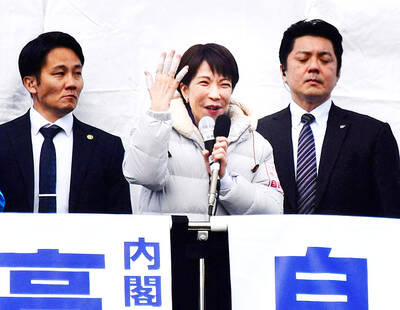
Japanese Prime Minister Sanae Takaichi has talked up the benefits of a weaker yen in a campaign speech, adopting a tone at odds with her finance ministry, which has refused to rule out any options to counter excessive foreign exchange volatility. Takaichi later softened her stance, saying she did not have a preference for the yen’s direction. “People say the weak yen is bad right now, but for export industries, it’s a major opportunity,” Takaichi said on Saturday at a rally for Liberal Democratic Party candidate Daishiro Yamagiwa in Kanagawa Prefecture ahead of a snap election on Sunday. “Whether it’s selling food or

CONCERNS: Tech companies investing in AI businesses that purchase their products have raised questions among investors that they are artificially propping up demand Nvidia Corp chief executive officer Jensen Huang (黃仁勳) on Saturday said that the company would be participating in OpenAI’s latest funding round, describing it as potentially “the largest investment we’ve ever made.” “We will invest a great deal of money,” Huang told reporters while visiting Taipei. “I believe in OpenAI. The work that they do is incredible. They’re one of the most consequential companies of our time.” Huang did not say exactly how much Nvidia might contribute, but described the investment as “huge.” “Let Sam announce how much he’s going to raise — it’s for him to decide,” Huang said, referring to OpenAI
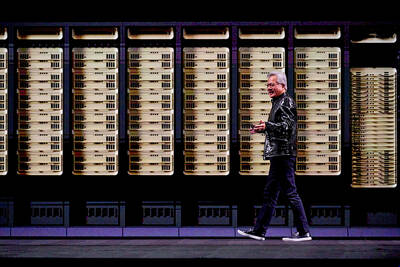
The global server market is expected to grow 12.8 percent annually this year, with artificial intelligence (AI) servers projected to account for 16.5 percent, driven by continued investment in AI infrastructure by major cloud service providers (CSPs), market researcher TrendForce Corp (集邦科技) said yesterday. Global AI server shipments this year are expected to increase 28 percent year-on-year to more than 2.7 million units, driven by sustained demand from CSPs and government sovereign cloud projects, TrendForce analyst Frank Kung (龔明德) told the Taipei Times. Demand for GPU-based AI servers, including Nvidia Corp’s GB and Vera Rubin rack systems, is expected to remain high,


 RSS
RSS