


Nearly 300 financial companies plan to spend NT$3.032 billion (US$101.3 million) subsidizing domestic trips for employees from this month to the end of the year to help boost the economy, the Financial Supervisory Commission (FSC) said yesterday.
The 287 companies include 36 banks, 41 insurance companies, 68 securities brokerages, 39 securities investment trust firms, 84 securities investment consulting companies, 15 futures traders and four accounting firms, FSC Chairman Thomas Huang (黃天牧) said.
Banks plan to spend NT$1.36 billion, the highest among all industries, followed by insurers with NT$1.35 billion, securities companies with NT$185 million and accounting firms with NT$67 million, the commission said.
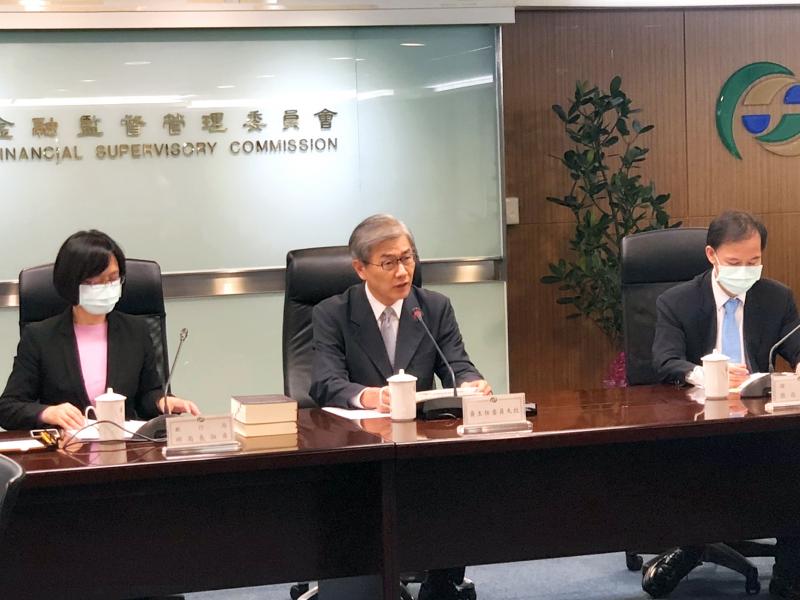
Photo: Kelson Wang, Taipei Times
A total of 600,000 employees are expected to benefit from the subsidies, Huang said.
Many firms had planned to organize overseas trips for their employees, or hold conferences and employee training courses abroad, Huang said.
In light of the nation’s stable epidemic situation compared with other countries, they have decided to hold these events domestically, he said.
Fubon Financial Holding Co (富邦金控) yesterday said it would spend NT$700 million on domestic travel and training programs for its 58,000 employees.
The company’s insurance unit, Fubon Life Insurance Co (富邦人壽), plans to spend NT$220 million on similar endeavors, it added.
Lin Yuan Group (霖園集團) — which owns Cathay Financial Holdings Co (國泰金控), Cathay Real Estate Co (國泰建設) and Cathay General Hospital (國泰綜合醫院) — last month announced that it would spend NT$440 million to subsidize domestic trips and other events for its 50,000 employees.
Meanwhile, a survey released yesterday by MasterCard showed that 45 percent of respondents are willing to travel locally within three months after the government eases restrictions on social distancing, while more than 50 percent would spend between NT$5,000 and NT$8,000 on domestic trips.
The survey indicated that most respondents are conservative about taking trips abroad as border controls remain in place in many countries.
For those who are willing to travel overseas, up to 70 percent said they would prioritize countries where virus infections have slowed down, the survey said.
In other news, the FSC yesterday said that 22 life insurance companies have trimmed their interest rates on policy loans by 50 basis points for the next six months.
The move is aimed at easing the financial burden on people affected by the virus, such as medical staff, COVID-19 patients or furloughed workers, Huang said.
The policy loans offered by life insurers totaled NT$614.7 billion at the end of April, and the rate cuts would lead to a NT$1.5 billion dip in insurers’ interest income this year, the commission said.
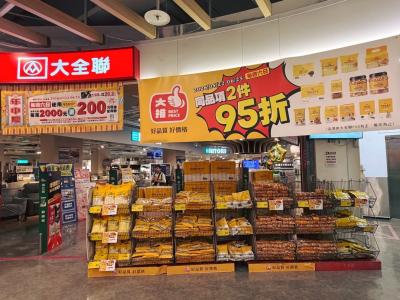
The Mega PX Mart Zhonglun (中崙) store in Taipei’s Zhongshan District (中山) would close on Sept. 13 after 22 years of business, Ruentex Development Co (潤泰創新) said today. More than 160 employees at the store would be assisted in finding new positions, with job openings to be made available in the coming days, Reuntex spokesman Chen Po-yu (陳柏宇) said. The Zhonglun store, previously an RT-Mart, opened in December 2004 as Taiwan’s first urban hypermarket in central Taipei. Due to high rents in the city center, the store never turned a profit in its 22 years of operation, Chen said. Even

Google DeepMind vice president John Jumper, who won the 2024 Nobel Prize in chemistry for his work on artificial intelligence (AI), is leaving the company to join Anthropic PBC. Jumper has been a key member of Google’s AI coding development team and his departure strains the tech giant’s efforts to beat Anthropic, OpenAI and SpaceX in the race to build the most powerful AI models. Google has struggled to sell AI coding tools to businesses, according to former employees. Employees and executives at DeepMind have raised concerns in the past few months that the company does not have a clear solution for

PROMISING SIGNS: The indications of a peace deal, or at least a ceasefire, between the US and Iran have global prices easing down slightly after months of shooting State-owned oil supplier CPC Corp, Taiwan (CPC, 台灣中油) announced on Saturday that it would cut domestic gasoline and diesel prices by NT$1.0 (US$0.03) and NT$0.7 per liter respectively this week, reflecting reduced upward pressure on international energy prices. The announcement marked an end to the company’s 11-week streak of leaving its retail fuel prices unchanged amid military conflicts in the Middle East. CPC said in a statement that international crude prices fell last week after the US and Iran announced plans to sign a memorandum of understanding to extend their ceasefire for 60 days and open the Strait of Hormuz, the choke

Bosch, a leading supplier of technology and services, expects another year of growth in Taiwan this year, betting that continued investment in artificial intelligence (AI), advanced manufacturing and sustainability would help offset geopolitical uncertainties and trade tensions. The company remains cautiously optimistic about Taiwan’s economic and industrial outlook, supported by the nation’s expanding role in global AI supply chains and strong demand for technology-driven solutions, Bosch Taiwan chairman and managing director Andreas Schmidt said. “The structural momentum behind Taiwan’s technology and AI ecosystems provides clear reasons for optimism,” Schmidt said. “Bosch Taiwan remains deeply committed to the local market and confident in


 RSS
RSS