


Taishin Financial Holding Co (台新金控) yesterday said its banking unit is expected to see high single-digit percentage growth in corporate lending this year, despite the COVID-19 outbreak.
Taishin International Bank (台新銀行) reported a 23.5 percent increase in corporate loans to NT$552 billion (US$18.46 billion) in the first quarter, from NT$447 billion a year earlier, the parent company told an investors’ conference in Taipei.
The loan book grew significantly in March as many big companies applied to increase borrowings to prepare for the fallout of the pandemic and to maintain their business operations, Taishin Financial head of wholesale banking Sharon Lin (林淑真) said, adding that most of them are short-term loans.
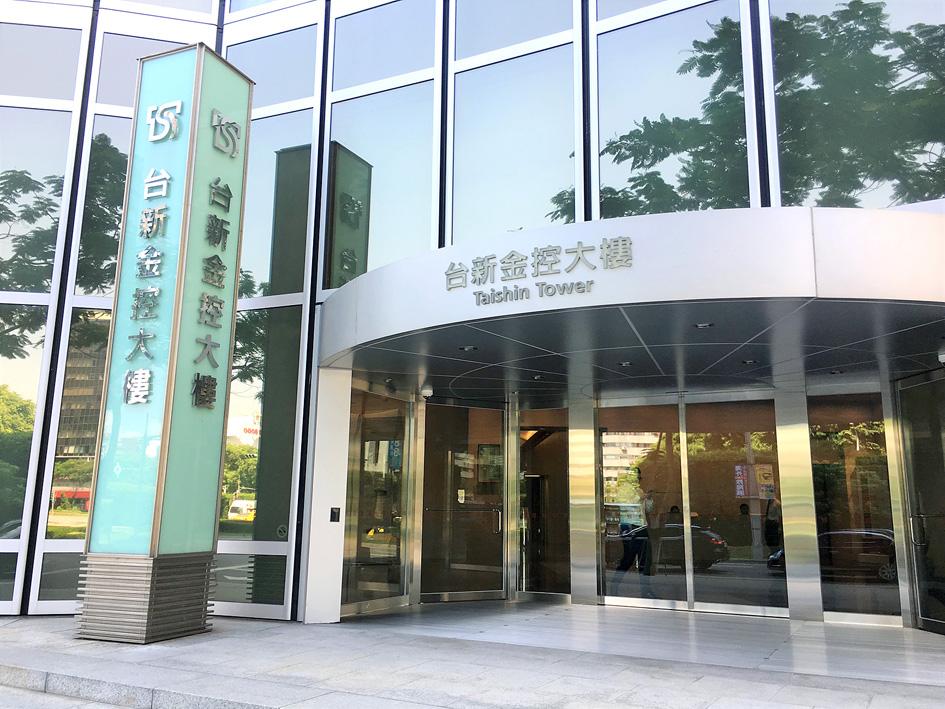
Photo: Kelson Wang, Taipei Times
Lending to manufacturers accounted for 37.7 percent of its total corporate loans, followed by 20 percent for financial companies, 14.2 percent for property and construction firms, 10.6 percent for the retail and wholesale sector, and 6 percent for transportation and telecom firms, she said.
“With unclear visibility on corporate lending ahead, we would be more cautious, but still keep our original goal of high single-digit growth in corporate lending this year,” Taishin Financial president Welch Lin (林維俊) said.
The bank’s nonperforming loan ratio grew to 0.2 percent, up from 0.17 percent at the end of last year, as it recognized soured loans to a unit of China Energy Reserve and Chemicals Group Co (中國國儲能源) in Shanghai, it said.
As loans extended to industries vulnerable to the outbreak, such as tourism, hotels and aviation, made up less than 1 percent of its corporate lending, loan quality should remain sound this year, Sharon Lin said.
The bank is not worried about exposure to companies in the petrochemical industry, despite volatile crude oil prices, as the financial strength of state-run oil refiner CPC Corp, Taiwan (台灣中油) — its sole debtor domestically — remains solid, she said.
Despite the loan growth in the first quarter, net fee income from corporate banking fell 24.8 percent annually to NT$314 million, as many syndicated loans had been postponed due to the outbreak, the bank said.
Net interest margin (NIM), a gauge of banks’ profitability, remained flat from a quarter earlier at 1.21 percent, while it expects NIM to decline by 10.7 basis points by the end of this year due to the rates cuts by the US Federal Reserve and the central bank in March.
Regarding overseas expansion, the bank last month received approval from the China Banking and Insurance Regulatory Commission to set up an office in Shanghai, which would begin operations later this quarter.
It is still awaiting approval from national regulators to set up new branches in Long An, Vietnam, and Labuan, Malaysia, Welch Lin said.
He did not comment on reports that Taishin Financial plans to acquire Prudential Life Insurance Inc’s local unit, saying only that the company’s goal to have banking, insurance and securities units for better business development.
In other news, SinoPac Financial Holdings Co’s (永豐金控) appointment of former Chung-Hua Institution for Economic Research (中華經濟研究院) president Chen Shi-kuan (陳思寬) as chairperson was approved during its annual shareholders’ meeting in Taipei.
Chen not only is SinoPac’s first chairwoman, she is the first among the nation’s seven privately owned financial holding companies.
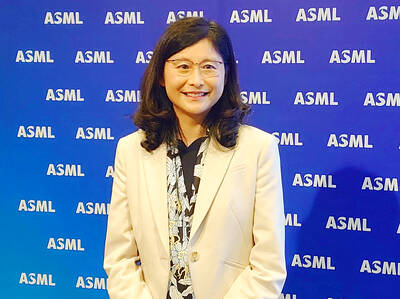
Netherlands-based semiconductor equipment supplier ASML Holding NV yesterday said that it is planning to hire an additional 1,000 people in Taiwan this year in response to growing demand from clients. ASML had previously planned to recruit 600 people this year, but that the plan has been adjusted upward, ASML vice president and ASML Taiwan general manager Grace Wang (汪佳慧) told reporters. ASML has a workforce of more than 4,500 in Taiwan, accounting for about 10 percent of its global total, Wang said. This year’s recruitment campaign would focus on adding people in the customer support, manufacturing and supply chain domains to assist ASML
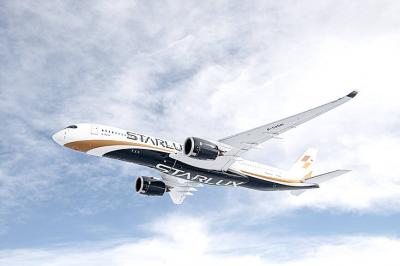
Starlux Airlines Co (星宇航空) today unveiled a long-haul network expansion plan at a shareholders’ meeting in Taipei, including direct flights to Barcelona, Spain, and Zurich, Switzerland, as well as a service connecting Taipei, Sydney and New Zealand. Starlux is to become the first Taiwanese carrier to offer non-stop services to the two European cities, while the inaugural oceanic route is expected to expand transit opportunities within the Australia-New Zealand market, Starlux said. Flight services to Chicago, Dallas, Washington and New York are under evaluation, the airline added. Prior to the shareholders’ meeting, the airline earlier this year announced that it would be
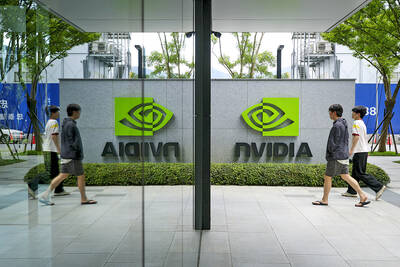
UNDER MICROSCOPE: Taiwan detained three people who allegedly conspired to buy servers in Taiwan and export them using fraudulent documentation, prosecutors said Nvidia Corp chief executive officer Jensen Huang (黃仁勳) on Saturday urged Super Micro Computer Inc to tighten up on compliance after Taiwan detained three people this week for allegedly making fraudulent declarations about artificial intelligence (AI) servers made by its US partner. The development marked the nation’s first crackdown on semiconductor smuggling, which grew after the US slapped restrictions on exports of high-end chips such as Nvidia AI accelerators to China. Nvidia is “rigorous” in explaining regulations to all of its partners, Huang told reporters after arriving in Taipei. “Ultimately Super Micro has to run their own company,” he said in response to

Nvidia Corp yesterday announced that CEO Jensen Huang (黃仁勳) would attend an employee meeting in Taipei tomorrow to celebrate the launch of the company’s Taiwan headquarters project. Huang would attend a gathering at the site of Nvidia’s planned headquarters in Beitou Shilin Technology Park (北投士林科技園區), the company said in a statement. After arriving in Taiwan on Saturday last week, Huang told reporters that he plans to meet with Quanta Computer Inc (廣達) chairman Barry Lam (林百里) and Taiwan Semiconductor Manufacturing Co (TSMC, 台積電) chairman C.C. Wei (魏哲家), and would attend the groundbreaking ceremony for Nvidia’s Taiwan headquarters tomorrow. Nvidia has not yet applied


 RSS
RSS