


EMQ Taiwan (易安聯) and Welldone Co (統振) can extend their remittance services for migrant workers from April 30 to Oct 29, the Financial Supervisory Commission (FSC) said on Thursday.
The firms, which were permitted to conduct the experiment as part of the commission’s regulatory sandbox, began their remittance services in May last year.
Their experiments allow workers from Vietnam, the Philippines, Thailand and Indonesia to send money home and without having to pay the high fees conventional banks charge for remittance services.
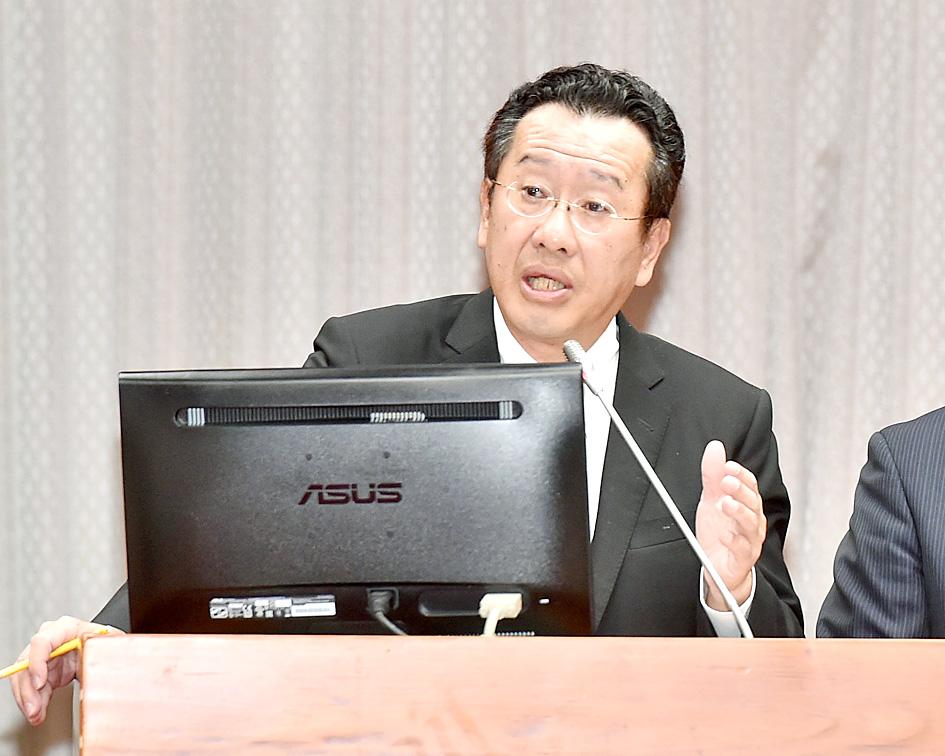
Photo: Tu Chien-jung, Taipei Times
Their services enable the workers to send money home from convenience stores, with handling fees ranging from NT$100 to NT$250, compared with fees of NT$600 to NT$1,000 charged by banks, Department of Planning Director-General Lin Chih-chi (林志吉) said.
“Their services were not popular among migrant workers in the beginning, as the number of users hovered in the tens and hundreds, and the overall amount of remittance only stood at a few million New Taiwan dollars per month,” Lin said.
“However, their services have become more popular since the second half of last year, and the number of users has risen to tens of thousands and the overall amount of remittances surpassed NT$100 million [US$3.34 million] in March,” he said.
Commission data showed that some workers remit money every two months to save on handling fees, while those from Indonesia and the Philippines send more money than their peers from Vietnam and Thailand, Lin said.
The commission has monitored the experiment to see if any loopholes for money laundering had been discovered, but it has not seen such activities so far, he said.
It last month approved Welldone’s application to raise the limit on remittances, from NT$70,000 per month and NT$360,000 per year to NT$100,000 and NT$500,000 respectively, Lin said.
The new limits are also available for EMQ Taiwan, he added.
If a proposed amendment to the Act Governing Electronic Payment Institutions (電子支付機構管理條例) is passed by lawmakers, companies not engaged in electronic payment services would be allowed to offer remittance services if they can gain a limited license, Lin said.
Meanwhile, Mega International Commercial Bank (兆豐銀行), the state-run lending arm of Mega Financial Holding Co (兆豐金控), has won FSC approval to set up a sub-branch in the Cambodian capital, Phnom Penh, allowing it to deepen its reach into Southeast Asia.
The commission gave its go-ahead on Tuesday, the bank said in a statement on Wednesday.
Mega Bank entered the Cambodian market eight years ago and has been impressed by the nation’s fast-growing economy and relative political stability, the statement said.
The new sub-branch would help advance the government’s New Southbound Policy, it said, adding that it is eyeing expansion in Indonesia and Myanmar.
Japanese supermarket operator Aeon Co is to build a mall in Phnom Penh, where several Taiwanese companies have a presence, and more are likely to follow suit, creating opportunities for the new sub-branch, Mega Bank said.
The new outlet would be its fourth in Cambodia, it added.
It has operations in Vietnam, Thailand, the Philippines, Myanmar and Singapore, and it has set aside NT$100 billion (US$3.34 billion) to meet the cash needs of corporate clients in Southeast Asia, it said.
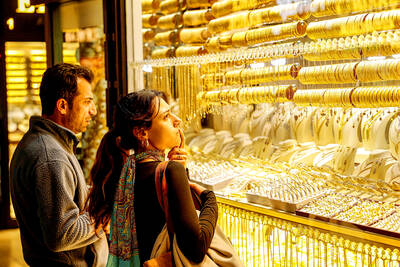
In Italy’s storied gold-making hubs, jewelers are reworking their designs to trim gold content as they race to blunt the effect of record prices and appeal to shoppers watching their budgets. Gold prices hit a record high on Thursday, surging near US$5,600 an ounce, more than double a year ago as geopolitical concerns and jitters over trade pushed investors toward the safe-haven asset. The rally is putting undue pressure on small artisans as they face mounting demands from customers, including international brands, to produce cheaper items, from signature pieces to wedding rings, according to interviews with four independent jewelers in Italy’s main

Japanese Prime Minister Sanae Takaichi has talked up the benefits of a weaker yen in a campaign speech, adopting a tone at odds with her finance ministry, which has refused to rule out any options to counter excessive foreign exchange volatility. Takaichi later softened her stance, saying she did not have a preference for the yen’s direction. “People say the weak yen is bad right now, but for export industries, it’s a major opportunity,” Takaichi said on Saturday at a rally for Liberal Democratic Party candidate Daishiro Yamagiwa in Kanagawa Prefecture ahead of a snap election on Sunday. “Whether it’s selling food or

CONCERNS: Tech companies investing in AI businesses that purchase their products have raised questions among investors that they are artificially propping up demand Nvidia Corp chief executive officer Jensen Huang (黃仁勳) on Saturday said that the company would be participating in OpenAI’s latest funding round, describing it as potentially “the largest investment we’ve ever made.” “We will invest a great deal of money,” Huang told reporters while visiting Taipei. “I believe in OpenAI. The work that they do is incredible. They’re one of the most consequential companies of our time.” Huang did not say exactly how much Nvidia might contribute, but described the investment as “huge.” “Let Sam announce how much he’s going to raise — it’s for him to decide,” Huang said, referring to OpenAI

The global server market is expected to grow 12.8 percent annually this year, with artificial intelligence (AI) servers projected to account for 16.5 percent, driven by continued investment in AI infrastructure by major cloud service providers (CSPs), market researcher TrendForce Corp (集邦科技) said yesterday. Global AI server shipments this year are expected to increase 28 percent year-on-year to more than 2.7 million units, driven by sustained demand from CSPs and government sovereign cloud projects, TrendForce analyst Frank Kung (龔明德) told the Taipei Times. Demand for GPU-based AI servers, including Nvidia Corp’s GB and Vera Rubin rack systems, is expected to remain high,


 RSS
RSS