


In a manic week full of previously unthinkable market moves, Wall Street on Friday ended with one reminiscent of what things were like before the COVID-19 pandemic upended everything.
The S&P 500 glided to a gain of 1.4 percent, with Apple Inc, Microsoft Corp and other technology stocks leading the way, as they did so many times before the US economy shut down in the hopes of slowing the spread of the novel coronavirus.
The bond market was quiet, while crude prices climbed again.
The gains offered a soothing coda for a wild week, which began with Monday’s astonishing plummet for oil and carried through Thursday’s sudden disappearance of a morning stock rally, as markets pinballed from fear to hope and back again.
“The market sort of feels like Dorothy coming to the crossroads and has yet to meet the scarecrow to tell her which way to go,” Center for Financial Research and Analysis chief investment strategist Sam Stovall said.
The S&P 500 still lost 1.3 percent for the week as worries about the economic damage dealt by the pandemic outweighed hopes that businesses could soon reopen. That snapped the first two-week winning streak for the S&P 500 since it began selling off in February.
Reports piled higher through the week showing that the pandemic is bludgeoning the US economy even more than economists had feared. Roughly one in six US workers has filed for unemployment benefits over the past five weeks.
The damage is so severe that a heavily divided US Congress has reached bipartisan agreement on massive support for the economy.
US President Donald Trump on Friday signed a bill to provide nearly US$500 billion more, including loans for small businesses and aid for hospitals.
The big question for markets is when the US economy can reopen, Harvest Volatility Management head of trading and research Mike Zigmont said.
Businesses can get by for a few months on government help, but if the shutdown drags on longer, they could be permanently damaged, he said.
Many investors have essentially agreed to swallow horrific corporate profits and economic data in upcoming months, and they are turning their focus to who can survive and eventually grow their profits.
Next week is to be one of the busiest of this earnings season, with more than 150 companies in the S&P 500 reporting how much they made in the first three months of this year.
Many companies have been pulling their profit forecasts entirely for this year given all the uncertainty, and Wall Street is slashing its own estimates.
“I don’t really think that’s added to the concern of investors, because they assume that companies will be doing a lot of writing down in this bad year so that 2021 could look even better,” Stovall said.
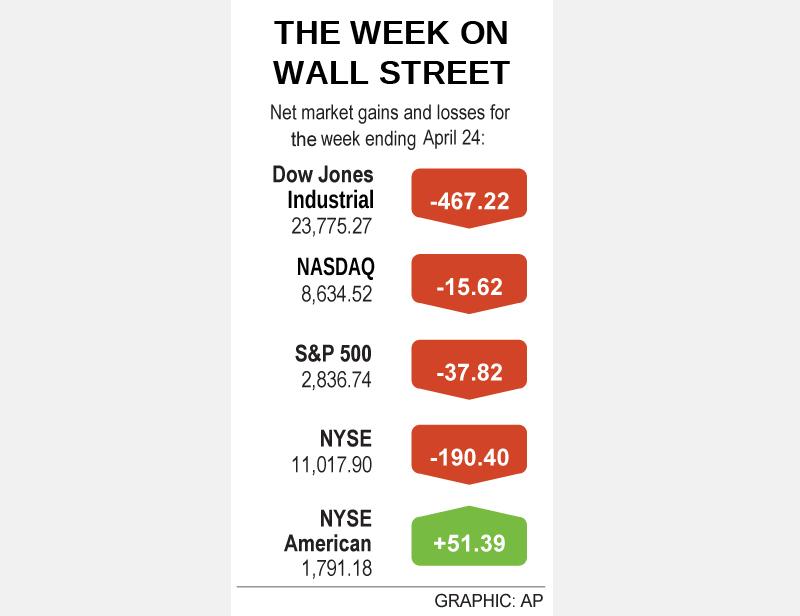
The S&P 500 on Friday added 38.94 points to 2,836.74.
The Dow Jones Industrial Average on Friday rose 260.01 points, or 1.1 percent, to 23,775.27, falling 1.9 percent from a close of 24,242.49 on April 17.
The NASDAQ Composite on Friday added 139.77 points, or 1.7 percent, to 8,634.52, edging down 0.2 percent from 8,650.14 a week earlier.
The Russell 2000 index of small company stocks on Friday gained 18.99 points, or 1.6 percent, to 1,233.05, a 0.3 percent increase from 1,229.10 on April 17.
Gains for big tech stocks led the way. Tech makes up an outsized portion of the S&P 500 following years of market dominance, and because changes in market value dictate the index’s moves, the performance of the biggest stocks can have a disproportionate effect.
Stocks have been generally rallying since late last month on promises for massive aid from Congress and the US Federal Reserve, along with more recent hopes that parts of the US economy might be close to reopening.
In Georgia, some businesses on Friday began welcoming back customers after Georgia Governor Brian Kemp eased a month-long shutdown.
However, many professional investors have been skeptical of the market’s recent rally, saying that there is still too much uncertainty about how long the recession would last and that attempts to reopen the US economy could trigger more waves of infections if they are premature.
In a demonstration of how hungry the market is for a vaccine or treatment for COVID-19, the S&P 500 on Thursday erased a rally of more than 1 percent in a span of seconds following a discouraging report about a potential drug treatment.
The Financial Times reported that a Chinese study of the Gilead Sciences Inc’s experimental antiviral drug remdesivir found no positive effect, citing data published accidentally by the WHO.
However, Gilead said that the data represented “inappropriate characterizations” of the study.
Through all the volatility, many investors saving for retirement have been holding steady. They have been calling in for advice much more often, but the majority of savers with 401(k) accounts at Fidelity Investments Inc did not pull back on their contributions in this quarter.
The S&P 500 is down 16.2 percent from its record in February, although it has more than halved its loss since late last month.
The yield on the 10-year US Treasury note slipped from 0.61 percent late on Thursday to 0.60 percent.
Yields tend to fall when investors are downgrading their expectations for the economy and inflation.
Additional reporting by staff writer
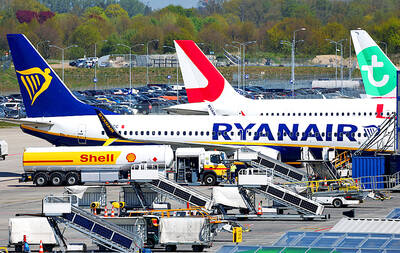
Ryanair, Transavia, Volotea and other low-cost airlines are feeling the financial pain from high jet fuel prices as a result of the Middle East war and are cutting flights. The closure of the Strait of Hormuz has taken a huge chunk of oil supplies off the market, sending the price of jet fuel soaring and triggering fears of shortages that could force airlines to cancel flights. Airlines are not waiting for a lack of supplies to react. “Travel alert: Airlines are cutting thousands of flights right now,” Travel Therapy host Karen Schaler said in an Instagram reel this past weekend.

MANAGING RISKS: Taiwan has secured LNG sufficient to cover 95 percent of electricity demand for next month, UBS said, describing the government’s approach as proactive UBS Group AG has raised its forecast for Taiwan’s economic growth this year to 8 percent, up from 6.9 percent previously, and said expansion could reach as high as 8.6 percent if external energy shocks are avoided. The upgrade reflects a stronger-than-expected first-quarter performance and sustained momentum in artificial intelligence (AI)-driven exports, which UBS said are providing a firm foundation for growth despite geopolitical and energy risks. Taiwan’s GDP expanded 13.69 percent year-on-year in the first quarter, the fastest growth since the second quarter of 1987, the Directorate-General of Budget, Accounting and Statistics (DGBAS) reported on Thursday. On a seasonally

The Fair Trade Commission’s (FTC) ongoing review of Grab Holdings Ltd’s US$600 million acquisition of Foodpanda Taiwan’s operations, announced on March 23, has taken on fresh urgency as industry experts warn that the transaction could embed significant Chinese cybersecurity vulnerabilities into Taiwan’s digital infrastructure through Grab’s deep ties to autonomous-driving firm WeRide (文遠知行). Less than 16 months after the FTC blocked Uber Eats’ direct attempt to acquire Foodpanda Taiwan — citing potential combined market shares of 80 to 90 percent — the emergence of Grab as the buyer has prompted questions about whether the same competitive harm is simply being rerouted
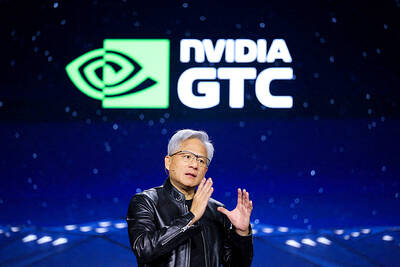
The list of Asian stocks that benefit from business partnership with Nvidia Corp is getting longer, as the region further integrates into the artificial intelligence (AI) chip giant’s business ecosystem. Just in the past week, South Korea’s LG Electronics Inc, Taiwan’s Nanya Technology Corp (南亞科技), as well as China’s Huizhou Desay SV Automotive Co (德賽西威) and Pateo Connect Technology Shanghai Corp (博泰車聯) have become the latest to rally on news of tie-ups, supply-chain participation or product collaboration with the US chip designer. Asian suppliers account for about 90 percent of Nvidia’s production costs, up from about 65 percent last year, data compiled


 RSS
RSS