


The nation’s annual computer and technology trade show, Computex Taipei, has been postponed to September, the Taiwan External Trade Development Council (TAITRA, 外貿協會) said yesterday.
This year’s Computex, Asia’s largest exhibition of its kind, was originally scheduled for June 2 to June 5 at the Taipei World Trade Center Exhibition Hall and the Taipei Nangang Exhibition Hall.
To preserve the health and safety of participating members and exhibiting companies, TAITRA, one of the trade show’s organizers, said that it has rescheduled the event to be held on Sept. 28 to 30 at the Taipei Nangang Exhibition Hall.
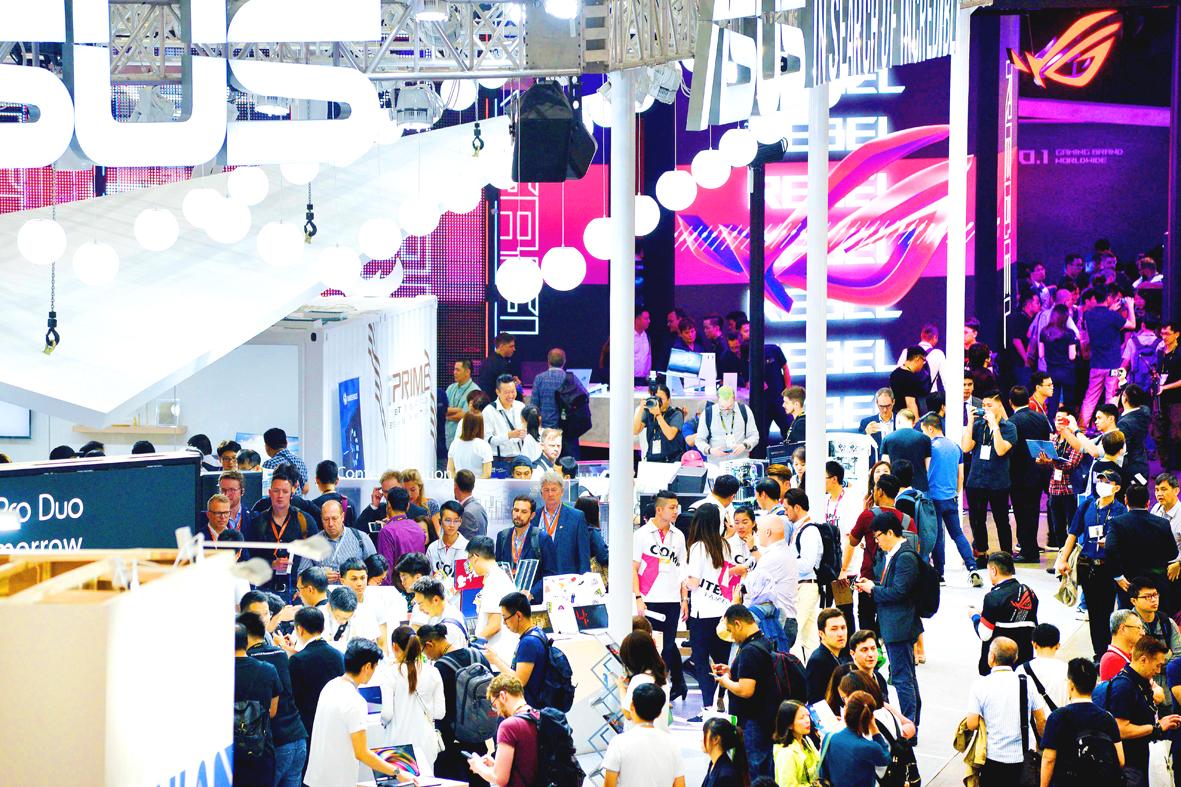
Photo: AFP
“For companies launching their products earlier, we will still hold procurement conferences online,” a TAITRA official surnamed Tseng (曾) told the Taipei Times by telephone, adding that exhibiting firms are encouraged to share their latest products in September’s show.
Computex is to highlight themes such as 5G technology, 5G networks and communications, smart solutions and e-gaming, TAITRA said.
A special exhibition called InnoVEX, which is to focus on innovation and start-ups, would run at the same time as Computex, TAITRA said.
Last year’s exhibition attracted 42,495 international buyers from 171 countries, while InnoVEX attracted 18,251 visitors, TAITRA data showed.
In 2003, Computex was also delayed from June to September due to the SARS outbreak.
A McKinsey & Co report has forecast that the pandemic should be contained by the second quarter in China and Southeast Asia, while the pandemic could ravage Europe and the US into June.
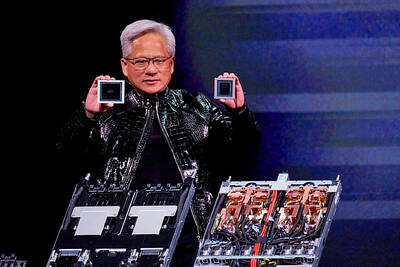
Nvidia Corp chief executive officer Jensen Huang (黃仁勳) on Monday introduced the company’s latest supercomputer platform, featuring six new chips made by Taiwan Semiconductor Manufacturing Co (TSMC, 台積電), saying that it is now “in full production.” “If Vera Rubin is going to be in time for this year, it must be in production by now, and so, today I can tell you that Vera Rubin is in full production,” Huang said during his keynote speech at CES in Las Vegas. The rollout of six concurrent chips for Vera Rubin — the company’s next-generation artificial intelligence (AI) computing platform — marks a strategic

Enhanced tax credits that have helped reduce the cost of health insurance for the vast majority of US Affordable Care Act enrollees expired on Jan.1, cementing higher health costs for millions of Americans at the start of the new year. Democrats forced a 43-day US government shutdown over the issue. Moderate Republicans called for a solution to save their political aspirations this year. US President Donald Trump floated a way out, only to back off after conservative backlash. In the end, no one’s efforts were enough to save the subsidies before their expiration date. A US House of Representatives vote
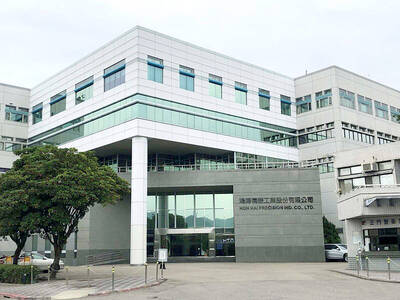
REVENUE PERFORMANCE: Cloud and network products, and electronic components saw strong increases, while smart consumer electronics and computing products fell Hon Hai Precision Industry Co (鴻海精密) yesterday posted 26.51 percent quarterly growth in revenue for last quarter to NT$2.6 trillion (US$82.44 billion), the strongest on record for the period and above expectations, but the company forecast a slight revenue dip this quarter due to seasonal factors. On an annual basis, revenue last quarter grew 22.07 percent, the company said. Analysts on average estimated about NT$2.4 trillion increase. Hon Hai, which assembles servers for Nvidia Corp and iPhones for Apple Inc, is expanding its capacity in the US, adding artificial intelligence (AI) server production in Wisconsin and Texas, where it operates established campuses. This
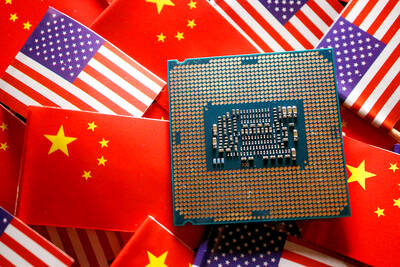
US President Donald Trump on Friday blocked US photonics firm HieFo Corp’s US$3 million acquisition of assets in New Jersey-based aerospace and defense specialist Emcore Corp, citing national security and China-related concerns. In an order released by the White House, Trump said HieFo was “controlled by a citizen of the People’s Republic of China” and that its 2024 acquisition of Emcore’s businesses led the US president to believe that it might “take action that threatens to impair the national security of the United States.” The order did not name the person or detail Trump’s concerns. “The Transaction is hereby prohibited,”


 RSS
RSS