


It has taken more than a century, but Japanese banks are finally parting ways with a piece of technology that has not felt cutting edge since the shogun reigned.
Hanko, the personal stamps required for even simple transactions in Japan since the 1800s, are getting phased out at some of the country’s biggest financial institutions.
Lenders have begun allowing customers to transfer money or make payments with their smartphone or a tablet, instead of pressing wood to ink and paper like their ancestors. For millennials in Japan, one of the most tech-obsessed places on Earth, the change is long overdue.
“It’s too much work to bring hanko and do the paperwork just to withdraw money at branches,” said Tomoyuki Shiraishi, a 24-year-old construction worker.
After arriving late to the fintech revolution, Japanese banks are racing to catch up as they try to slash paperwork, boost efficiency and appeal to the younger generation.
Mitsubishi UFJ Financial Group Inc (MUFG), the country’s biggest lender, has started offering accounts that do not require hanko or passbooks, and is overhauling its branch network to replace rows of tellers with tablet computers.
The goal is to help customers adapt to digital platforms so that they can eventually do more banking on their own devices.
As many as 100 of MUFG’s 500-plus domestic outlets would convert to the new format by 2024. The Tokyo-based lender plans to halve the number of branches with traditional counters.
MUFG is not alone. Resona Holdings Inc last year started allowing customers to open accounts without hanko at about 600 branches.
The shift to digital has support from Japanese Prime Minister Shinzo Abe’s administration, which has drafted a bill to make more government services available online.
Winning over Japan’s bureaucracy has not been easy.
MUFG needed two years to convince 450 local governments to begin processing tax payments electronically, said Takayuki Ogura, director of its main banking unit.
In other areas of Japanese officialdom, hanko are firmly entrenched. Small businesses use them for many contracts, and they are still required for things such as marriage and home ownership.
The making of hanko is a US$1.5 billion-a-year industry, said fourth-generation carver Keiichi Fukushima, vice chairman of the national trade group.
“There are still lots of occasions where we need to use hanko in our lives,” Fukushima said.
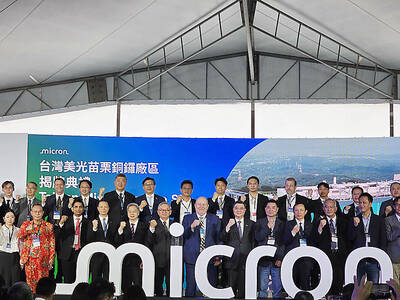
UNPRECEDENTED PACE: Micron Technology has announced plans to expand manufacturing capabilities with the acquisition of a new chip plant in Miaoli Micron Technology Inc unveiled a newly acquired chip plant in Miaoli County yesterday, as the company expands capacity to meet growing demand for advanced DRAM chips, including high-bandwidth memory chips amid the artificial intelligence boom. The plant in Miaoli County’s Tongluo Township (銅鑼), which Micron acquired from Powerchip Semiconductor Manufacturing Corp (力積電) for US$1.8 billion, is expected to make a sizeable capacity contribution to the company from fiscal 2028, the company said in a statement. It would be an extended production site of Micron’s large-scale manufacturing hub in Taichung, the company said. As the global semiconductor industry is racing to reach US$1 trillion

Singapore-based ride-hailing and delivery giant Grab Holdings Ltd has applied for regulatory approval to acquire the Taiwan operations of Germany-based Delivery Hero SE's Foodpanda in a deal valued at about US$600 million. Grab submitted the filing to the Fair Trade Commission on Friday last week, with the transaction subject to regulatory review and approval, the company said in a statement yesterday. Its independent governance structure would help foster a healthy and competitive market in Taiwan if the deal is approved, Grab said. Grab, which is listed on the NASDAQ, said in the filing that US-based Uber Technologies Inc holds about 13 percent of
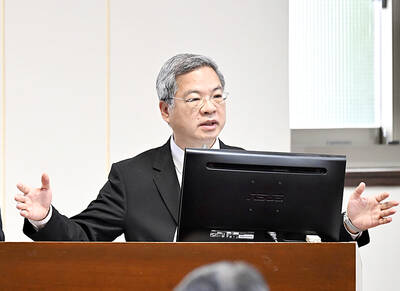
ABOVE LEGAL REQUIREMENT: The Ministry of Economic Affairs is prepared if LNG supply is disrupted, with more than the legal requirement of 11 days of inventory Taiwan has largely secured liquefied natural gas (LNG) supplies through May and arranged about half of June’s supply, Minister of Economic Affairs Kung Ming-hsin (龔明鑫) said yesterday. Since the Middle East conflict began on Feb. 28, Taiwan’s LNG inventories have remained more than 12 days, exceeding the legal requirement of 11 days, indicating no major supply concerns for domestic gas and electricity, Kung said at a meeting of the legislature’s Economics Committee in Taipei. The ministry aims to increase the figure to 14 days by the end of next year, he said. While one or two LNG or crude oil shipments for May

Taiwan’s food delivery market could undergo a major shift if Singapore-based Grab Holdings Ltd completes its planned acquisition of Delivery Hero SE’s Foodpanda business in Taiwan, industry experts said. Grab on Monday last week announced it would acquire Foodpanda’s Taiwan operations for US$600 million. The deal is expected to be finalized in the second half of this year, with Grab aiming to complete user migration to its platform by the first half of next year. A duopoly between Uber Eats and Foodpanda dominates Taiwan’s delivery market, a structure that has remained intact since the Fair Trade Commission (FTC) blocked Uber Technologies Inc’s


 RSS
RSS