


Activision Blizzard Inc is creating an e-sports league of its own with competitive play of team-based shooter game Overwatch, and a goal of building professional stars — possibly with big-league payouts.
The US video game giant on Friday announced the creation of an Overwatch League, saying it would let teams share in money generated by the latest entry in the booming trend of computer game play as spectator sport.
Activision Blizzard chief executive officer Bobby Kotick said that the launch aims to create greater prominence for e-sports.
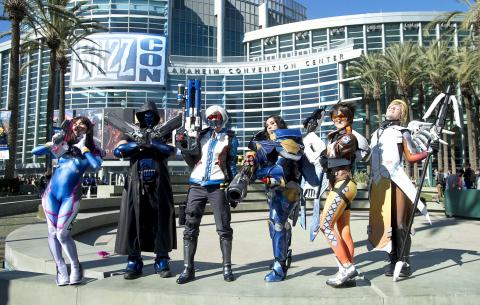
Photo: AP
“The thing we are doing that is unique is a league where owners actually have defined rights to revenues and there are operating principles super well-defined,” he told reporters in an interview.
About 292 million people globally will watch e-sports this year, with that number expected to grow to 427 million people over the coming three years, Activision Blizzard said.
A strong focus of the Overwatch League is to provide competitive gamers with the kind of status typically given to professional athletes in traditional sports.
“We want them to have that kind of recognition for their achievements, and also financial rewards,” Kotick said of e-sports contenders.
Teams in the league are to share in revenue from sources such as licensing, broadcast rights and ticket sales, Activision Blizzard said.
Late last year, Activision Blizzard launched a division devoted to competitive gaming. It has since acquired live e-sports event titan star Major League Gaming and launched Call of Duty World League based on a blockbuster shooter franchise.
Overwatch League’s opening season was scheduled for next year.
The Blizzard Entertainment video game released about five months ago already boasts more than 20 million players who have been vying against one another on an amateur level.
“Overwatch has such a special place for me; I honestly love every single thing about it,” Kotick said.
Overwatch was designed for e-sports experiences, building in features such as international settings and characters representing a wide range of demographics, Kotick said.
Blizzard Entertainment chief executive officer Mike Morhaime said that the league is intended to be “a genuine career opportunity” for skilled players.
E-sports will have the eGames in Pyeongchang, South Korea, in 2018, International eGames Group chief executive officer Chester King told reporters in September.
King said his wish was for national pride to be at stake rather than it being based around prize money.
It is certainly a money-spinning industry, with global revenue in the hundreds of millions of dollars and growing, according to industry trackers.
Facebook Inc this year entered the e-sports business, jumping into the arena with rivals such as Amazon.com Inc-owned Twitch and Google’s YouTube Gaming.
The leading social network began letting players use Facebook accounts to log in to Blizzard Entertainment computer games such as World of Warcraft.
The collaboration added social features to Blizzard games while highlighting Facebook as a platform for sharing, viewing and discussing play, the companies said.
It also brought the potential for streaming play of Blizzard games such as Overwatch at the Facebook Live real-time video service.
Yahoo Inc this year launched an online venue for live tournaments, commentary, features, interviews and more tailored for video game play audiences.
The launch of YouTube Gaming in the middle of last year marked the public debut of an online spot where video game fans can find commentary, live play, on-demand snippets and more.
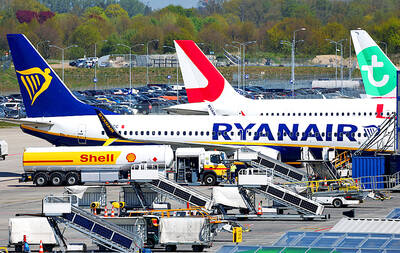
Ryanair, Transavia, Volotea and other low-cost airlines are feeling the financial pain from high jet fuel prices as a result of the Middle East war and are cutting flights. The closure of the Strait of Hormuz has taken a huge chunk of oil supplies off the market, sending the price of jet fuel soaring and triggering fears of shortages that could force airlines to cancel flights. Airlines are not waiting for a lack of supplies to react. “Travel alert: Airlines are cutting thousands of flights right now,” Travel Therapy host Karen Schaler said in an Instagram reel this past weekend.

MANAGING RISKS: Taiwan has secured LNG sufficient to cover 95 percent of electricity demand for next month, UBS said, describing the government’s approach as proactive UBS Group AG has raised its forecast for Taiwan’s economic growth this year to 8 percent, up from 6.9 percent previously, and said expansion could reach as high as 8.6 percent if external energy shocks are avoided. The upgrade reflects a stronger-than-expected first-quarter performance and sustained momentum in artificial intelligence (AI)-driven exports, which UBS said are providing a firm foundation for growth despite geopolitical and energy risks. Taiwan’s GDP expanded 13.69 percent year-on-year in the first quarter, the fastest growth since the second quarter of 1987, the Directorate-General of Budget, Accounting and Statistics (DGBAS) reported on Thursday. On a seasonally

The Fair Trade Commission’s (FTC) ongoing review of Grab Holdings Ltd’s US$600 million acquisition of Foodpanda Taiwan’s operations, announced on March 23, has taken on fresh urgency as industry experts warn that the transaction could embed significant Chinese cybersecurity vulnerabilities into Taiwan’s digital infrastructure through Grab’s deep ties to autonomous-driving firm WeRide (文遠知行). Less than 16 months after the FTC blocked Uber Eats’ direct attempt to acquire Foodpanda Taiwan — citing potential combined market shares of 80 to 90 percent — the emergence of Grab as the buyer has prompted questions about whether the same competitive harm is simply being rerouted
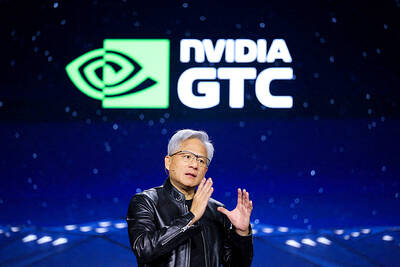
The list of Asian stocks that benefit from business partnership with Nvidia Corp is getting longer, as the region further integrates into the artificial intelligence (AI) chip giant’s business ecosystem. Just in the past week, South Korea’s LG Electronics Inc, Taiwan’s Nanya Technology Corp (南亞科技), as well as China’s Huizhou Desay SV Automotive Co (德賽西威) and Pateo Connect Technology Shanghai Corp (博泰車聯) have become the latest to rally on news of tie-ups, supply-chain participation or product collaboration with the US chip designer. Asian suppliers account for about 90 percent of Nvidia’s production costs, up from about 65 percent last year, data compiled


 RSS
RSS