


Handset chip designer MediaTek Inc (聯發科) yesterday said it plans to seek business opportunities in India, the world’s fourth-largest smartphone market, by tripling its workforce there within the next three years.
The company has been expanding its presence in China over the past decade and is gradually shifting its focus to India in pursuit of new growth.
MediaTek accounts for 70 percent of the handset chip market in India, where New Delhiis seeking to develop its home-grown mobile phone brands via the “Made in India” initiative.
“India has a huge growth potential,” MediaTek chairman Tsai Ming-kai (蔡明介) told reporters on the sidelines of a forum in Taipei arranged by the Federation of Indian Chambers of Commerce and Industry, citing the firm’s strategy of growing with local brands in emerging markets.
Local brands have rapidly expanded their market share in India from 7 percent in 2007 to 56 percent in 2014, Tsai said.
EMPLOYMENT GROWTH
In the five-year period to 2019, smartphone sales in India are expected to expand at a compound annual growth rate of 8 percent to 341 million units, according to data provided by the Indian Ministry of Commerce and Industry.
MediaTek plans to increase its headcount in India from 500 to 1,500, with most new hires being engineers in research and development, software and customer services, the company said.
MediaTek yesterday launched a talent training program in India to help its local partners enhance their phone designing capabilities. About 50 Indian engineers are to join the program in the next two-and-half-months, it said.
PHISON
NAND flash controller supplier Phison Electronics Corp (群聯) has also targeted India as its next growth source.
The company yesterday said it wants to set up a research and development center in India and is seeking partners to expand into the market there. It has two research and development centers, on in Taiwan and one in China.
Phison last quarter began shipping products to India’s two largest electronics manufacturers — Moser Baer India Ltd and Sahasra Electronics Pvt Ltd — after signing a memorandum of understanding with the firms in June.
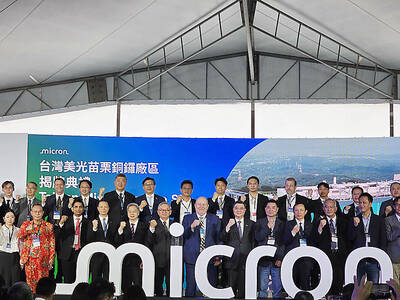
UNPRECEDENTED PACE: Micron Technology has announced plans to expand manufacturing capabilities with the acquisition of a new chip plant in Miaoli Micron Technology Inc unveiled a newly acquired chip plant in Miaoli County yesterday, as the company expands capacity to meet growing demand for advanced DRAM chips, including high-bandwidth memory chips amid the artificial intelligence boom. The plant in Miaoli County’s Tongluo Township (銅鑼), which Micron acquired from Powerchip Semiconductor Manufacturing Corp (力積電) for US$1.8 billion, is expected to make a sizeable capacity contribution to the company from fiscal 2028, the company said in a statement. It would be an extended production site of Micron’s large-scale manufacturing hub in Taichung, the company said. As the global semiconductor industry is racing to reach US$1 trillion

Singapore-based ride-hailing and delivery giant Grab Holdings Ltd has applied for regulatory approval to acquire the Taiwan operations of Germany-based Delivery Hero SE's Foodpanda in a deal valued at about US$600 million. Grab submitted the filing to the Fair Trade Commission on Friday last week, with the transaction subject to regulatory review and approval, the company said in a statement yesterday. Its independent governance structure would help foster a healthy and competitive market in Taiwan if the deal is approved, Grab said. Grab, which is listed on the NASDAQ, said in the filing that US-based Uber Technologies Inc holds about 13 percent of
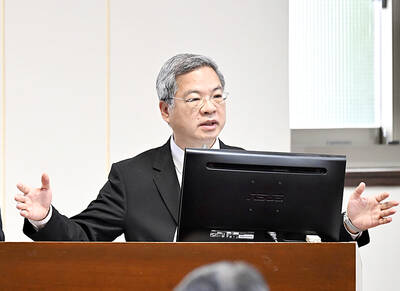
ABOVE LEGAL REQUIREMENT: The Ministry of Economic Affairs is prepared if LNG supply is disrupted, with more than the legal requirement of 11 days of inventory Taiwan has largely secured liquefied natural gas (LNG) supplies through May and arranged about half of June’s supply, Minister of Economic Affairs Kung Ming-hsin (龔明鑫) said yesterday. Since the Middle East conflict began on Feb. 28, Taiwan’s LNG inventories have remained more than 12 days, exceeding the legal requirement of 11 days, indicating no major supply concerns for domestic gas and electricity, Kung said at a meeting of the legislature’s Economics Committee in Taipei. The ministry aims to increase the figure to 14 days by the end of next year, he said. While one or two LNG or crude oil shipments for May

Taiwan’s food delivery market could undergo a major shift if Singapore-based Grab Holdings Ltd completes its planned acquisition of Delivery Hero SE’s Foodpanda business in Taiwan, industry experts said. Grab on Monday last week announced it would acquire Foodpanda’s Taiwan operations for US$600 million. The deal is expected to be finalized in the second half of this year, with Grab aiming to complete user migration to its platform by the first half of next year. A duopoly between Uber Eats and Foodpanda dominates Taiwan’s delivery market, a structure that has remained intact since the Fair Trade Commission (FTC) blocked Uber Technologies Inc’s


 RSS
RSS