


Investors led by Chinese online games developer Shanghai Giant Network Technology Co (上海巨人網絡科技有限公司) agreed to buy Caesars Entertainment Corp’s online casino-style games unit Playtika Ltd for US$4.4 billion in cash, even as gambling remains illegal in the Asian country.
The consortium includes Yunfeng Capital (雲峰基金), the private equity company founded by Alibaba Group Holding Ltd chairman Jack Ma (馬雲), China Oceanwide Holdings Group Co (中泛控股), China Minsheng Trust Co and Hony Capital Fund, the purchasers said yesterday in a statement.
Playtika will remain independently run from its headquarters in Herliya, Israel, they said.
The deal gives the Chinese buyers a foothold in a fast-growing segment of the gaming industry, as users turn to mobile applications over the PC and console-based systems.
Organized gambling is illegal in China with the exception of licensed casinos in Macau, and while rules are not clear for online games, authorities have regularly raided operators.
“Despite the legal issues in China, these Chinese investors are more comfortable playing the long game,” Union Gaming Group LLC analyst Grant Govertsen said. “Online gaming, eventually, should be massive after the various regulatory hurdles are worked out even if it takes a significant number of years.”
Police in Zhejiang Province arrested 36 suspects involved in a lottery-based online gambling operator worth more than 100 million yuan (US$15 million), Xinhua news agency reported on July 1. Last year, Guangdong police busted an online gambling ring that took in US$66 billion in monthly bets, arresting more than 1,071 people involved in 199 Web sites, Xinhua reported.
For Caesars, it is an exit from a business that it bought in 2011 via the Caesars Interactive Entertainment arm.
The unit’s World Series of Poker and real-money online gaming businesses will not be included in the transaction, and the virtual currency used on the Playtika platform will continue not to be exchangeable for real money, according to yesterday’s statement.
Playtika was “the first to introduce free-to-play casino-style games to social networks,” according to the company’s Web site.
Its Caesars Casino game, playable as a Facebook application, includes slot machines, blackjack, roulette and video poker.
“We are incredibly excited by the commercial opportunities the consortium will make available to us, particularly in its ability to provide us access to large and rapidly growing emerging markets,” Playtika cofounder and chief executive officer Robert Antokol said.
China’s Giant had been in talks to acquire the online game unit for more than US$4 billion, according to people familiar with the matter on July 22.
The Giant-led group has emerged as the leading contender for the business after an auction process, said one of the people, asking not to be identified because the matter is private.
“Playtika today is a highly profitable growth company with more than 1,300 employees, multiple top grossing titles and millions of daily users,” Caesars Interactive chairman and chief executive officer Mitch Garber said.
The deal, subject to regulatory approvals, is expected to be completed in the third or fourth quarter of this year.
Raine Group LLC served as Caesars Interactive’s financial adviser and Latham & Watkins LLP served as legal adviser. CODE Advisers LLC was financial adviser and Fenwick & West LLP served as legal adviser to Shanghai Giant.
Shanghai Giant, backed by billionaire Shi Yuzhu (史玉柱), delisted from the New York Stock Exchange in 2014 and entered the Chinese stock market after a reverse merger with Shenzhen-listed Chongqing New Century Cruise Co (重慶新世紀遊輪股份有限公司).
Shares of Chongqing New Century have been suspended since July 13 pending a major transaction involving an “overseas mobile phone games company,” it said.
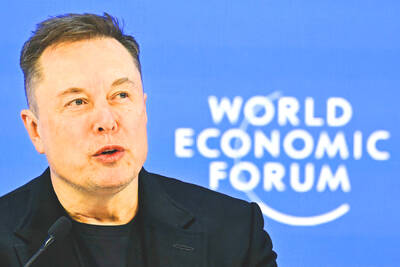
Elon Musk’s lieutenants have reached out to chip industry suppliers, including Applied Materials Inc, Tokyo Electron Ltd and Lam Research Corp, for his envisioned Terafab, early steps in an audacious and likely arduous attempt to break into the production of cutting-edge chips. Staff working for the joint venture between Tesla Inc and Space Exploration Technologies Corp (SpaceX) have sought price quotes and delivery times for an array of chipmaking gear, people familiar with the matter said. In past weeks, they’ve contacted makers of photomasks, substrates, etchers, depositors, cleaning devices, testers and other tools, according to the people, who asked not to

Taichung reported the steepest fall in completed home prices among the six special municipalities in the first quarter of this year, data compiled by Taiwan Realty Co (台灣房屋) showed yesterday. From January through last month, the average transaction price for completed homes in Taichung fell 8 percent from a year earlier to NT$299,000 (US$9,483) per ping (3.3m²), said Taiwan Realty, which compiled the data based on the government’s price registration platform. The decline could be attributed to many home buyers choosing relatively affordable used homes to live in themselves, instead of newly built homes in the city’s prime property market, Taiwan Realty
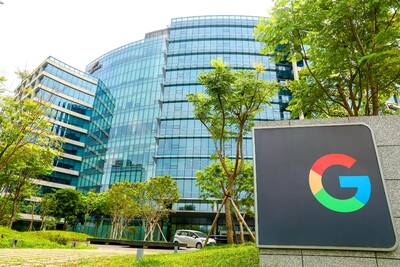
The government yesterday approved applications by Alphabet Inc’s Google to invest NT$27.08 billion (US$859.98 million) in Taiwan, the Ministry of Economic Affairs said in a statement. The Department of Investment Review approved two investments proposed by Google, with much of the funds to be used for data processing and electronic information supply services, as well as inventory procurement businesses in the semiconductor field, the ministry said. It marks the second consecutive year that Google has applied to increase its investment in Taiwan. Google plans to infuse NT$25.34 billion into Charter Investments Ltd (特許投資顧問) through its Singapore-based subsidiary Fructan Holdings Singapore Pte Ltd, and
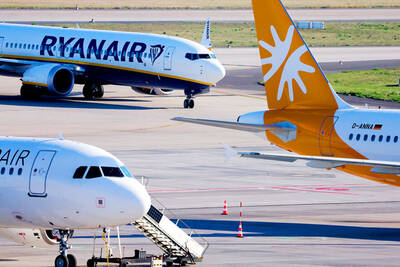
JET JUICE: The war on Iran’s secondary effects have seen fuel prices skyrocket, knocking flight schedules down to earth in return as airlines struggle with costs Airline passengers should brace for more irritation in the next few months as carriers worldwide cancel flights and ground planes to cope with stratospheric increases in jet-fuel prices. Dutch flag carrier KLM is the latest company to cut its schedule, saying on Thursday that it would scrap 80 return flights at Amsterdam’s Schiphol Airport in the coming month. That puts it in the same league as United Airlines Holdings Inc, Deutsche Lufthansa AG and Cathay Pacific Airways Ltd, which have all pruned itineraries to mitigate costs. Global capacity for next month has been reduced by about 3 percentage points, with all


 RSS
RSS