


Federal regulators on Friday closed an investigation of multinational nutritional supplements company Herbalife Ltd, which has for years been dogged by accusations that it was run as an elaborate pyramid scheme.
Though Herbalife was ordered to restructure its US operations and pay a US$200 million settlement, it avoided being classified by the US as a pyramid scheme.
According to the settlement, Herbalife must rework the way in which it pays its salespeople. They must be compensated for selling Herbalife products and the company must scrap incentives that reward them for recruiting other salespeople.
A business model that rewards participants for bringing in others to take part in an enterprise is essentially the base model of a pyramid scheme.
“The settlements are an acknowledgment that our business model is sound and underscore our confidence in our ability to move forward successfully, otherwise we would not have agreed to the terms,” Herbalife chairman and CEO Michael Johnson said.
News that the US Federal Trade Commission (FTC) was closing its two-year investigation without labeling Herbalife as a pyramid scheme sent shares soaring by 16 percent at the open of trade.
The company’s shares were hammered almost four years ago when a prominent hedge fund manager unleashed a blistering attack on the company. Since that time, Herbalife has become a proxy battlefield for major Wall Street players who took opposing sides, some shorting the company’s stock believing it would collapse, while others bought huge caches of Herbalife shares.
One of the most vocal supporters has been activist investor and billionaire Carl Icahn, who built up an 18 percent stake in the company after it came under assault from hedge fund manager Bill Ackman in 2012.
On Friday, Herbalife announced that it was boosting Icahn’s stock ownership limit from 25 percent to 34.99 percent.
“The FTC settlement announced today [Friday], coming after a two-year investigation also concluded that Herbalife is not a pyramid scheme — a conclusion that obviously vindicates our research and conviction,” Icahn said in a printed release.
“While Bill Ackman and I are on friendly terms, we have agreed to disagree (vehemently) on this subject,” the statement said.
The two had once sparred when they both called into the business channel CNBC, with Ackman calling Icahn a bully, and Icahn saying that Ackman reminded him of a little boy crying on a playground.
On Friday, Ackman’s Pershing Square Capital Management LP issued a statement to say it was standing behind its characterization of Herbalife.
“While it appears that Herbalife negotiated away the words ‘pyramid scheme’ from the settlement agreement, the FTC’s findings are clear,” it said.
Pershing Square said that it foresees Herbalife’s top distributors and others leaving the company once its restructuring is fully implemented.
A number of Wall Street heavyweights, from George Soros to Michael Gordon, at some point took sizeable positions in Herbalife against Ackman.
However, under requirements of the deal it struck with the FTC, Herbalife is facing some significant hurdles going forward.
At least 80 percent of Herbalife’s product sales must come from “legitimate end-users,” the FTC said.
That is exactly the contention that Ackerman first made four years ago, that Herbalife was able to generate huge sales because so much of its products were sold to its own salespeople, who in turn would have to sell the products to turn a profit themselves.
Shares of Herbalife gained more than 9 percent in Friday afternoon trading.
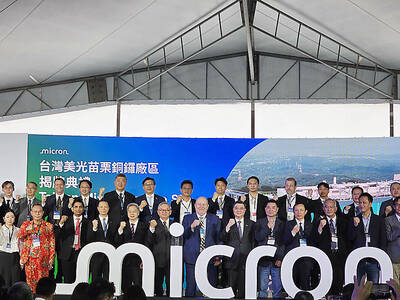
UNPRECEDENTED PACE: Micron Technology has announced plans to expand manufacturing capabilities with the acquisition of a new chip plant in Miaoli Micron Technology Inc unveiled a newly acquired chip plant in Miaoli County yesterday, as the company expands capacity to meet growing demand for advanced DRAM chips, including high-bandwidth memory chips amid the artificial intelligence boom. The plant in Miaoli County’s Tongluo Township (銅鑼), which Micron acquired from Powerchip Semiconductor Manufacturing Corp (力積電) for US$1.8 billion, is expected to make a sizeable capacity contribution to the company from fiscal 2028, the company said in a statement. It would be an extended production site of Micron’s large-scale manufacturing hub in Taichung, the company said. As the global semiconductor industry is racing to reach US$1 trillion

Singapore-based ride-hailing and delivery giant Grab Holdings Ltd has applied for regulatory approval to acquire the Taiwan operations of Germany-based Delivery Hero SE's Foodpanda in a deal valued at about US$600 million. Grab submitted the filing to the Fair Trade Commission on Friday last week, with the transaction subject to regulatory review and approval, the company said in a statement yesterday. Its independent governance structure would help foster a healthy and competitive market in Taiwan if the deal is approved, Grab said. Grab, which is listed on the NASDAQ, said in the filing that US-based Uber Technologies Inc holds about 13 percent of
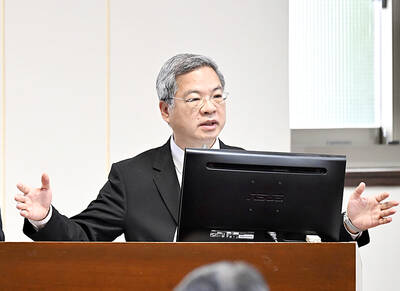
ABOVE LEGAL REQUIREMENT: The Ministry of Economic Affairs is prepared if LNG supply is disrupted, with more than the legal requirement of 11 days of inventory Taiwan has largely secured liquefied natural gas (LNG) supplies through May and arranged about half of June’s supply, Minister of Economic Affairs Kung Ming-hsin (龔明鑫) said yesterday. Since the Middle East conflict began on Feb. 28, Taiwan’s LNG inventories have remained more than 12 days, exceeding the legal requirement of 11 days, indicating no major supply concerns for domestic gas and electricity, Kung said at a meeting of the legislature’s Economics Committee in Taipei. The ministry aims to increase the figure to 14 days by the end of next year, he said. While one or two LNG or crude oil shipments for May

Taiwan’s food delivery market could undergo a major shift if Singapore-based Grab Holdings Ltd completes its planned acquisition of Delivery Hero SE’s Foodpanda business in Taiwan, industry experts said. Grab on Monday last week announced it would acquire Foodpanda’s Taiwan operations for US$600 million. The deal is expected to be finalized in the second half of this year, with Grab aiming to complete user migration to its platform by the first half of next year. A duopoly between Uber Eats and Foodpanda dominates Taiwan’s delivery market, a structure that has remained intact since the Fair Trade Commission (FTC) blocked Uber Technologies Inc’s


 RSS
RSS