


CTBC Charity Foundation (中國信託慈善基金會) yesterday kicked off its 31st annual “Light Up A Life” charity drive, that aims to raise NT$100 million (US$3.035 million) to aid the nation’s disadvantaged children.
CTBC Financial Holding Co (中信金控) led the fundraising effort with a NT$2 million donation.
“Although I was saddened to learn of the plight of disadvantaged children living in rural regions, I was also inspired by selfless compassion displayed of many individuals who have dedicated their life to helping disadvantaged children,” foundation chairman Jeffery Koo (辜仲諒) said at a press event yesterday.

In the past, children were put under the care of their grandparents as their parents need to work out of town to support the family, but in recent years there had been a rise in abandonment and abuse, Koo said, recounting his travels across Taiwan’s rural regions.
“In some ways, orphaned children are luckier, as they have been spared the pain of being abandoned,” Koo said. Many children were also abused by their parents, who are troubled by drug addiction and alcoholism, Koo added.
But Koo said that he was also inspired by a new generation of young teachers, many of them were once disadvantaged children, who have returned to their homes to help to complete the cycle of compassion. He also recounted an elementary school principal who took out a personal loan to build a dormitory to house abandoned children.
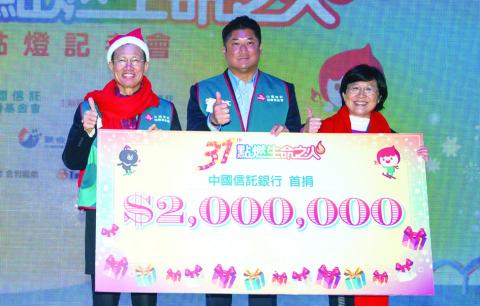
“Their efforts must be supported with resources, and this situation has given me new meaning to the concept of resource reallocation,” Koo said, noting that CTBC Charity Foundation cannot take on the effort alone.
Koo made the remarks at a commencement ceremony for the charity drive, where the foundation lit a 17-meter Christmas tree. The event featured a violin performance by a class of elementary school students from Huashan Elementary School (華山國小) in Yunlin’s Kukeng Township (古坑), who were able to pursue their interest in music with the help of the foundation.
In its three-decade history, the “Light Up A Life” initiative has helped raised about NT$1.5 billion, helping more than 330,000 disadvantaged children throughout Taiwan’s rural regions, providing them with the tools to have a chance to pursue their aspirations.
Donations made be made via fax and postal remittance, or at the counters of 148 CTBC Bank Co Ltd (中國信託銀行) branches, or the bank’s 5,000 ATMs nationwide.
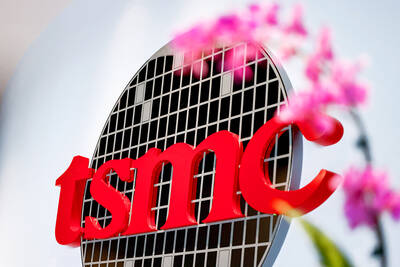
Taiwan Semiconductor Manufacturing Co (TSMC, 台積電) has approved a capital budget of US$31.28 billion for production expansion to meet long-term development needs during the artificial intelligence (AI) boom. The company’s board meeting yesterday approved the capital appropriation plan for purposes such as the installation of advanced technology capacity and fab construction, the world’s largest contract chipmaker said in a statement. At an earnings conference last month, TSMC forecast that its capital expenditure for this year would be at the higher end of the US$52 billion to US$56 billion range it forecast in January in response to robust demand for 5G, AI and
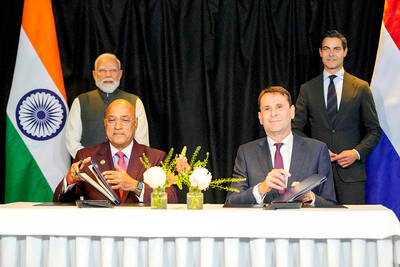
NEW MARKET: The partnership opens up India to the Dutch company, which already has a strong hold in the semiconductor market of South Korea, Taiwan and China ASML Holding NV entered into a partnership agreement with Tata Electronics Pvt Ltd aimed at ramping up India’s goal to develop domestic chip-manufacturing capabilities. The Dutch company’s technology would help power Tata Electronics’ planned 300 millimeter (mm) semiconductor foundry in Gujarat, according to a joint statement from the two companies on Saturday. The signing of a memorandum of understanding coincides with a visit by Indian Prime Minister Narendra Modi to the Netherlands, which is looking to deepen bilateral relations with New Delhi. ASML, whose top customers include Taiwan Semiconductor Manufacturing Co (台積電) and Samsung Electronics Co, makes lithography machines that can print
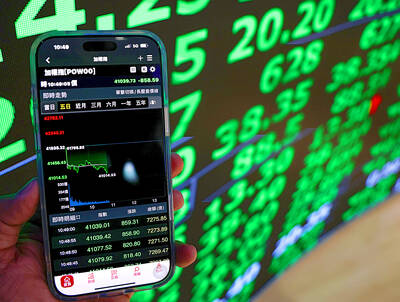
PORTFOLIO REBALANCING: The adjustments in three global equity indices reflect rising investor appetite for semiconductor and artificial intelligence-related stocks Taiwan’s weighting in major global equity indices compiled by MSCI Inc is to rise modestly following the latest quarterly review, underscoring the market’s expanding role in emerging-market portfolios, as global investors continue to favor the nation’s technology sector. Taiwan’s weighting in the MSCI Emerging Markets Index is to increase by 0.30 percentage points to 23.76 percent, after the changes take effect at the close of the May 29 session. Its weighting in the MSCI All-Country Asia ex-Japan Index is to rise 0.37 percentage points to 27.16 percent, while that in the MSCI All Country World Index is to edge up slightly to
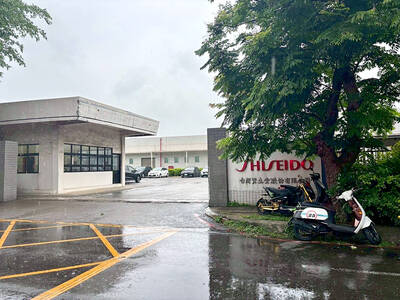
The Hsinchu County Government’s Labor Affairs Department yesterday said that it has received a plan from cosmetics brand Taiwan Shiseido Co (台灣資生堂) detailing mass layoffs at its plant in Hukou Township (湖口). While the labor authorities did not disclose the number of employees to be laid off, Japanese news media earlier in the day reported that the closure of the company’s factory in Hukou would result in 170 employees losing their jobs. Shiseido followed the law by reporting its layoff plan, the department said, adding that authorities would closely monitor negotiations between the management and affected employees and step in if any


 RSS
RSS