


A new measure allowing life insurance policies to be converted into other types of insurance policies took effect yesterday, which should benefit both policyholders and insurance companies, especially Cathay Life Insurance (國泰人壽) and Shin Kong Life Insurance Company (新光人壽), the government and analysts said.
The new measure enables policyholders to convert life insurance policies into annuity, medical and long-term care insurance policies the Financial Supervisory Commission said.
The commission said on Thursday that the policy conversion would also allow policyholders to receive benefits while alive. For example, once life insurance policyholders changed over their contracts to health insurance, the insurers would pay them when they suffered disease or injury.
Moreover, as people aged 50 and older typically face difficulties in subscribing to new medical and long-term care insurance policies, the new measure looks attractive, according to UBS Securities analyst Kelvin Chu (朱曉暐).
The Life Insurance Association of the ROC (人壽保險公會) also believes that in an aging society like Taiwan, such conversions would benefit elderly policyholders.
However, to safeguard the rights of policyholders, the commission requires a three-year “cooling-off” period that allows policyholders to revert to their original policies if they wish, unless they take a payout during that three-year period.
Life insurers are not allowed to solicit the insured to make any conversion through inappropriate marketing campaigns, with offenders subject to a fine ranging between NT$600,000 and NT$3 million (US$100,500), the commission said.
For life insurance companies, the new measure would also help them better manage their outstanding “Legacy policies” and thus narrow the negative interest spread arising from signing high-guaranteed rate policies in the past, Chu said. Legacy policies refer to those with a guaranteed policy return of 4 percent or above.
Chu said her analysis suggests that every 10 percent conversion could reduce Taiwanese insurers’ cost of liability by between 6 and 21 basis points, while leading to an earnings accretion of from 5 to 30 percent for the major players.
Cathay Life and Shin Kong Life, could see from 14 to 30 percent increase in earnings in the long term, on the premise of a 10 percent conversion in legacy policies, she said.
However, Cathay Life executive vice president Lin Chao-ting (林昭廷) said yesterday that it is hard to gauge the impact of the policy conversion for the time being.
“We welcome and will support the policy though it may bring longevity and mortality risks,” Lin said at the company's quarterly meeting with investors in Taipei.
Analysts said it is estimated that at least 4 million life insurance policies — worth more than NT$1 trillion in the local market — are eligible for the changes.
Additional reporting by Crystal Hsu and CNA
This story has been updated since it was first published.
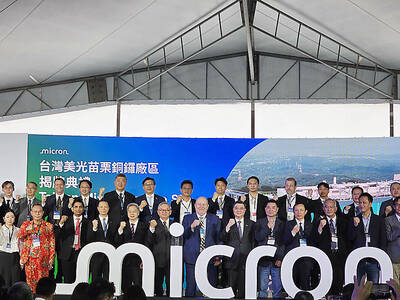
UNPRECEDENTED PACE: Micron Technology has announced plans to expand manufacturing capabilities with the acquisition of a new chip plant in Miaoli Micron Technology Inc unveiled a newly acquired chip plant in Miaoli County yesterday, as the company expands capacity to meet growing demand for advanced DRAM chips, including high-bandwidth memory chips amid the artificial intelligence boom. The plant in Miaoli County’s Tongluo Township (銅鑼), which Micron acquired from Powerchip Semiconductor Manufacturing Corp (力積電) for US$1.8 billion, is expected to make a sizeable capacity contribution to the company from fiscal 2028, the company said in a statement. It would be an extended production site of Micron’s large-scale manufacturing hub in Taichung, the company said. As the global semiconductor industry is racing to reach US$1 trillion

Singapore-based ride-hailing and delivery giant Grab Holdings Ltd has applied for regulatory approval to acquire the Taiwan operations of Germany-based Delivery Hero SE's Foodpanda in a deal valued at about US$600 million. Grab submitted the filing to the Fair Trade Commission on Friday last week, with the transaction subject to regulatory review and approval, the company said in a statement yesterday. Its independent governance structure would help foster a healthy and competitive market in Taiwan if the deal is approved, Grab said. Grab, which is listed on the NASDAQ, said in the filing that US-based Uber Technologies Inc holds about 13 percent of
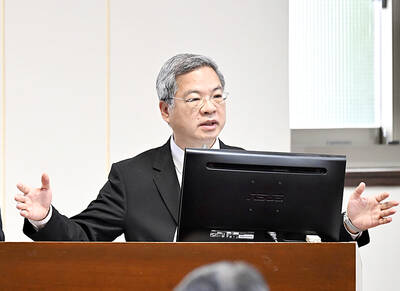
ABOVE LEGAL REQUIREMENT: The Ministry of Economic Affairs is prepared if LNG supply is disrupted, with more than the legal requirement of 11 days of inventory Taiwan has largely secured liquefied natural gas (LNG) supplies through May and arranged about half of June’s supply, Minister of Economic Affairs Kung Ming-hsin (龔明鑫) said yesterday. Since the Middle East conflict began on Feb. 28, Taiwan’s LNG inventories have remained more than 12 days, exceeding the legal requirement of 11 days, indicating no major supply concerns for domestic gas and electricity, Kung said at a meeting of the legislature’s Economics Committee in Taipei. The ministry aims to increase the figure to 14 days by the end of next year, he said. While one or two LNG or crude oil shipments for May

Taiwan’s food delivery market could undergo a major shift if Singapore-based Grab Holdings Ltd completes its planned acquisition of Delivery Hero SE’s Foodpanda business in Taiwan, industry experts said. Grab on Monday last week announced it would acquire Foodpanda’s Taiwan operations for US$600 million. The deal is expected to be finalized in the second half of this year, with Grab aiming to complete user migration to its platform by the first half of next year. A duopoly between Uber Eats and Foodpanda dominates Taiwan’s delivery market, a structure that has remained intact since the Fair Trade Commission (FTC) blocked Uber Technologies Inc’s


 RSS
RSS