


Taiwan has the potential to become a biomedical powerhouse in three years if the nation can continue to provide capital access to the industry, Chen Lan-bo (陳良博), cofounder of AIDS drug developer TaiMed Biologics Inc (中裕新藥), said last week.
Chen, an emeritus at Harvard Medical School, expects new drug companies in Taiwan could generate US$30 billion in revenue a year, with 10 companies, including TaiMed, OBI Pharma Inc (台灣浩鼎), Taiwan Liposome Co (台灣微脂體) and TaiGen Biotechnology Co (太景生技) able to acquire drug permits over the next three years.
Chen said his optimism should encourage investors, including government officials, to continue funding the industry and help attract major global pharmaceutical companies to seek for potential collaboration opportunities here.
MIRACLE
“It is a miracle for the capital market in Taiwan to become so supportive to the industry,” Chen said at a press conference on Saturday. “The phenomenon was totally unimaginable five to 10 years ago.”
In 2007, Chen and David Ho (何大一), well known for his study on combination therapy to treat AIDS, founded TaiMed in Taipei with investments from the state-run National Development Fund and the private sector.
Chen said funding is especially important to the industry, but relying on stock markets might not be enough. Rather, private hedge funds or the government should also play a role to offer money in need, he said.
“The government should establish rules for local insurance companies to invest their money in the biotechnology industry, as pension funds in the US are one of the main sources for capital,” he said.
INVESTMENT TALKS
About eight years ago, when Chen worked as senior scientific adviser for New York-based hedge fund Caxton Health Holdings, he had talks with nine Taiwanese insurance companies about investing in biomedical firms.
However, their investment plans were denied by the government, as officials perceived making investment in the industry as too risky, he said.
According to Chen, the nine companies had idle funds of about NT$8 trillion to NT$15 trillion (US$267 trillion to US$501 trillion) at that time, and even 1 percent of the money would be helpful to many biomedical firms.
Asked whether there is a bubble for the biomedical industry in Taiwan, Chen said the same question was asked in the US in the past when the industry began to flourish.
“However, for the industry in Taiwan to really make some achievements, to have enough people believing the industry would be successful is a precondition,” he said.
At the conference on Saturday, Ho, the scientific director and CEO of Aaron Diamond AIDS Research Center at the Rockefeller University, said that for Taiwan to have a strong biotechnology industry like the US, the nation should adopt a more bottom-up decisionmaking process to allow scientists “the freedom to roam and explore,” rather than requiring them to focus on topics policymakers and officials are interested in.
LEARNING FROM FLIES
“We learn something about the immune system from the studies of flies. A fruit fly taught us that there is a whole part of our immune system that 20 years ago we didn’t know anything about,” Ho said. “It is uninhibited research that makes scientific breakthroughs, and important products emerge from those breakthroughs.”
Unlike companies in South Korea, where large private firms are backed by the government, the success of small biotechnology firms in Taiwan is the result of contributions from private citizens, including Samuel Yin (尹衍樑), chairman of Ruentex Group (潤泰集團) who helped fund TaiMed, Ho said, adding that although these firms are still young and deliver “more promises than products,” they will be more successful in coming years.
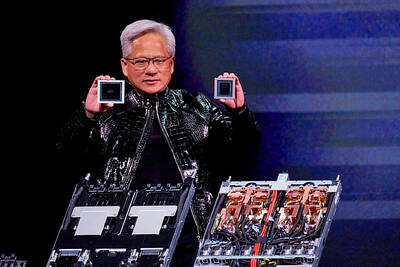
Nvidia Corp chief executive officer Jensen Huang (黃仁勳) on Monday introduced the company’s latest supercomputer platform, featuring six new chips made by Taiwan Semiconductor Manufacturing Co (TSMC, 台積電), saying that it is now “in full production.” “If Vera Rubin is going to be in time for this year, it must be in production by now, and so, today I can tell you that Vera Rubin is in full production,” Huang said during his keynote speech at CES in Las Vegas. The rollout of six concurrent chips for Vera Rubin — the company’s next-generation artificial intelligence (AI) computing platform — marks a strategic

Enhanced tax credits that have helped reduce the cost of health insurance for the vast majority of US Affordable Care Act enrollees expired on Jan.1, cementing higher health costs for millions of Americans at the start of the new year. Democrats forced a 43-day US government shutdown over the issue. Moderate Republicans called for a solution to save their political aspirations this year. US President Donald Trump floated a way out, only to back off after conservative backlash. In the end, no one’s efforts were enough to save the subsidies before their expiration date. A US House of Representatives vote
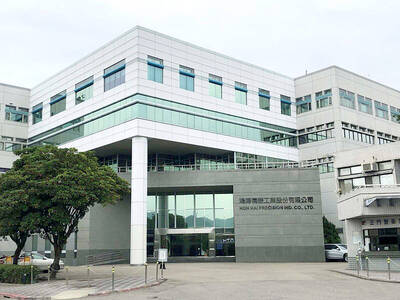
REVENUE PERFORMANCE: Cloud and network products, and electronic components saw strong increases, while smart consumer electronics and computing products fell Hon Hai Precision Industry Co (鴻海精密) yesterday posted 26.51 percent quarterly growth in revenue for last quarter to NT$2.6 trillion (US$82.44 billion), the strongest on record for the period and above expectations, but the company forecast a slight revenue dip this quarter due to seasonal factors. On an annual basis, revenue last quarter grew 22.07 percent, the company said. Analysts on average estimated about NT$2.4 trillion increase. Hon Hai, which assembles servers for Nvidia Corp and iPhones for Apple Inc, is expanding its capacity in the US, adding artificial intelligence (AI) server production in Wisconsin and Texas, where it operates established campuses. This
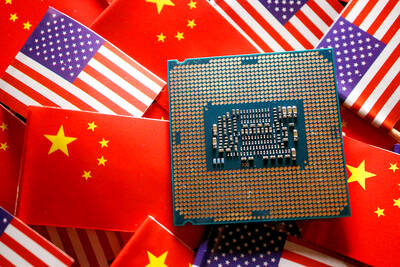
US President Donald Trump on Friday blocked US photonics firm HieFo Corp’s US$3 million acquisition of assets in New Jersey-based aerospace and defense specialist Emcore Corp, citing national security and China-related concerns. In an order released by the White House, Trump said HieFo was “controlled by a citizen of the People’s Republic of China” and that its 2024 acquisition of Emcore’s businesses led the US president to believe that it might “take action that threatens to impair the national security of the United States.” The order did not name the person or detail Trump’s concerns. “The Transaction is hereby prohibited,”


 RSS
RSS