


Oracle Corp agreed to buy Micros Systems Inc for US$5.3 billion, as chief executive officer Larry Ellison seeks to reignite slowing growth by adding software for hotels and restaurants.
Micros stockholders will get US$68 a share in cash, 18 percent more than the closing price on Monday last week, a day before Bloomberg reported the companies were near a deal. Net of Micros’s cash, the value is US$4.6 billion, Oracle said in a statement on Monday.
The Redwood City, California-based software maker came close to acquiring Micros six years ago only for the deal to fall through at the last minute.
Oracle, which has acquired about 100 companies in the past decade, has seen the incremental revenue gains accrued through those deals dry up. After a late entry to the cloud-computing market, sales have declined or gained less than 5 percent in each of the past 11 quarters as customers gravitate to rivals selling Internet-based software. Last week, Oracle posted profit and sales that missed analysts’ estimates.
“Micros gives them a strong foothold in the hotel and hospitality industry,” said Richard Williams, an analyst at Summit Research Partners LLC in Summit, New Jersey, who recommends holding Oracle’s stock.
“That will be an important asset for them and will tie well into their other systems such as their engineer systems and cloud-related offerings,” he said.
The deal, expected to close in the second half of the year, is expected to add to Oracle’s earnings immediately, excluding some items, chief financial officer Safra Catz said in the statement.
The acquisition would be Oracle’s largest since the US$5.7 billion takeover of Sun Microsystems Inc in 2010, data compiled by Bloomberg show.
FBR Capital Markets analyst Daniel Ives expects more acquisitions after the Micros purchase.
“It’s clear they need to do deals on the horizon in order to accelerate growth,” said Ives, who rates Oracle’s shares outperform. “They were late to the cloud.”
Oracle has almost US$39 billion of cash and marketable securities, Catz said on a conference call last week.
Based in Columbia, Maryland, Micros sells point-of-sale systems for hotels, restaurants and retailers.
Six years ago, Micros chairman Tom Giannopoulos, who was CEO at the time, flew from Maryland to California to sign a deal with Oracle, only to have the transaction fall through, according to one person with knowledge of the matter.
Dealmaking in the technology space is accelerating as established software companies try to navigate the shift to cloud computing and fend off challenges from new competitors. This month, SanDisk Corp agreed to buy Fusion-io Inc, which provides storage to Facebook Inc and Apple Inc, for about US$1.1 billion.
Oracle has long been an acquisition machine under Ellison, who is worth US$46.6 billion and ranks eighth on the Bloomberg Billionaires Index. He led Oracle Team USA to victory in the America’s Cup last year and agreed in 2012 to buy most of the Hawaiian island of Lanai for an undisclosed sum.
Micron Memory Taiwan Co (台灣美光), a subsidiary of US memorychip maker Micron Technology Inc, has been granted a NT$4.7 billion (US$149.5 million) subsidy under the Ministry of Economic Affairs A+ Corporate Innovation and R&D Enhancement program, the ministry said yesterday. The US memorychip maker’s program aims to back the development of high-performance and high-bandwidth memory chips with a total budget of NT$11.75 billion, the ministry said. Aside from the government funding, Micron is to inject the remaining investment of NT$7.06 billion as the company applied to participate the government’s Global Innovation Partnership Program to deepen technology cooperation, a ministry official told the
Taiwan Semiconductor Manufacturing Co (TSMC, 台積電), the world’s leading advanced chipmaker, officially began volume production of its 2-nanometer chips in the fourth quarter of this year, according to a recent update on the company’s Web site. The low-key announcement confirms that TSMC, the go-to chipmaker for artificial intelligence (AI) hardware providers Nvidia Corp and iPhone maker Apple Inc, met its original roadmap for the next-generation technology. Production is currently centered at Fab 22 in Kaohsiung, utilizing the company’s first-generation nanosheet transistor technology. The new architecture achieves “full-node strides in performance and power consumption,” TSMC said. The company described the 2nm process as
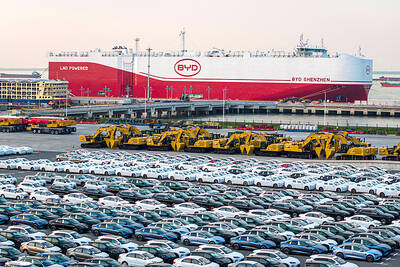
POTENTIAL demand: Tesla’s chance of reclaiming its leadership in EVs seems uncertain, but breakthrough in full self-driving could help boost sales, an analyst said Chinese auto giant BYD Co (比亞迪) is poised to surpass Tesla Inc as the world’s biggest electric vehicle (EV) company in annual sales. The two groups are expected to soon publish their final figures for this year, and based on sales data so far this year, there is almost no chance the US company led by CEO Elon Musk would retain its leadership position. As of the end of last month, BYD, which also produces hybrid vehicles, had sold 2.07 million EVs. Tesla, for its part, had sold 1.22 million by the end of September. Tesla’s September figures included a one-time boost in
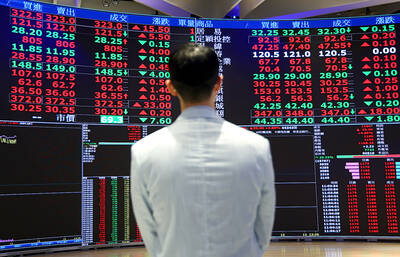
Shares in Taiwan closed at a new high yesterday, the first trading day of the new year, as contract chipmaker Taiwan Semiconductor Manufacturing Co (TSMC, 台積電) continued to break records amid an artificial intelligence (AI) boom, dealers said. The TAIEX closed up 386.21 points, or 1.33 percent, at 29,349.81, with turnover totaling NT$648.844 billion (US$20.65 billion). “Judging from a stronger Taiwan dollar against the US dollar, I think foreign institutional investors returned from the holidays and brought funds into the local market,” Concord Securities Co (康和證券) analyst Kerry Huang (黃志祺) said. “Foreign investors just rebuilt their positions with TSMC as their top target,


 RSS
RSS