


EirGenix Inc (台康生技) has high hopes for its sales of recombinant proteins. The reason for this is that the proteins’ share of annual growth is expected to increase more than that of all other biopharmaceutical products in coming years, according to company president and chief executive officer Liu Lee-cheng (劉理成) in an interview on Friday.
“As a contract developer and manufacturer, EirGenix will generate revenue by offering services to other drug companies that will enable them to make recombinant proteins and to develop biosimilar drugs,” Liu said in the company’s headquarters in Sijhih (汐止), New Taipei City (新北市).
EirGenix is a brand new venture between government agencies and private investors that was launched on Tuesday. It has the nation’s only plant for making recombinant proteins that are less toxic, while having a higher potency than other drugs.
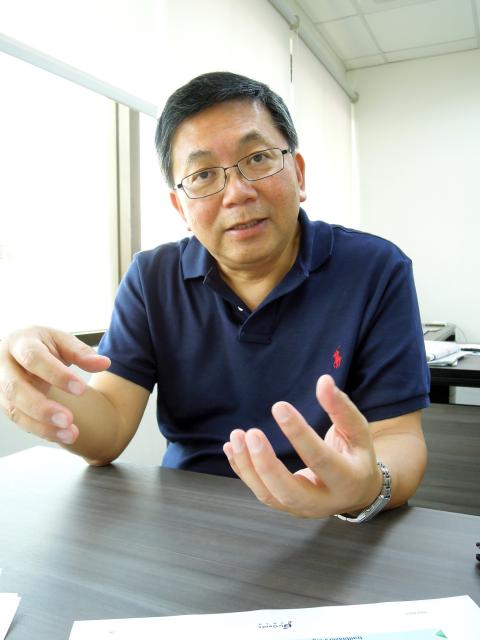
Photo: Camaron Kao, Taipei Times
The factory has two mammalian cell culture bioreactors, one with a capacity of 300 liters and the other of 500 liters, according to the company.
The recombinant protein market is huge. Global sales account for one-third of total sales of all biopharmaceutical products. In 2010, global biopharmaceutical sales were US$134 billion and the numbers are expected to grow 4.6 percent every year on average to US$176 billion in 2016.
Yet of this, sales of recombinant proteins will be growing at the compound annual growth rate of 8.2
percent over the same period, Liu said.
Furthermore, between this year and 2015, patents of 32 recombinant proteins have expired, opening up a market of around US$45 billion for biosimilars, he said.
Based on data provided by the government-funded Development Center for Biotechnology (DCB), there are 16 recombinant protein drugs and biosimilars under phase one and two clinical trials in Taiwan. Six drugs are under phase three study.
“However, it will not be enough for us to just offer services to Taiwanese companies — we are aiming to find customers in Japan and Germany as well,” Liu said.
To meet the potential demand from an expanding customer base, the company plans to expand its capacity by replacing its bioreactor of 300 liters with a single use bio-
reactor of 1,000 liters in the second quarter next year, and by building two production lines of 3,000 liters next year, with one of the lines to be operational in 2016, Liu said.
“With larger capacity, we can take orders from customers who require 1,000 liters or more,” Liu said, adding that some customers prefer larger orders with lower average costs.
EirGenix’s factory was built by the DCB in 2005 to promote the development of recombinant proteins. Active pharmaceutical ingredient maker Formosa Laboratories Inc (台耀化學) won the bid to operate the factory in January and set up the business with an investment of NT$90 million (US$3.03 million) from the DCB and NT$60 million from the National Development Fund. EirGenix’s capital is currently valued at NT$540 million.
The company’s factories will also be used for the clinical trials of biosimilars transferred from the DCB: EG-001, which is used to treat breast cancer, and EG-002, which is used to treat colorectal cancer, as well as breast cancer, Liu said.
The company will file an investigational new drug application for EG-001 in the US and Europe next year, while EG-002 will have to wait until 2015, Liu said, adding that the company will find local partners in every country to register and market these drugs.
He estimated the market values for both drugs are about US$6 billion each. To fund its capital spending, and research and development, the company plans to raise another NT$450 million to NT$600 million in the second half of next year. The company is looking for foreign investors to participate in the fund-raising, Liu said.
However, EirGenix is not without possible competitors. Mycenax Biotech Inc (永昕生醫) is building a factory with a capacity of 2,000 liters, while Amaran Biotechnology Inc (潤雅生技) is constructing a factory for the manufacture of Botox, which is widely used in cosmetic surgery. PharmaEssentia Corp (藥華醫藥) has a factory to make 1 million units of drugs a year.
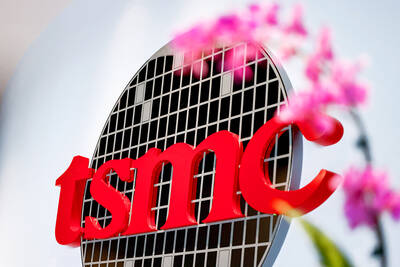
Taiwan Semiconductor Manufacturing Co (TSMC, 台積電) has approved a capital budget of US$31.28 billion for production expansion to meet long-term development needs during the artificial intelligence (AI) boom. The company’s board meeting yesterday approved the capital appropriation plan for purposes such as the installation of advanced technology capacity and fab construction, the world’s largest contract chipmaker said in a statement. At an earnings conference last month, TSMC forecast that its capital expenditure for this year would be at the higher end of the US$52 billion to US$56 billion range it forecast in January in response to robust demand for 5G, AI and
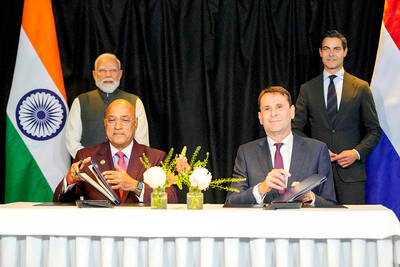
NEW MARKET: The partnership opens up India to the Dutch company, which already has a strong hold in the semiconductor market of South Korea, Taiwan and China ASML Holding NV entered into a partnership agreement with Tata Electronics Pvt Ltd aimed at ramping up India’s goal to develop domestic chip-manufacturing capabilities. The Dutch company’s technology would help power Tata Electronics’ planned 300 millimeter (mm) semiconductor foundry in Gujarat, according to a joint statement from the two companies on Saturday. The signing of a memorandum of understanding coincides with a visit by Indian Prime Minister Narendra Modi to the Netherlands, which is looking to deepen bilateral relations with New Delhi. ASML, whose top customers include Taiwan Semiconductor Manufacturing Co (台積電) and Samsung Electronics Co, makes lithography machines that can print
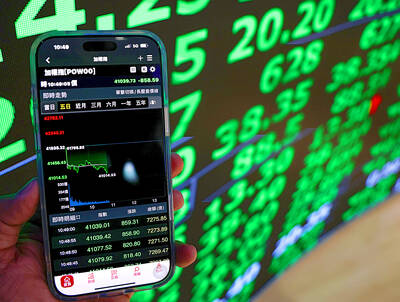
PORTFOLIO REBALANCING: The adjustments in three global equity indices reflect rising investor appetite for semiconductor and artificial intelligence-related stocks Taiwan’s weighting in major global equity indices compiled by MSCI Inc is to rise modestly following the latest quarterly review, underscoring the market’s expanding role in emerging-market portfolios, as global investors continue to favor the nation’s technology sector. Taiwan’s weighting in the MSCI Emerging Markets Index is to increase by 0.30 percentage points to 23.76 percent, after the changes take effect at the close of the May 29 session. Its weighting in the MSCI All-Country Asia ex-Japan Index is to rise 0.37 percentage points to 27.16 percent, while that in the MSCI All Country World Index is to edge up slightly to
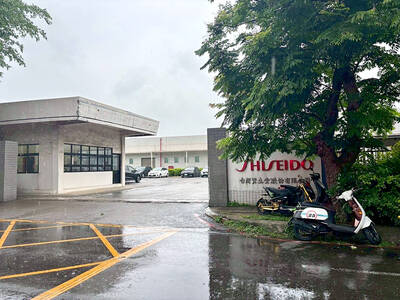
The Hsinchu County Government’s Labor Affairs Department yesterday said that it has received a plan from cosmetics brand Taiwan Shiseido Co (台灣資生堂) detailing mass layoffs at its plant in Hukou Township (湖口). While the labor authorities did not disclose the number of employees to be laid off, Japanese news media earlier in the day reported that the closure of the company’s factory in Hukou would result in 170 employees losing their jobs. Shiseido followed the law by reporting its layoff plan, the department said, adding that authorities would closely monitor negotiations between the management and affected employees and step in if any


 RSS
RSS