


Fonterra yesterday apologized for a milk powder contamination scare in China, which has raised safety concerns that threaten New Zealand’s US$9 billion annual dairy trade and Fonterra’s own business in a top market.
Fonterra, the world’s biggest dairy exporter, said over the weekend that it had found bacteria in some products that could cause botulism. It said contaminated whey protein concentrate had been exported to China, Malaysia, Vietnam, Thailand and Saudi Arabia, and used in products, including infant milk powder and sports drinks.
At a media briefing in Beijing after hurriedly flying to deal with the fallout in one of its largest markets, Fonterra chief executive Theo Spierings said food safety was the company’s top priority.
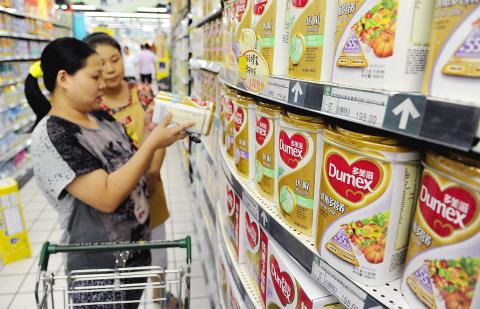
Photo: Reuters
“We really regret the distress and anxiety which this issue could have caused,” he said. “We totally understand there is concern by parents and other consumers around the world. Parents have the right to know that infant nutrition and other dairy products are harmless and safe.”
The company was not facing a ban on its products in China, only restrictions on whey protein concentrate, he said, adding that 38 tonnes of whey protein concentrate were contaminated, of which 18 tonnes were used in its own factories in Australia and New Zealand to produce milk formula for two customers.
In China, Spierings said that products from two companies — Coca-Cola Co and Chinese food firm Wahaha (娃哈哈) — are safe because any bacteria would be killed during processing. Protein drinks made by Auckland-based Vitaco Health Group, another Fonterra customer, were also unaffected for the same reason.
A third company in China, Dumex Baby Food Co (多美滋嬰幼兒食品), a subsidiary of France’s Danone, has told Fonterra that 12 batches could have been affected, he said. Half have been recalled as a precautionary measure and the other half remain in factories.
“None of the products tested by Dumex in China have reported problems,” Spierings said. “There have been no customer complaints.”
Products exported to China under the Karicare brand by another Danone subsidiary, Nutricia, do not contain the contaminated whey protein concentrate, he said.
Fonterra is a major supplier of bulk milk powder products used in infant formula in China, but it had stayed out of the branded space after Chinese dairy company Sanlu (三鹿), in which it had held a large stake, was found to have added melamine — often used in plastics — to bulk up formulas in 2008.
Spierings said the latest problem originated in a pipe in an factory in New Zealand that was seldom used, so a normal cleaning was not sufficient to sanitize it.
Fonterra discovered in March that some whey protein concentrate, produced and sold to customers in May last year, was contaminated. It immediately began testing, but as most of the bacteria’s strains are benign, the company did not find the harmful strain until last month. Customers were informed on July 31, Spierings said.
“The supply chain for infant nutrition powder takes a long time with many steps,” he said.
Initial tests last year did not uncover the harmful bacteria, Spierings said, but a more thorough round of testing in March did.
The affected plant was closed for cleaning after the possibility of a problem was discovered, he said.
He said the problem was isolated to that factory, and he was confident all contaminated products had been found.
China has restricted New Zealand imports of whey products, but Spierings said he expected that the curbs would be lifted as soon as the company furnishes a detailed explanation of what went wrong to Chinese regulators early this week.
The majority of the affected products have already been contained, he said, and the problem will be resolved within two days after all contaminated products have been recalled.
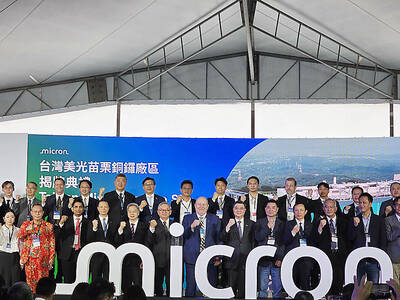
UNPRECEDENTED PACE: Micron Technology has announced plans to expand manufacturing capabilities with the acquisition of a new chip plant in Miaoli Micron Technology Inc unveiled a newly acquired chip plant in Miaoli County yesterday, as the company expands capacity to meet growing demand for advanced DRAM chips, including high-bandwidth memory chips amid the artificial intelligence boom. The plant in Miaoli County’s Tongluo Township (銅鑼), which Micron acquired from Powerchip Semiconductor Manufacturing Corp (力積電) for US$1.8 billion, is expected to make a sizeable capacity contribution to the company from fiscal 2028, the company said in a statement. It would be an extended production site of Micron’s large-scale manufacturing hub in Taichung, the company said. As the global semiconductor industry is racing to reach US$1 trillion

Singapore-based ride-hailing and delivery giant Grab Holdings Ltd has applied for regulatory approval to acquire the Taiwan operations of Germany-based Delivery Hero SE's Foodpanda in a deal valued at about US$600 million. Grab submitted the filing to the Fair Trade Commission on Friday last week, with the transaction subject to regulatory review and approval, the company said in a statement yesterday. Its independent governance structure would help foster a healthy and competitive market in Taiwan if the deal is approved, Grab said. Grab, which is listed on the NASDAQ, said in the filing that US-based Uber Technologies Inc holds about 13 percent of
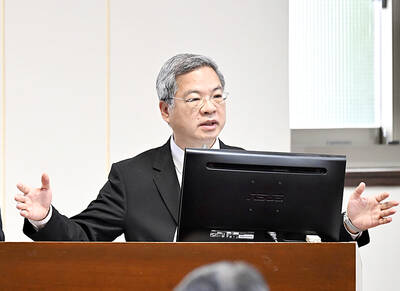
ABOVE LEGAL REQUIREMENT: The Ministry of Economic Affairs is prepared if LNG supply is disrupted, with more than the legal requirement of 11 days of inventory Taiwan has largely secured liquefied natural gas (LNG) supplies through May and arranged about half of June’s supply, Minister of Economic Affairs Kung Ming-hsin (龔明鑫) said yesterday. Since the Middle East conflict began on Feb. 28, Taiwan’s LNG inventories have remained more than 12 days, exceeding the legal requirement of 11 days, indicating no major supply concerns for domestic gas and electricity, Kung said at a meeting of the legislature’s Economics Committee in Taipei. The ministry aims to increase the figure to 14 days by the end of next year, he said. While one or two LNG or crude oil shipments for May

Taiwan’s food delivery market could undergo a major shift if Singapore-based Grab Holdings Ltd completes its planned acquisition of Delivery Hero SE’s Foodpanda business in Taiwan, industry experts said. Grab on Monday last week announced it would acquire Foodpanda’s Taiwan operations for US$600 million. The deal is expected to be finalized in the second half of this year, with Grab aiming to complete user migration to its platform by the first half of next year. A duopoly between Uber Eats and Foodpanda dominates Taiwan’s delivery market, a structure that has remained intact since the Fair Trade Commission (FTC) blocked Uber Technologies Inc’s


 RSS
RSS