


Taiwanese smartphone maker HTC Corp (宏達電) yesterday launched a new flagship product — the latest HTC One — in an attempt to regain market share in an intensely competitive market dominated by Apple Inc and Samsung Electronics Co.
The new high-end smartphone model is seen as the company’s biggest bet to restore its growth momentum after reporting consecutive quarterly revenue declines since the second quarter of last year.
The HTC One, which uses Google’s Android operating system, is equipped with a 4.7-inch full-HD display, and an “ultra-pixel” auto-focus rear camera that has a resolution of just 4 megapixels, but is able to shoot high-quality photos or films like a 13-megapixel camera, the company said.

Photo: Bloomberg
The HTC One is able to transmit data using 4G long-term evolution (LTE) high-speed wireless communication networks.
“Although smartphones are one of the main ways we stay in touch with people and information we care about, conventional designs have failed to keep pace with how people are actually using them,” HTC chief executive Peter Chou (周永明) said in a statement.
“A new, exciting approach to the smartphone is needed, and with the new HTC One, we have re-imagined the mobile experience from the ground up to reflect this new reality,” Chou said.
However, investor response was lukewarm, with HTC’s stock dropping 1.6 percent yesterday to NT$277.50, underperforming the TAIEX, which gained 0.86 percent.
“In our view, in terms of video and audio experience, HTC One is the best Android smartphone for the time being,” Birdy Lu (呂家霖), an analyst with Daiwa Capital Markets, said in an e-mailed note.
Lu said the HTC One was an “impressive” product, particularly its display and camera quality, especially in a low light environment.
However, the launch was ill-timed, as Samsung is likely to roll out its new flagship smartphone model, the Galaxy S4, as soon as next month to compete with the HTC One, Lu said.
Daiwa Capital Markets maintained its neutral rating on HTC and forecast that the stock price would stay resilient and trade in a narrow range of between NT$260 and NT$300 before the arrival of the Samsung Galaxy S4.
Jeff Pu (蒲得宇), an equity research analyst at Taipei-based Fubon Securities (富邦證券), forecast HTC would ship 1.5 million units of the HTC One per month starting from April.
“Despite our near-term optimism, we believe HTC is still a product cycle-driven company, and therefore a solid product roadmap in the second half of the year is critical amid a highly competitive landscape,” Pu said in a note yesterday.
Fu said HTC could launch some new LTE models in the middle of the third quarter to take advantage of the rapidly expanding LTE coverage in developed countries. He expects HTC to achieve quarterly growth of 35 percent and 20 percent respectively in the next two quarters.
Fubon raised its target price for HTC to NT$345 from NT$310, and expected the stock to outperform ahead of this new product cycle.
HTC said its new flagship smartphone model would soon be available in more than 80 countries, and that it would collaborate with more than 185 operators to sell the phone next month.
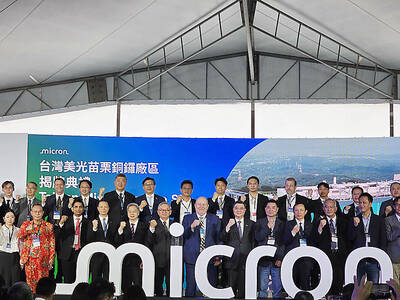
UNPRECEDENTED PACE: Micron Technology has announced plans to expand manufacturing capabilities with the acquisition of a new chip plant in Miaoli Micron Technology Inc unveiled a newly acquired chip plant in Miaoli County yesterday, as the company expands capacity to meet growing demand for advanced DRAM chips, including high-bandwidth memory chips amid the artificial intelligence boom. The plant in Miaoli County’s Tongluo Township (銅鑼), which Micron acquired from Powerchip Semiconductor Manufacturing Corp (力積電) for US$1.8 billion, is expected to make a sizeable capacity contribution to the company from fiscal 2028, the company said in a statement. It would be an extended production site of Micron’s large-scale manufacturing hub in Taichung, the company said. As the global semiconductor industry is racing to reach US$1 trillion

Singapore-based ride-hailing and delivery giant Grab Holdings Ltd has applied for regulatory approval to acquire the Taiwan operations of Germany-based Delivery Hero SE's Foodpanda in a deal valued at about US$600 million. Grab submitted the filing to the Fair Trade Commission on Friday last week, with the transaction subject to regulatory review and approval, the company said in a statement yesterday. Its independent governance structure would help foster a healthy and competitive market in Taiwan if the deal is approved, Grab said. Grab, which is listed on the NASDAQ, said in the filing that US-based Uber Technologies Inc holds about 13 percent of
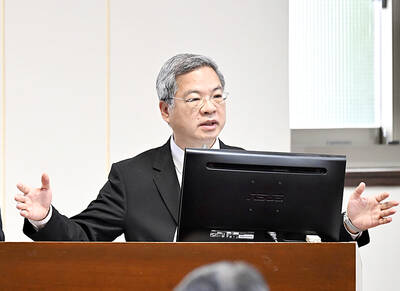
ABOVE LEGAL REQUIREMENT: The Ministry of Economic Affairs is prepared if LNG supply is disrupted, with more than the legal requirement of 11 days of inventory Taiwan has largely secured liquefied natural gas (LNG) supplies through May and arranged about half of June’s supply, Minister of Economic Affairs Kung Ming-hsin (龔明鑫) said yesterday. Since the Middle East conflict began on Feb. 28, Taiwan’s LNG inventories have remained more than 12 days, exceeding the legal requirement of 11 days, indicating no major supply concerns for domestic gas and electricity, Kung said at a meeting of the legislature’s Economics Committee in Taipei. The ministry aims to increase the figure to 14 days by the end of next year, he said. While one or two LNG or crude oil shipments for May

Taiwan’s food delivery market could undergo a major shift if Singapore-based Grab Holdings Ltd completes its planned acquisition of Delivery Hero SE’s Foodpanda business in Taiwan, industry experts said. Grab on Monday last week announced it would acquire Foodpanda’s Taiwan operations for US$600 million. The deal is expected to be finalized in the second half of this year, with Grab aiming to complete user migration to its platform by the first half of next year. A duopoly between Uber Eats and Foodpanda dominates Taiwan’s delivery market, a structure that has remained intact since the Fair Trade Commission (FTC) blocked Uber Technologies Inc’s


 RSS
RSS