


The neighbors had gathered on the patio of a sun-baked ranch here, eager to hear the party’s hosts talk about their products and how they could enhance their lives. However, in place of the timeworn arrangement of plastic storage containers or cosmetics on the coffee table, the couple was showing off an array of a different sort: the 32 solar panels on the roof.
“It’s just wonderful, the savings that we’ve had on our bills,” Pat Peaper, one of the hosts, told the crowd as it sipped iced tea and lemonade and picked at cookies and crudites.
“We have a neighbor next door who’s averaging US$350 a month” in energy bills without solar, said her husband, Jim. “If they put it in, they can certainly cut that, probably by two-thirds.”
Environmentalists, government officials and sales representatives have been trying to get Americans to go solar for decades, with limited success. Despite the long push, solar power still represents less than 1 percent of electricity generated in the US. Home solar panel setups, which typically run US$25,000 or more, are considered by many consumers to be the province of the rich or idealistic.
So now solar companies are adhering to a path blazed by Tupperware decades ago, figuring that the best sales people are often enthusiastic customers willing to share their experiences with friends and neighbors — and perhaps earn a referral fee on any sales that result.
In Arizona, a nonprofit marketing company called SmartPower has had surprising success building networks of neighbors who install solar in their homes and then spread the gospel at promotional gatherings like the Peapers’ party.
Solar companies like SunWize Technologies and SolarCity are running party-plan programs of their own, which makes it easier and cheaper for them to find new customers.
The effectiveness of such marketing is apparent in Pebble Creek, the gated community for older adults where the Peapers live. About 10 percent of the roughly 6,000 homes in the community, which is just west of Phoenix, have installed solar arrays, and more are about to sign up.
“You might or might not believe the salesperson,” said Ted Lindhorn, a guest at the Peapers’ September party who was considering a purchase. “But if it’s a friend or a neighbor that has nothing to gain for it, you’re going to believe them.”
In many cases, those friends and neighbors do have something to gain: They can earn bonuses for steering customers to installation companies. SolarCity offers US$400 for each residential referral, while a local Arizona outfit called SolarParty.org advertises paying US$250.
For SmartPower, which gets the bulk of its income from foundation grants and government and utility contracts, the parties are part of its effort to promote renewable energy and energy efficiency. After a pilot program in Connecticut, the group challenged 13 Arizona towns last year to install solar on 5 percent of owner-occupied homes by 2015. A town reaching that goal gets a sign designating it an “Arizona Solar Community,” a reward meant to encourage both communal spirit and extramural competition.
The group, under the direction of its vice president, Toni Bouchard, created a Web site and hired solar coaches, local experts who can advise customers on which installation companies they can use and what kinds of rate plans would maximize their savings. The coaches also help recruit solar ambassadors like the Peapers: ordinary residents who have solar and are willing to organize parties to encourage their friends and neighbors to do so as well.
Almost half the towns have exceeded the 5 percent solar goal, with Goodyear and three others passing 10 percent. SmartPower is now expanding its program in New England.
“On-the-ground outreach tied to the online communication is really what’s making the difference here,” SmartPower president Brian Keane said. “You need to meet people in the communities where they live, work and play.”
The party-plan model has traditionally been aimed at women, selling products for the home, bedroom and body, from Botox injections to Longaberger baskets — but the solar parties are intended to sell big-ticket items and appeal to men as well.
Just as Tupperware failed to fly off store shelves without a salesperson showing customers how to work the airtight seal, which inspired the party-plan model, solar panels often require demonstration and explanation to make the sale.
“If you can talk to someone who’s gone through it who has a positive view, then they could really alleviate some of the concerns,” said Bryan Bollinger, an assistant professor of marketing at the Stern School of Business at New York University who has studied patterns of solar adoption.
Bollinger found that people were more likely to install solar once their neighbors had. He said it was not clear what was behind that phenomenon, known as the peer effect, but it could be the combination of a conspicuous way of being green with the momentum of word-of-mouth.
That dynamic has been particularly strong in Pebble Creek, which has an active online network where residents offer referrals and advice.
“People here are real big on references,” said Joe Wallace, one of the Peapers’ guests, who said that he and his wife had thought about installing solar for a long time, but decided to take the plunge only after learning more from their neighbors.
Dru Bacon, a former Solar Coach who lives in Pebble Creek and has been a driving force behind solar adoption there, said that while the promised savings on electricity had spurred many customers to install solar, that was not all that motivated them.
“I’ve had at least 10 people say: ‘I have the biggest solar system in the community,’” he said. “They don’t say: ‘I have the lowest electric bill.’”

Taiwan Semiconductor Manufacturing Co (TSMC, 台積電) has approved a capital budget of US$31.28 billion for production expansion to meet long-term development needs during the artificial intelligence (AI) boom. The company’s board meeting yesterday approved the capital appropriation plan for purposes such as the installation of advanced technology capacity and fab construction, the world’s largest contract chipmaker said in a statement. At an earnings conference last month, TSMC forecast that its capital expenditure for this year would be at the higher end of the US$52 billion to US$56 billion range it forecast in January in response to robust demand for 5G, AI and

NEW MARKET: The partnership opens up India to the Dutch company, which already has a strong hold in the semiconductor market of South Korea, Taiwan and China ASML Holding NV entered into a partnership agreement with Tata Electronics Pvt Ltd aimed at ramping up India’s goal to develop domestic chip-manufacturing capabilities. The Dutch company’s technology would help power Tata Electronics’ planned 300 millimeter (mm) semiconductor foundry in Gujarat, according to a joint statement from the two companies on Saturday. The signing of a memorandum of understanding coincides with a visit by Indian Prime Minister Narendra Modi to the Netherlands, which is looking to deepen bilateral relations with New Delhi. ASML, whose top customers include Taiwan Semiconductor Manufacturing Co (台積電) and Samsung Electronics Co, makes lithography machines that can print

PORTFOLIO REBALANCING: The adjustments in three global equity indices reflect rising investor appetite for semiconductor and artificial intelligence-related stocks Taiwan’s weighting in major global equity indices compiled by MSCI Inc is to rise modestly following the latest quarterly review, underscoring the market’s expanding role in emerging-market portfolios, as global investors continue to favor the nation’s technology sector. Taiwan’s weighting in the MSCI Emerging Markets Index is to increase by 0.30 percentage points to 23.76 percent, after the changes take effect at the close of the May 29 session. Its weighting in the MSCI All-Country Asia ex-Japan Index is to rise 0.37 percentage points to 27.16 percent, while that in the MSCI All Country World Index is to edge up slightly to
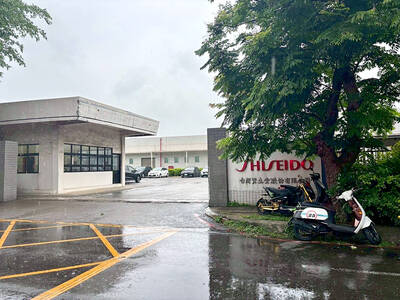
The Hsinchu County Government’s Labor Affairs Department yesterday said that it has received a plan from cosmetics brand Taiwan Shiseido Co (台灣資生堂) detailing mass layoffs at its plant in Hukou Township (湖口). While the labor authorities did not disclose the number of employees to be laid off, Japanese news media earlier in the day reported that the closure of the company’s factory in Hukou would result in 170 employees losing their jobs. Shiseido followed the law by reporting its layoff plan, the department said, adding that authorities would closely monitor negotiations between the management and affected employees and step in if any


 RSS
RSS