


Following Ruten.com’s (露天拍賣) announcement that it will start charging 1.5 percent for each successful transaction on its portal from Nov. 1, a number of smaller competitors in the e-commerce sector hope to cash in on a possible exodus of members to other sites.
The Internet portal ihergo (愛合購) — along with other portals that currently do not charge members such as kijiji (奇集集) and Hinet Auction — is one of the beneficiaries.
Ihergo, an e-commerce portal that allows vendors to post merchandise for free and charges no transaction fee, saw its new vendor registration numbers soar to 200 yesterday.
“Normally we have around 100 new vendors a day opening for business on ihergo and the news of Ruten charging a fee must have prompted an increase in membership,” Ariel Chung (鍾依恬), public relations manager at ihergo, said by telephone.
SWEETENER
To attract more new vendors to its portal, ihergo has offered the incentive of a free advertisements program. Individuals switching from Ruten to ihergo will be entitled to NT$1,000 (US$31) in free advertisement on ihergo — the equivalent of a two-week free banner advertisement on the portal’s front page. It currently has 210,000 members and more than 18,000 cyber shops on the portal.
On Thursday, Ruten — the nation’s second-largest online auction portal boasting a listing of more than 19 million items — announced a new fee-charging mechanism.
The portal will charge 1.5 percent, up to a maximum of NT$150, per successful transaction on a single item. The maximum charges for home electronics and audio-visual equipment are capped at NT$30, while there are no charges for the services and real-estate categories.
FREE
It is still free for members to post their items on Ruten and there will be no restriction in terms of number of postings, said the statement from Ruten, created by PC Home Online (網路家庭) and eBay Inc in 2006 to compete with Yahoo-Kimo Inc (雅虎奇摩).
Ruten saw a big growth in terms of item listings over the year as it did not charge members for transactions or postings.
A bulk of its members came from Yahoo-Kimo, which began charging sellers a transaction handling fee — 3 percent of the selling price on top of a listing fee of NT$3 per item — in September 2006.
“Ruten and Yahoo-Kimo are two big players in the market and since both of them are charging a fee now, netizens have no choice but to get used to the fact,” said Liu Chu-hui (劉楚慧), an industry analyst at the Taipei-based Market Intelligence & Consulting Institute (MIC, 產業情報研究所).
To stand out from the competition, an e-commerce site will have to offer better user interface, enhanced services and more a diversified product portfolio, she said.
Despite a possible slowdown in the coming years, Taiwan’s e-commerce market size this year was set to grow 25 percent from last year, MIC said.
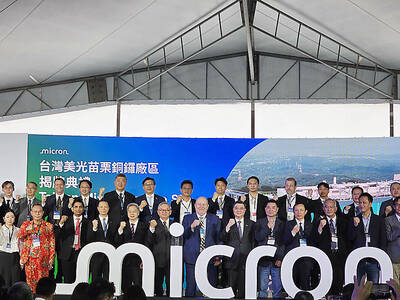
UNPRECEDENTED PACE: Micron Technology has announced plans to expand manufacturing capabilities with the acquisition of a new chip plant in Miaoli Micron Technology Inc unveiled a newly acquired chip plant in Miaoli County yesterday, as the company expands capacity to meet growing demand for advanced DRAM chips, including high-bandwidth memory chips amid the artificial intelligence boom. The plant in Miaoli County’s Tongluo Township (銅鑼), which Micron acquired from Powerchip Semiconductor Manufacturing Corp (力積電) for US$1.8 billion, is expected to make a sizeable capacity contribution to the company from fiscal 2028, the company said in a statement. It would be an extended production site of Micron’s large-scale manufacturing hub in Taichung, the company said. As the global semiconductor industry is racing to reach US$1 trillion

Singapore-based ride-hailing and delivery giant Grab Holdings Ltd has applied for regulatory approval to acquire the Taiwan operations of Germany-based Delivery Hero SE's Foodpanda in a deal valued at about US$600 million. Grab submitted the filing to the Fair Trade Commission on Friday last week, with the transaction subject to regulatory review and approval, the company said in a statement yesterday. Its independent governance structure would help foster a healthy and competitive market in Taiwan if the deal is approved, Grab said. Grab, which is listed on the NASDAQ, said in the filing that US-based Uber Technologies Inc holds about 13 percent of
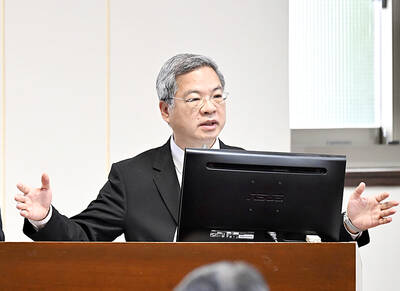
ABOVE LEGAL REQUIREMENT: The Ministry of Economic Affairs is prepared if LNG supply is disrupted, with more than the legal requirement of 11 days of inventory Taiwan has largely secured liquefied natural gas (LNG) supplies through May and arranged about half of June’s supply, Minister of Economic Affairs Kung Ming-hsin (龔明鑫) said yesterday. Since the Middle East conflict began on Feb. 28, Taiwan’s LNG inventories have remained more than 12 days, exceeding the legal requirement of 11 days, indicating no major supply concerns for domestic gas and electricity, Kung said at a meeting of the legislature’s Economics Committee in Taipei. The ministry aims to increase the figure to 14 days by the end of next year, he said. While one or two LNG or crude oil shipments for May

Taiwan’s food delivery market could undergo a major shift if Singapore-based Grab Holdings Ltd completes its planned acquisition of Delivery Hero SE’s Foodpanda business in Taiwan, industry experts said. Grab on Monday last week announced it would acquire Foodpanda’s Taiwan operations for US$600 million. The deal is expected to be finalized in the second half of this year, with Grab aiming to complete user migration to its platform by the first half of next year. A duopoly between Uber Eats and Foodpanda dominates Taiwan’s delivery market, a structure that has remained intact since the Fair Trade Commission (FTC) blocked Uber Technologies Inc’s


 RSS
RSS