


AU Optronics Corp (友達光電), the world’s No. 3 flat-panel maker, has earned gold certification for Leadership in Energy and Environmental Design (LEED) for its 8.5-generation factory in the Central Taiwan Science Park (中部科學園區), a corporation executive said yesterday.
The 8.5-generation factory, the world’s first thin-film-transistor liquid-crystal-display-panel (TFT-LCD) hybrid fab, is one of just four facilities in the world to have been awarded the LEED gold rating. Among them, it is the largest in terms of facility size, AU Optronics chief executive officer Chen Lai-juh (陳來助) said.
The company expects to save 21 percent of its total energy consumption and reach a water-recycling rate of 90 percent, which is equivalent to saving 3 million tonnes of fresh tap water annually, enough to fill 1,430 standard swimming pools, Chen said.
LEED, developed by the US Green Building Council, is a voluntary, consensus-based rating system for developing sustainable high-performance buildings.
Since last year, AU Optronics, as Taiwan’s largest TFT-LCD manufacturer, has been committed to incorporating environmentally responsible decisions in its daily operations, such as promoting green innovations for research and development, production, transport and service, with the aim of becoming carbon-neutral by next year, the company said.
The company has pioneered advanced technology in building a wind-powered generator system through its ventilation shafts, which it is willing to share with other factory operators, Chen said.
Its waste recycling has also won high praise, with its recycling rate reaching 90 percent, he added.
The company is also promoting forestation, which, in combination with its energy conservation, will cut 87,000 tonnes of carbon emissions a year — 330 times the quantity absorbed by Taipei’s Da-an Forest Park a year, Chen said.
Last year, the company saved about 230 million kilowatts of electricity consumption in its various facilities around the country. In addition, by installing greenhouse gas abatement devices, about 770,000 tonnes of carbon emissions were reduced per year, the company said.
It also saved up to 24.2 million tonnes of water last year, about one-eighth of the volume of the Shihmen Reservoir in Taoyuan County, Chen said.
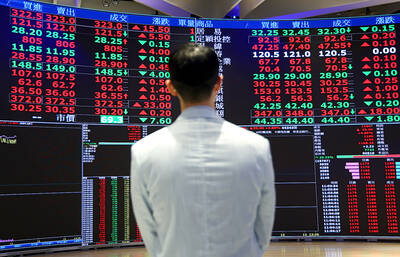
Shares in Taiwan closed at a new high yesterday, the first trading day of the new year, as contract chipmaker Taiwan Semiconductor Manufacturing Co (TSMC, 台積電) continued to break records amid an artificial intelligence (AI) boom, dealers said. The TAIEX closed up 386.21 points, or 1.33 percent, at 29,349.81, with turnover totaling NT$648.844 billion (US$20.65 billion). “Judging from a stronger Taiwan dollar against the US dollar, I think foreign institutional investors returned from the holidays and brought funds into the local market,” Concord Securities Co (康和證券) analyst Kerry Huang (黃志祺) said. “Foreign investors just rebuilt their positions with TSMC as their top target,
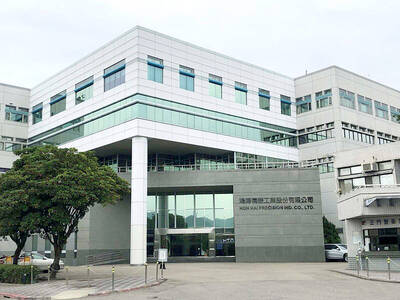
REVENUE PERFORMANCE: Cloud and network products, and electronic components saw strong increases, while smart consumer electronics and computing products fell Hon Hai Precision Industry Co (鴻海精密) yesterday posted 26.51 percent quarterly growth in revenue for last quarter to NT$2.6 trillion (US$82.44 billion), the strongest on record for the period and above expectations, but the company forecast a slight revenue dip this quarter due to seasonal factors. On an annual basis, revenue last quarter grew 22.07 percent, the company said. Analysts on average estimated about NT$2.4 trillion increase. Hon Hai, which assembles servers for Nvidia Corp and iPhones for Apple Inc, is expanding its capacity in the US, adding artificial intelligence (AI) server production in Wisconsin and Texas, where it operates established campuses. This
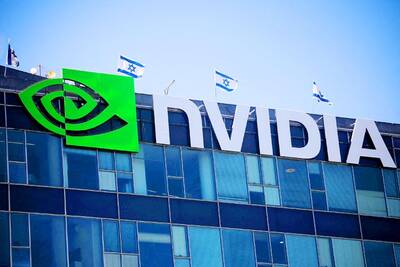
H200 CHIPS: A source said that Nvidia has asked the Taiwanese company to begin production of additional chips and work is expected to start in the second quarter Nvidia Corp is scrambling to meet demand for its H200 artificial intelligence (AI) chips from Chinese technology companies and has approached contract manufacturer Taiwan Semiconductor Manufacturing Co (TSMC, 台積電) to ramp up production, sources said. Chinese technology companies have placed orders for more than 2 million H200 chips for this year, while Nvidia holds just 700,000 units in stock, two of the people said. The exact additional volume Nvidia intends to order from TSMC remains unclear, they said. A third source said that Nvidia has asked TSMC to begin production of the additional chips and work is expected to start in the second
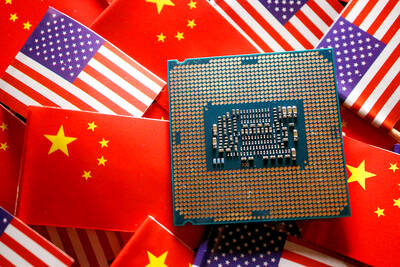
US President Donald Trump on Friday blocked US photonics firm HieFo Corp’s US$3 million acquisition of assets in New Jersey-based aerospace and defense specialist Emcore Corp, citing national security and China-related concerns. In an order released by the White House, Trump said HieFo was “controlled by a citizen of the People’s Republic of China” and that its 2024 acquisition of Emcore’s businesses led the US president to believe that it might “take action that threatens to impair the national security of the United States.” The order did not name the person or detail Trump’s concerns. “The Transaction is hereby prohibited,”


 RSS
RSS