


Two new Internet bans in China may offer insight into the communist regime's biggest fears.
One bars Internet news services from inciting "illegal" assemblies, marches and demonstrations; the other prohibits activities on behalf of "illegal" civil groups.
Together, the new rules appear to demonstrate the Chinese government's concerns about growing civil unrest -- and particularly over the role of technology in fostering protests and strikes, says Julien Pain, who heads the Internet Freedom desk at Reporters Without Borders in Paris.
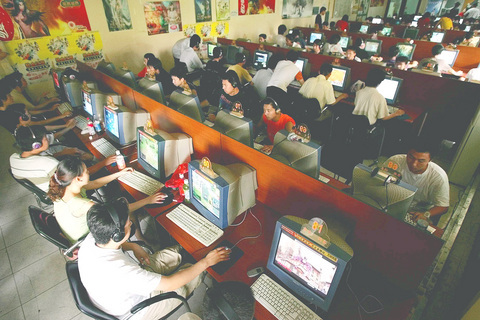
PHOTO: AP
Although the Chinese government encourages Internet use for education and business, it keeps a tight watch, blocking material it deems subversive or pornographic. Online dissidents who post items critical of the government, or those expressing opinions in chat rooms, are regularly arrested and charged under vaguely worded state security laws.
While the government has been successful at blocking specific Web sites, Pain said, "what is more difficult to censor are usually the forums and chat rooms." Add to that Web journals known as blogs, cell-phone text messaging and e-mail lists -- all potential outlets for unchecked political commentary.
Last week's update to Internet regulations issued in 2000 is vague, but human rights activists and scholars on China say the new rules define online news services more broadly. The state-run China Daily even cites SMS text messages, available to anyone with a mobile phone, as falling under the new umbrella.
"The old regs were focused more on news sites," said Jim Lewis, a senior fellow at the Center for Strategic and International Studies in Washington, DC. Since then, "people have used SMS to organize themselves, to pass news around, to rally crowds of protesters."
The two new speech prohibitions appear directed at discouraging protests and restricting dissidents. The other nine -- including bans on rumors, pornography and defamatory statements online -- were largely lifted from the 2000 regulations.
Organized demonstrations have been on the rise in China, especially in the impoverished countryside, where anger has been growing over widespread graft, industrial pollution and seizures of land for development. The government says there were 74,000 major protests nationwide last year.
Popular forums
Authorities have clamped down on popular discussion forums, barring non-students from university chat rooms and banning anonymous postings. But newer outlets like text messaging are even more difficult to control.
Xiao Qiang, director of the China Internet Project at University of California, Berkeley, said cellphones were successfully used to organize anti-Japanese protests in April. Though protesters were supporting the government line, Xiao said, the use of technology served as a wake-up call to its potential threat to government control.
Bloggers, too, have given the government headaches.
Microsoft Corp took some heat from human rights activists for agreeing to incorporate software in its Chinese blog service to automatically reject "democracy," "human rights" and other words deemed taboo by the government.
"Before the Net came around, Xinhua [China's official news agency] was pretty much where you got the news," said Jonathan Zittrain, an Internet legal scholar affiliated with Oxford and Harvard universities. "This does seem to me an acknowledgment that news can be made by people, and they are struggling with that."
Zittrain said the government might be trying to stem alternative news sites on the model of OhmyNews in South Korea, where thousands of citizens have shaken the traditional media and political establishments by submitting their own reporting.
Earlier this year, authorities ordered all Web sites, including private, noncommercial blogs, to register and identify the person in charge. The new regulations require sites to post only news on current events and politics -- without any commentary, normally a staple of blogs.
"These are really, really clear about no independent commentary," said Mickey Spiegel, a senior researcher on Asia at Human Rights Watch in New York. "You cannot take a story, even an official story, and then run with it or comment on it in a way there was some space to do in the past. You really have to follow the party line."
No-comment provisions
Besides blogs, the no-comment provisions seems to be directed also at portals like Sina and Sohu as well as the discussion forums they host, Spiegel said. Sites that produce or transmit news must obtain a license or register, and the regulations outline some staffing and asset requirements, making it difficult for smaller organizations and individual bloggers to qualify. Violations could result in fines or closure.
The new rules supplement the government's efforts to block foreign news sources through technical filters and to restrict online use by regulating and closing down cybercafes that serve as a primary access point for many Chinese users.
Liu Kang, director of the Chinese media program at Duke University, said the new regulations appear to be more of the same: Banning conduct already prohibited under China's constitution, which he described as "a joke in China because by and large they just ignore it."
But drafting the regulations could serve to inform the public and local authorities that the central government considers Internet control a priority, Liu said.
Complete enforcement is virtually impossible in a country with 100 million Internet users -- second only to the US -- but the rules will let the government "cherry pick" the most troubling cases, said Lewis of the Center for Strategic and International Studies. They also could foster self-censorship, he said.
Nonetheless, he added, resourceful Internet users have typically managed to bypass controls in the past, forcing authorities to regularly "restate the rules in a way to get more compliance from people and close potential loopholes."
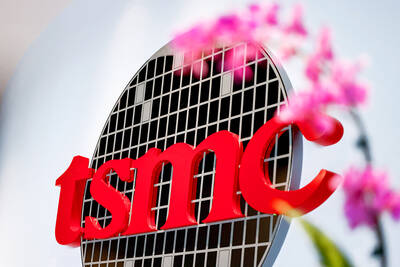
Taiwan Semiconductor Manufacturing Co (TSMC, 台積電) has approved a capital budget of US$31.28 billion for production expansion to meet long-term development needs during the artificial intelligence (AI) boom. The company’s board meeting yesterday approved the capital appropriation plan for purposes such as the installation of advanced technology capacity and fab construction, the world’s largest contract chipmaker said in a statement. At an earnings conference last month, TSMC forecast that its capital expenditure for this year would be at the higher end of the US$52 billion to US$56 billion range it forecast in January in response to robust demand for 5G, AI and

NEW MARKET: The partnership opens up India to the Dutch company, which already has a strong hold in the semiconductor market of South Korea, Taiwan and China ASML Holding NV entered into a partnership agreement with Tata Electronics Pvt Ltd aimed at ramping up India’s goal to develop domestic chip-manufacturing capabilities. The Dutch company’s technology would help power Tata Electronics’ planned 300 millimeter (mm) semiconductor foundry in Gujarat, according to a joint statement from the two companies on Saturday. The signing of a memorandum of understanding coincides with a visit by Indian Prime Minister Narendra Modi to the Netherlands, which is looking to deepen bilateral relations with New Delhi. ASML, whose top customers include Taiwan Semiconductor Manufacturing Co (台積電) and Samsung Electronics Co, makes lithography machines that can print
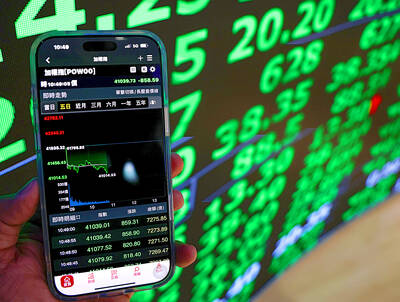
PORTFOLIO REBALANCING: The adjustments in three global equity indices reflect rising investor appetite for semiconductor and artificial intelligence-related stocks Taiwan’s weighting in major global equity indices compiled by MSCI Inc is to rise modestly following the latest quarterly review, underscoring the market’s expanding role in emerging-market portfolios, as global investors continue to favor the nation’s technology sector. Taiwan’s weighting in the MSCI Emerging Markets Index is to increase by 0.30 percentage points to 23.76 percent, after the changes take effect at the close of the May 29 session. Its weighting in the MSCI All-Country Asia ex-Japan Index is to rise 0.37 percentage points to 27.16 percent, while that in the MSCI All Country World Index is to edge up slightly to
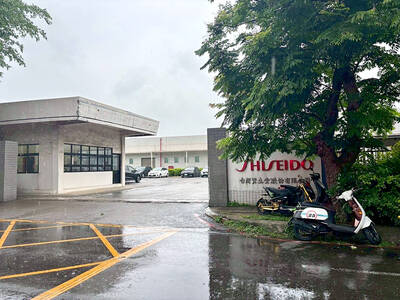
The Hsinchu County Government’s Labor Affairs Department yesterday said that it has received a plan from cosmetics brand Taiwan Shiseido Co (台灣資生堂) detailing mass layoffs at its plant in Hukou Township (湖口). While the labor authorities did not disclose the number of employees to be laid off, Japanese news media earlier in the day reported that the closure of the company’s factory in Hukou would result in 170 employees losing their jobs. Shiseido followed the law by reporting its layoff plan, the department said, adding that authorities would closely monitor negotiations between the management and affected employees and step in if any


 RSS
RSS