


Miin Wu (
"We hope to move production equipment in sometime next year," Wu said in an interview. "We're just not sure when."
Macronix, as with other chipmakers, wants to time any increase in production to a rebound in the industry from its worst slump after demand for chips that power personal computers, phones and electronic games plummeted, leaving a glut. The industry shrank by a third from a record US$200 billion last year. While Asia's chipmakers are preparing for a recovery, their gains may be capped by idle capacity, investors said.
"The year 2000 was a bubble," said Ernie Tam, who helps manage US$2 billion at Baring Asset Management (Asia) Ltd in Hong Kong. "It will take a long time for sales to recover to that level."
In the meantime, profit will be dragged down by unused production equipment, investors said.
"The capacity that resulted in 2001 came from the perception that demand would grow forever," said Magdalene Miller, who manages US$2 billion in Asia for Standard Life Investments in Edinburgh.
As demand fell, many of the industry's biggest manufacturers were forced to operate at a fraction of their capacities.
Hsinchu, Taiwan-based Taiwan Semiconductor Manufacturing Co.
(TSMC, 台積電), the largest maker of chips for other companies, and its nearest rival United Microelectronics Corp (UMC, 聯電), cut capacity use to below half. Singapore-based Chartered Semiconductor Manufacturing Co, the third-largest made-to-order chipmaker, said it's using about a quarter of its production equipment.
Those companies, which had more orders than they could meet during most of last year, will at best use 70 percent of their capacity by the second half, analysts said.
Makers of dynamic random-access memory chips, or DRAMs were the worst-hit segment of the industry. All DRAM makers reported losses after sales worldwide fell two thirds to US$10 billion. Prices of the benchmark 128-megabit chips fell to a record US$0.99, less than half the US$2 apiece it costs to make them. While spot prices have recovered to a recent US$1.98, according to DRAMeXchange.com Corp, a clearinghouse for the chips, they're still below cost.
"The DRAM industry will probably recover in the second half as production cuts reduce inventories, but PC demand may not pick up until later," said Sadaji Shibata, general manager at Daiwa Asset Management Co, which manages about ?1.5 trillion (US$11.7 billion) in Japanese equities.
That's small comfort to Japanese memory-chip makers, which once commanded more than 90 percent of the market. Now accounting for less than 10 percent, companies such as Toshiba Corp and NEC Corp are exiting parts of the business. Last week, Toshiba sold its US DRAM business to Micron Technology Inc, the second-largest supplier.
Japan's four biggest chipmakers are cutting thousands of jobs and idling plants after posting combined losses of ?439 billion (US$3.4 billion) in the six months to Sept. 30. The worst may not be over, according to some investors.
Losses, Exits Toshiba, the second-largest chipmaker, expects to post a loss of
50 billion in its chip business in the year ending March next year and will gradually phase out DRAM production at a plant in Yokkaichi in western Japan.
NEC, the third-largest chipmaker, says it will halt production at its UK plant in April and fire all 1,260 employees after a decline in European demand for mobile phones.
The company, which forecast a full-year loss of ?80 billion at its chip unit, said it sees "no immediate sign of recovery in semiconductor market conditions."
Hitachi Ltd and Fujitsu Ltd also expect to post losses.
Hitachi said it will report a ?27 billion loss in the year ending March next year, half of which will be from memory chips.
Fujitsu expects a record loss of ?10 billion in the year ending March next year.
The shares of Toshiba and Fujitsu have declined by about half in the past year, while NEC shares have dropped more than a third. Hitachi fell almost a 10th in the period.
Mergers and Partnerships The industry's difficulties are forcing some memory-chip makers to seek partners.
Hynix Semiconductor Inc. of Korea and Winbond Electronics Corp (華邦電子) of Taiwan said they're interested in partnerships with rivals. Hynix, which is struggling to repay US$6.7 billion in debt and is falling behind competitors on upgrades of production equipment that help cut costs, has been in merger talks with Micron.
"If Hynix and Micron merge their DRAM operations, prices might stabilize," Shibata said.
Samsung Electronics Co, which has almost a third of the memory-chip market, will benefit the most as smaller rivals seek to combine to boost market share and gain economies of scale, investors said. The shares of Samsung have risen by almost three- fifths the past year.
Foundries, Designers Foundries such as TSMC won't start to make profits comparable to those in 2000 until the end of 2002, investors said. In the longer term, such chipmakers may benefit from a recovery in demand as companies like Schaumburg, Illinois-based Motorola Inc and Tokyo-based NEC, which closed or idled chip plants, farm out more production.
"We know the trend is in favor of the Taiwan foundry business," said Pedro Tai, who counts shares in TSMC among the US$180 million he helps manage at HSBC Asset Management Taiwan.
"But are you willing to pay a premium for the companies and wait two years for their recovery?" TSMC shares have risen more than two-fifths in the past year. UMC shares have gained by less than a fifth. The shares of Chartered rose 2.1 percent in the period.
Asian chip designers, which don't own factories, will be among the earliest gainers from a chip-industry recovery. They will benefit from lower prices for raw materials from foundries like TSMC, some investors said.
"Chip-design companies are more resilient in a downturn," said Tam at Baring Asset Management. "Quite a few good ones in Taiwan are benefiting from lower silicon wafer prices."
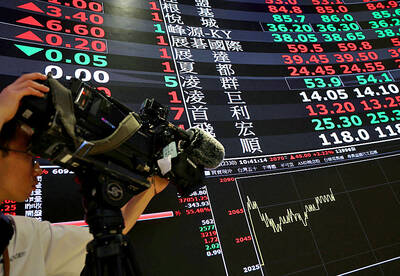
After several years flying high as Asia’s best Nvidia Corp proxy, Taiwan Semiconductor Manufacturing Co (TSMC, 台積電) is increasingly vying with other artificial intelligence (AI) stocks for investor attention. Stock traders are chasing a wider array of beneficiaries as mainstream usage of AI creates demand for hardware beyond the most-advanced chips TSMC makes for Nvidia. Subthemes from the deepening memory crunch to advances in robotics are also luring bids. At the same time, investment caps on single stocks are pushing funds to diversify, while retail investors long familiar with TSMC through its US depositary receipts are being offered a broader set of

TECH RELIANCE: Growth is increasingly reflecting an unequal K-shaped distribution, where technology sectors outperform and other industries struggle, an expert said Standard Chartered Bank has significantly raised its forecast for Taiwan’s economic growth to 9.5 percent this year, up from 7.6 percent previously, citing surging artificial intelligence (AI) demand driving exports, semiconductor production and investment. The upgrade reflects a sustained AI supercycle that continues to fuel demand for advanced chips and technology infrastructure, which form the backbone of Taiwan’s exports, the bank said in a report this week. “We raise our 2026 growth forecast to reflect a much stronger-than-expected first-quarter GDP figure,” Standard Chartered senior economist for greater China and Asia Tommy Wu (胡東安) said in the report. Driven largely by a 35.3 percent

Two of Taiwan’s international carriers, Starlux Airlines Co (星宇航空) and EVA Airways Corp (長榮航空), have retained the five-star airline rating awarded by international airline review organization Skytrax. Starlux was awarded the distinction for a second consecutive year, while EVA Air received it for the 11th straight year, Skytrax said in statements released yesterday and on Thursday last week, respectively. The five-star rating is considered one of the airline industry's highest honors and is awarded following professional audits of airline product and frontline service standards, Skytrax said. The ratings are based on in-depth assessments using unified global quality standards rather than customer review scores
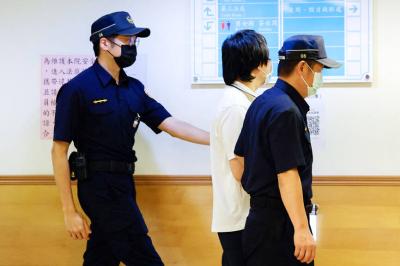
Tokyo Electron's Taiwan unit today said in a written response that it respects the judicial process, takes the court ruling seriously and would not appeal in the Taiwan Semiconductor Manufacturing Co (TSMC, 台積電) trade secrets case. Last month, a court fined the Taiwan unit of Japan's Tokyo Electron NT$150 million (US$4.74 million) in a case involving trade secrets related to TSMC's sensitive chip technology.


 RSS
RSS