


A small group of militants armed with guns and suicide jackets yesterday attacked a mosque at an army facility in northwest Pakistan, triggering a shoot-out in which four insurgents and two soldiers were killed, the military and officials said.
The army said 14 troops were also wounded in the attack on Ghalani Camp in Mohmand tribal region bordering Afghanistan.
It said in a statement that security forces “valiantly averted” an attempted suicide attack and killed all four militants.
It said the attackers wanted to enter the camp and started firing after they reached the mosque, where residents and a large number of recruits gathered for an early morning prayer.
The army said the attackers were contained in the outer courtyard of the mosque.
Two security officials also confirmed the account and said a search operation was underway to trace and arrest any accomplices of the attackers.
They said the assailants entered from the backside of the camp, which is near a paddock.
The officials said the dead and wounded were being transported to hospitals.
They spoke on condition of anonymity as they were not authorized to discuss any details about the attack.
Shortly after the attack, Jamaat-ul-Ahrar, a breakaway faction of the Taliban, claimed responsibility.
Ahsanullah Ahsan, spokesman for the group, said that the gunbattle between attackers and troops was still ongoing yesterday morning.
He said that the Ghalani Camp was notorious for torturing detained militants and that they carried out the attack to send a message to the outgoing Pakistani army chief General Raheel Rashid, who is retiring next week after completing his three-year tenure.
The Mohmand tribal region is a hotbed for militants and the Pakistani army has carried out several operations to eliminate militant hideouts, but the militants have struck back, indicating they still have the capability to launch attacks.
Sharif has said the army would continue operations against militants until they are eliminated.
Sharif is leaving a legacy of a military chief who supported a strong, democratically elected government, personally served on the front lines and who led a military offensive that claims to have dismantled militant sanctuaries in tribal regions bordering Afghanistan.


Showcasing phallus-shaped portable shrines and pink penis candies, Japan’s annual fertility festival yesterday teemed with tourists, couples and families elated by its open display of sex. The spring Kanamara Matsuri near Tokyo features colorfully dressed worshipers carrying a trio of giant phallic-shaped objects as they parade through the street with glee. The festival, as legend has it, honors a local blacksmith in the Edo Period (1603-1868) who forged an iron dildo to break the teeth of a sharp-toothed demon inhabiting a woman’s vagina that had been castrating young men on their wedding nights. A 1m black steel phallus sits in the courtyard of

JAN. 1 CLAUSE: As military service is voluntary, applications for permission to stay abroad for over three months for men up to age 45 must, in principle, be granted A little-noticed clause in sweeping changes to Germany’s military service policy has triggered an uproar after it emerged that the law requires men aged up to 45 to get permission from the armed forces before any significant stay abroad, even in peacetime. The legislation, which went into effect on Jan. 1 aims to bolster the military and demands all 18-year-old men fill out a questionnaire to gauge their suitability to serve in the armed forces, but stops short of conscription. If the “modernized” model fails to pull in enough recruits, parliament will be compelled to discuss the reintroduction of compulsory service, German
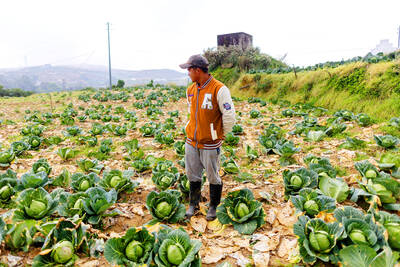
Filipino farmers like Romeo Wagayan have been left with little choice but to let their vegetables rot in the field rather than sell them at a loss, as rising oil prices linked to the Iran war drive up the cost of harvesting, labor and transport. “There’s nothing we can do,” said Wagayan, a 57-year old vegetable farmer in the northern Philippine province of Benguet. “If we harvest it, our losses only increase because of labor, transportation and packing costs. We don’t earn anything from it. That’s why we decided not to harvest at all,” he said. Soaring costs caused by the Middle East

Hungarian Prime Minister Viktor Orban’s officially declared wealth is fairly modest: some savings and a jointly owned villa in Budapest. However, voters in what Transparency International deems the EU’s most corrupt country believe otherwise — and they might make Orban pay in a general election this Sunday that could spell an end to his 16-year rule. The wealth amassed by Orban’s inner circle is fueling the increasingly palpable frustration of a population grappling with sluggish growth, high inflation and worsening public services. “The government’s communication machine worked well as long as our economic situation remained relatively good,” said Zoltan Ranschburg, a political analyst


 RSS
RSS