


Philippine election hopefuls campaigned for a final day on Saturday amid the drama of a late intervention by the nation’s outgoing leader to try to block Davao City Mayor Rodrigo Duterte from winning the presidency.
PhilippinePresident Benigno Aquino III on Friday caused a stir with a call for candidates to collaborate against Duterte in a last-ditch move to stop the “Trump of the East” from converting his runaway popularity into victory in tomorrow’s vote.
Philippine politics is no stranger to controversial characters and the firebrand Duterte is one of its most divisive, alarming opponents with his advocacy of extrajudicial killings as a deterrent against rampant crime and illegal drugs.

Photo: Reuters
There were no signs on Saturday of Aquino’s idea taking hold. Some experts said it could backfire on his chosen successor, Manuel Roxas II.
Roxas invited rival Philippine Senator Grace Poe for talks aimed at derailing Duterte, who has a double-digit lead in the latest opinion polls, but met a resounding “no.” Philippine Vice President Jejomar Binay ‘s team described Aquino’s call as “hollow.”
Political analyst Prospero de Vera said the government had seen the writing on the wall for its candidate and it needed to change tack.
“This is all part of the administration’s messaging to project that Manuel Roxas has the momentum,” De Vera said. “They need these dramatics to prevent allies in the provinces from jumping ship.”
The five candidates had major rallies planned later yesterday, the final day allowed for campaigning. Duterte was a clear leader in final opinion polling, with a lead of 11 points over Poe, with Roxas close behind in third.
Duterte, 71, is the alternative candidate who has lit up the race with his incendiary rhetoric and image as a loose cannon.
Experts say his recent surge, and Poe’s popularity, represents public disenchantment with Aquino’s administration.
That sentiment has perplexed investors and some Western governments given the robust performance of the Philippine economy under Aquino. However, criticism by opponents that it has not translated into jobs or better livelihoods for millions of poor people appears to be resonating.
However, Poe’s pro-investment, anti-poverty platform is striking a chord, as is Duterte’s promises of a war on crime and his profanity-packed speeches during a campaign that bears the emblem of a clenched fist.
Duterte’s campaign manager, Leoncio Evasco Jr, described Aquino’s call for a united front against Duterte as desperate.
“It also further unmasks the true character of the Aquino regime — one that in the face of debacle will abandon ship and run like a headless chicken,” Evasco said in a statement.


Showcasing phallus-shaped portable shrines and pink penis candies, Japan’s annual fertility festival yesterday teemed with tourists, couples and families elated by its open display of sex. The spring Kanamara Matsuri near Tokyo features colorfully dressed worshipers carrying a trio of giant phallic-shaped objects as they parade through the street with glee. The festival, as legend has it, honors a local blacksmith in the Edo Period (1603-1868) who forged an iron dildo to break the teeth of a sharp-toothed demon inhabiting a woman’s vagina that had been castrating young men on their wedding nights. A 1m black steel phallus sits in the courtyard of

JAN. 1 CLAUSE: As military service is voluntary, applications for permission to stay abroad for over three months for men up to age 45 must, in principle, be granted A little-noticed clause in sweeping changes to Germany’s military service policy has triggered an uproar after it emerged that the law requires men aged up to 45 to get permission from the armed forces before any significant stay abroad, even in peacetime. The legislation, which went into effect on Jan. 1 aims to bolster the military and demands all 18-year-old men fill out a questionnaire to gauge their suitability to serve in the armed forces, but stops short of conscription. If the “modernized” model fails to pull in enough recruits, parliament will be compelled to discuss the reintroduction of compulsory service, German
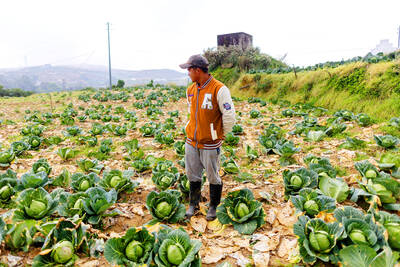
Filipino farmers like Romeo Wagayan have been left with little choice but to let their vegetables rot in the field rather than sell them at a loss, as rising oil prices linked to the Iran war drive up the cost of harvesting, labor and transport. “There’s nothing we can do,” said Wagayan, a 57-year old vegetable farmer in the northern Philippine province of Benguet. “If we harvest it, our losses only increase because of labor, transportation and packing costs. We don’t earn anything from it. That’s why we decided not to harvest at all,” he said. Soaring costs caused by the Middle East

Hungarian Prime Minister Viktor Orban’s officially declared wealth is fairly modest: some savings and a jointly owned villa in Budapest. However, voters in what Transparency International deems the EU’s most corrupt country believe otherwise — and they might make Orban pay in a general election this Sunday that could spell an end to his 16-year rule. The wealth amassed by Orban’s inner circle is fueling the increasingly palpable frustration of a population grappling with sluggish growth, high inflation and worsening public services. “The government’s communication machine worked well as long as our economic situation remained relatively good,” said Zoltan Ranschburg, a political analyst


 RSS
RSS