


India’s top court is set to hear a plea against the release of an attacker in the 2012 deadly gang rape of a student, which provoked international outrage, after a women’s rights body filed a petition early yesterday.
Swati Maliwal, head of the Delhi Commission of Women, submitted the petition to the Indian Supreme Court at 1am, seeking a stay just hours before the convict was to walk free after serving the maximum three-year sentence for juvenile offenders.
The court would take up the plea today, pending which Maliwal hoped the offender would not be released.
“SC accepted [our] petition. Matter listed on Monday as item No 3. Case subjudice now. Nirbhaya rapist should not be released until case heard,” Maliwal said on Twitter.
The attacker was the youngest of a group of men who brutally assaulted a 23-year-old student on a bus in 2012, triggering global outrage and protests in India over the country’s high levels of violence against women.
He was sent to a correction home for three years under India’s juvenile laws, while four others were convicted and handed the death penalty last year. The convicts’ appeals against the hangings is pending in the Supreme Court.
The student, who succumbed to her injuries two weeks after the attack, was publicly named by her mother on the third anniversary of her death last week, in an effort to end the stigma facing sex attack victims in India.
Under Indian laws, the identity of rape victims is not revealed even after death, although victims and their families can waive their right to anonymity.
The parents and women’s rights groups have been opposing the release of the youngest attacker, mainly on the grounds that it was unclear if he had been rehabilitated and was ready to be reintegrated into society.
On Saturday, the parents and scores of students holding placards and banners demonstrated outside the juvenile detention center in Delhi where the offender was held.


Showcasing phallus-shaped portable shrines and pink penis candies, Japan’s annual fertility festival yesterday teemed with tourists, couples and families elated by its open display of sex. The spring Kanamara Matsuri near Tokyo features colorfully dressed worshipers carrying a trio of giant phallic-shaped objects as they parade through the street with glee. The festival, as legend has it, honors a local blacksmith in the Edo Period (1603-1868) who forged an iron dildo to break the teeth of a sharp-toothed demon inhabiting a woman’s vagina that had been castrating young men on their wedding nights. A 1m black steel phallus sits in the courtyard of

JAN. 1 CLAUSE: As military service is voluntary, applications for permission to stay abroad for over three months for men up to age 45 must, in principle, be granted A little-noticed clause in sweeping changes to Germany’s military service policy has triggered an uproar after it emerged that the law requires men aged up to 45 to get permission from the armed forces before any significant stay abroad, even in peacetime. The legislation, which went into effect on Jan. 1 aims to bolster the military and demands all 18-year-old men fill out a questionnaire to gauge their suitability to serve in the armed forces, but stops short of conscription. If the “modernized” model fails to pull in enough recruits, parliament will be compelled to discuss the reintroduction of compulsory service, German
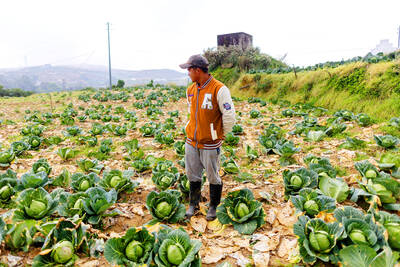
Filipino farmers like Romeo Wagayan have been left with little choice but to let their vegetables rot in the field rather than sell them at a loss, as rising oil prices linked to the Iran war drive up the cost of harvesting, labor and transport. “There’s nothing we can do,” said Wagayan, a 57-year old vegetable farmer in the northern Philippine province of Benguet. “If we harvest it, our losses only increase because of labor, transportation and packing costs. We don’t earn anything from it. That’s why we decided not to harvest at all,” he said. Soaring costs caused by the Middle East

For two decades, researchers observed members of the Ngogo chimpanzee group of Kibale National Park in Uganda spend their days eating fruits and leaves, resting, traveling and grooming in their tropical rainforest abode, but this stable community then fractured and descended into years of deadly violence. The researchers are now describing the first clearly documented example of a group of wild chimpanzees splitting into two separate factions, with one launching a series of coordinated attacks against the other. Adult males and infants were targeted, with 28 deaths. “Biting, pounding the victim with their hands, dragging them, kicking them — mostly adult males,


 RSS
RSS