


A protected 2,500-year-old cultural heritage site in Yemen’s capital was obliterated in an explosion early on Friday, with witnesses and news reports saying the cause was a missile or bomb from a Saudi Arabian warplane. The Saudi military denied responsibility.
The top UN official for safeguarding antiquities condemned the destruction of ancient homes, towers and gardens, which also allegedly killed an unspecified number of residents in al-Qasimi, a neighborhood in Sana’a’s Old City area.
“I am profoundly distressed by the loss of human lives, as well as the damage inflicted on one of the world’s oldest jewels of Islamic urban landscape,” UNESCO Director-General Irina Bokova said.
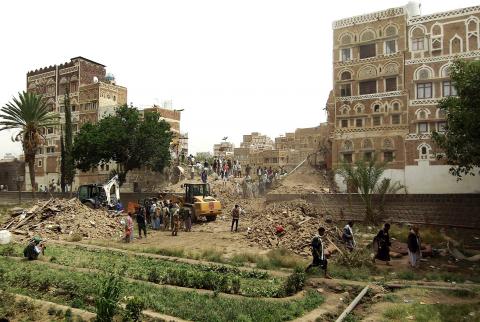
Photo: AFP
“I am shocked by the images of these magnificent many-story tower-houses and serene gardens reduced to rubble,” she said in a statement posted on the UNESCO Web site, calling on all antagonists in Yemen’s conflict to respect the nation’s cultural treasures.
“This heritage bears the soul of the Yemeni people; it is a symbol of a millennial history of knowledge and it belongs to all humankind,” Bokova said.
Photographs from the scene and witness accounts posted on social media said the attack destroyed at least five houses and caused irreparable damage to the area, registered as a UNESCO World Heritage Site.
The UNESCO statement said the damaged area in Sana’a’s Old City had been inhabited for more than 2,500 years and “bears witness to the wealth and beauty of the Islamic civilization.”
It was considered a major center for the propagation of Islam after the religion’s beginnings in the seventh century.
Yemeni news agency Saba reported that the Old City boasted more than 100 mosques, 14 public baths and more than 6,000 houses built before the 11th century.
A coalition of Arab states led by Saudi Arabia has been bombing Yemen, the Middle East’s most impoverished country, for more than two months in a concerted campaign against the Houthi insurgent group, which is allied with Iran, Saudi Arabia’s regional rival.
Hours after the destruction in Sana’a’s Old City, there were conflicting accounts of the precise cause. Saba asserted — without attribution — that a “Saudi bombing raid” had been responsible and that at least six people had been killed.
Saudi-led coalition spokesman Brigadier General Ahmed al-Assiri was quoted by Agence France-Presse as saying that the coalition did not carry out an attack and suggested that a rebel ammunition storehouse might have exploded.
Houthi fighters quoted by local news outlets denied having anything to do with the destruction.
Saudi Arabia has said its strikes are aimed only at military targets.
However, the WHO said that more than 2,500 people have been killed and more than 11,000 wounded in the two-month campaign, amid fears that the nation of 25 million is verging on collapse, with an estimated 80 percent of the population in need of humanitarian aid.
The destruction in Sana’a came a few days before peace talks sponsored by the UN are to be convened in Geneva, Switzerland.
Destruction of cultural antiquities in the Middle East has now become an integral part of the mayhem convulsing the region.
Islamic State insurgents in Syria and Iraq have flaunted their vandalism of treasured archaeological sites and historically important relics in recent months.

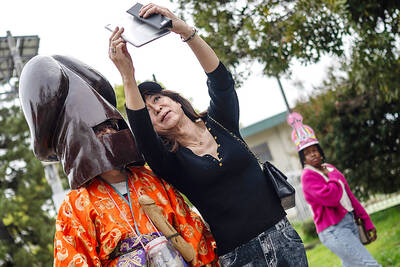
Showcasing phallus-shaped portable shrines and pink penis candies, Japan’s annual fertility festival yesterday teemed with tourists, couples and families elated by its open display of sex. The spring Kanamara Matsuri near Tokyo features colorfully dressed worshipers carrying a trio of giant phallic-shaped objects as they parade through the street with glee. The festival, as legend has it, honors a local blacksmith in the Edo Period (1603-1868) who forged an iron dildo to break the teeth of a sharp-toothed demon inhabiting a woman’s vagina that had been castrating young men on their wedding nights. A 1m black steel phallus sits in the courtyard of

JAN. 1 CLAUSE: As military service is voluntary, applications for permission to stay abroad for over three months for men up to age 45 must, in principle, be granted A little-noticed clause in sweeping changes to Germany’s military service policy has triggered an uproar after it emerged that the law requires men aged up to 45 to get permission from the armed forces before any significant stay abroad, even in peacetime. The legislation, which went into effect on Jan. 1 aims to bolster the military and demands all 18-year-old men fill out a questionnaire to gauge their suitability to serve in the armed forces, but stops short of conscription. If the “modernized” model fails to pull in enough recruits, parliament will be compelled to discuss the reintroduction of compulsory service, German
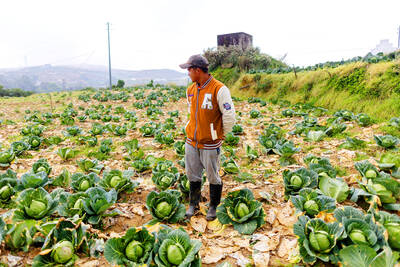
Filipino farmers like Romeo Wagayan have been left with little choice but to let their vegetables rot in the field rather than sell them at a loss, as rising oil prices linked to the Iran war drive up the cost of harvesting, labor and transport. “There’s nothing we can do,” said Wagayan, a 57-year old vegetable farmer in the northern Philippine province of Benguet. “If we harvest it, our losses only increase because of labor, transportation and packing costs. We don’t earn anything from it. That’s why we decided not to harvest at all,” he said. Soaring costs caused by the Middle East

Hungarian Prime Minister Viktor Orban’s officially declared wealth is fairly modest: some savings and a jointly owned villa in Budapest. However, voters in what Transparency International deems the EU’s most corrupt country believe otherwise — and they might make Orban pay in a general election this Sunday that could spell an end to his 16-year rule. The wealth amassed by Orban’s inner circle is fueling the increasingly palpable frustration of a population grappling with sluggish growth, high inflation and worsening public services. “The government’s communication machine worked well as long as our economic situation remained relatively good,” said Zoltan Ranschburg, a political analyst


 RSS
RSS