


In an extraordinary marriage between high-tech wizardry and ancient history, the Israel Antiques Authority (IAA) has launched an updated version of its digital library of the Dead Sea scrolls, showcasing thousands of high-quality photographs of one of the world’s most spectacular archeological finds.
The expanded online resource, which is accessible from personal computers and mobile phones, presents hundreds of scroll fragments imaged with a camera that was developed specifically for this purpose. Only five expert curators worldwide are authorized to physically handle the scrolls.
Among the scrolls is an early copy of the book of Deuteronomy, which includes the 10 Commandments. The first of the scrolls were discovered in a remote cave at Qumran in the West Bank close to the Dead Sea in 1947.
SHRINE OF THE BOOK
Housed in the Israel Museum in Jerusalem in a dedicated facility called the Shrine of the Book, the scrolls include part of the first chapter of the book of Genesis, dated to the first century BC, which describes the creation of the world; a number of copies of Psalms scrolls; tiny texts from the second temple period; letters and documents hidden by those fleeing Roman forces during the Bar Kochba revolt; and hundreds more ancient texts that shed light on biblical studies, the history of Judaism and the origins of Christianity.
The upgraded Web site includes 10,000 new multispectral images, extra manuscript descriptions, content translated into Russian and German in addition to the current languages, a faster search engine, and easy access from the site to the Facebook page and to Twitter and more, the IAA said.
“The novelty is the quality of the pictures through a system that was created especially for the scrolls,” said Pnina Shor, curator and head of the Dead Sea Scrolls Project at the IAA.
‘LIVING SITE’
“These are the best possible images of thousands of fragments. They are exactly like the originals. The technology was invented for NASA. It is a living site and a uniquely comprehensive one for documents this old,” Shor said.
By the early 1960s Bedouin treasure hunters and archeologists had found the remains of hundreds of manuscripts made up of thousands of fragments in the Judean desert along the western shore of the Dead Sea. These fragile pieces of parchment and papyrus were preserved for two millennia by the hot, dry climate and the darkness of the caves.
The texts are written in Hebrew, Aramaic, Greek and Nabataean. The manuscripts have been dated to various periods between 408 BC and 318 AD.
“The scrolls provide an unprecedented picture of the diverse religious beliefs of ancient Judaism, and of daily life during the turbulent Second Temple period when Jesus lived and preached, on biblical studies, the history of Judaism and the origins of Christianity,” the Web site says.

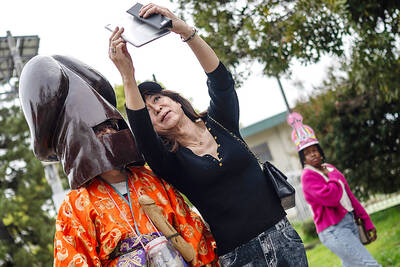
Showcasing phallus-shaped portable shrines and pink penis candies, Japan’s annual fertility festival yesterday teemed with tourists, couples and families elated by its open display of sex. The spring Kanamara Matsuri near Tokyo features colorfully dressed worshipers carrying a trio of giant phallic-shaped objects as they parade through the street with glee. The festival, as legend has it, honors a local blacksmith in the Edo Period (1603-1868) who forged an iron dildo to break the teeth of a sharp-toothed demon inhabiting a woman’s vagina that had been castrating young men on their wedding nights. A 1m black steel phallus sits in the courtyard of

JAN. 1 CLAUSE: As military service is voluntary, applications for permission to stay abroad for over three months for men up to age 45 must, in principle, be granted A little-noticed clause in sweeping changes to Germany’s military service policy has triggered an uproar after it emerged that the law requires men aged up to 45 to get permission from the armed forces before any significant stay abroad, even in peacetime. The legislation, which went into effect on Jan. 1 aims to bolster the military and demands all 18-year-old men fill out a questionnaire to gauge their suitability to serve in the armed forces, but stops short of conscription. If the “modernized” model fails to pull in enough recruits, parliament will be compelled to discuss the reintroduction of compulsory service, German
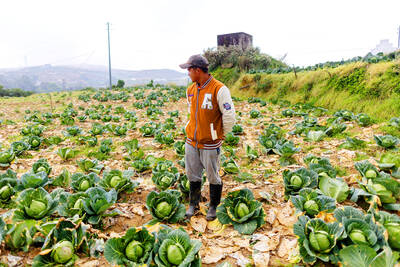
Filipino farmers like Romeo Wagayan have been left with little choice but to let their vegetables rot in the field rather than sell them at a loss, as rising oil prices linked to the Iran war drive up the cost of harvesting, labor and transport. “There’s nothing we can do,” said Wagayan, a 57-year old vegetable farmer in the northern Philippine province of Benguet. “If we harvest it, our losses only increase because of labor, transportation and packing costs. We don’t earn anything from it. That’s why we decided not to harvest at all,” he said. Soaring costs caused by the Middle East

For two decades, researchers observed members of the Ngogo chimpanzee group of Kibale National Park in Uganda spend their days eating fruits and leaves, resting, traveling and grooming in their tropical rainforest abode, but this stable community then fractured and descended into years of deadly violence. The researchers are now describing the first clearly documented example of a group of wild chimpanzees splitting into two separate factions, with one launching a series of coordinated attacks against the other. Adult males and infants were targeted, with 28 deaths. “Biting, pounding the victim with their hands, dragging them, kicking them — mostly adult males,


 RSS
RSS