


In photographs of her as a younger woman, Zubeidat Tsarnaeva wears a low-cut blouse and has her hair teased like a 1980s rock star. After she arrived in the US from Russia in 2002, she went to beauty school and did facials at a suburban day spa.
However, in recent years, people noticed a change. She began wearing a hijab and cited conspiracy theories about the Sept. 11, 2001, terror attacks being a plot against Muslims.
Now known as the angry and grieving mother of the Boston Marathon bombing suspects, Tsarnaeva is drawing increased attention after US federal officials say Russian authorities intercepted her telephone calls, including one in which she vaguely discussed jihad with her elder son.
In another, she was recorded talking to someone in southern Russia who is under FBI investigation in an unrelated case, US officials said.
Tsarnaeva insists there is no mystery, that she is no terrorist, just someone who found a deeper spirituality. She insists her sons — Tamerlan, who was killed in a gunfight with police, and Dzhokhar, who was wounded and captured — are innocent.
“It’s all lies and hypocrisy,” she told reporters in Dagestan. “I’m sick and tired of all this nonsense that they make up about me and my children. People know me as a regular person, and I’ve never been mixed up in any criminal intentions, especially any linked to terrorism.”
Amid the scrutiny, Tsarnaeva and her ex-husband, Anzor Tsarnaev, say they have put off the idea of any trip to the US to reclaim their elder son’s body or try to visit Dzhokhar in jail.
Tsarnaev said on Sunday he was too ill to travel to the US. Tsarnaeva faces a shoplifting charge in a Boston suburb, though it was unclear whether that was a deterrent.
At a news conference in Dagestan with Anzor last week, Tsarnaeva appeared overwhelmed with grief one moment, defiant the next.
“They already are talking about that we are terrorists, I am terrorist,” she said. “They already want me, him and all of us to look [like] terrorists.”
Tsarnaeva arrived in the US in 2002, settling in a working-class section of Cambridge, Mass.
With four children, Anzor and Zubeidat qualified for food stamps and were on and off public assistance benefits for years. The large family squeezed itself into a third-floor apartment.
Zubeidat took classes at the Catherine Hinds Institute of Esthetics, before becoming a state-licensed aesthetician. Anzor, who had studied law, fixed cars.
By some accounts, the family was tolerant.
Bethany Smith, a New Yorker who befriended Zubeidat’s two daughters, said in an interview with Newsday that when she stayed with the family for a month in 2008 while she looked at colleges, she was welcomed even though she was Christian and had tattoos.
“I had nothing but love over there. They accepted me for who I was,” Smith told the newspaper. “Their mother, Zubeidat, she considered me to be a part of the family. She called me her third daughter.”
Zubeidat said she and Tamerlan began to turn more deeply into their Muslim faith about five years ago, after being influenced by a family friend, named “Misha.”
The man, whose full name she did not reveal, impressed her with a religious devotion that was far greater than her own, even though he was an ethnic Armenian who converted to Islam.
“I wasn’t praying until he prayed in our house, so I just got really ashamed that I am not praying, being a Muslim, being born Muslim. I am not praying. Misha, who converted, was praying,” she said.
By then, she had left her job at the day spa and was giving facials in her apartment. One client, Alyssa Kilzer, noticed the change when Tsarnaeva put on a head scarf before leaving the apartment.
“She had never worn a hijab while working at the spa previously, or inside the house, and I was really surprised,” Kilzer wrote in a post on her blog. “She started to refuse to see boys that had gone through puberty, as she had consulted a religious figure and he had told her it was sacrilegious. She was often fasting.”
Kilzer wrote that Tsarnaeva was a loving and supportive mother, and she felt sympathy for her plight after the April 15 bombings.
However, she stopped visiting the family’s home for spa treatments in late 2011 or early last year, when during one session, she “started quoting a conspiracy theory, telling me that she thought 9/11 was purposefully created by the American government to make America hate Muslims.”
“It’s real,” Kilzer quoted Tsarnaeva as saying. “My son knows all about it. You can read on the Internet.”
Zubeidat married into a Chechen family, but was an outsider. She is an Avar, from one of the dozens of ethnic groups in Dagestan.
Her native village is now a hotbed of an ultraconservative strain of Islam known as Salafism or Wahabbism.
It is unclear whether religious differences fueled tension in their family. Anzor and Zubeidat divorced in 2011.

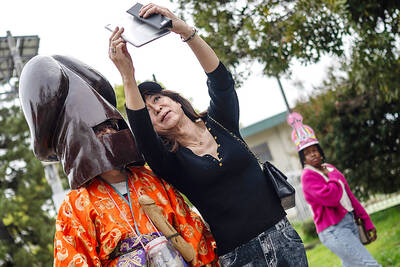
Showcasing phallus-shaped portable shrines and pink penis candies, Japan’s annual fertility festival yesterday teemed with tourists, couples and families elated by its open display of sex. The spring Kanamara Matsuri near Tokyo features colorfully dressed worshipers carrying a trio of giant phallic-shaped objects as they parade through the street with glee. The festival, as legend has it, honors a local blacksmith in the Edo Period (1603-1868) who forged an iron dildo to break the teeth of a sharp-toothed demon inhabiting a woman’s vagina that had been castrating young men on their wedding nights. A 1m black steel phallus sits in the courtyard of

JAN. 1 CLAUSE: As military service is voluntary, applications for permission to stay abroad for over three months for men up to age 45 must, in principle, be granted A little-noticed clause in sweeping changes to Germany’s military service policy has triggered an uproar after it emerged that the law requires men aged up to 45 to get permission from the armed forces before any significant stay abroad, even in peacetime. The legislation, which went into effect on Jan. 1 aims to bolster the military and demands all 18-year-old men fill out a questionnaire to gauge their suitability to serve in the armed forces, but stops short of conscription. If the “modernized” model fails to pull in enough recruits, parliament will be compelled to discuss the reintroduction of compulsory service, German
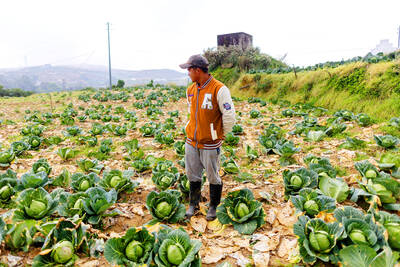
Filipino farmers like Romeo Wagayan have been left with little choice but to let their vegetables rot in the field rather than sell them at a loss, as rising oil prices linked to the Iran war drive up the cost of harvesting, labor and transport. “There’s nothing we can do,” said Wagayan, a 57-year old vegetable farmer in the northern Philippine province of Benguet. “If we harvest it, our losses only increase because of labor, transportation and packing costs. We don’t earn anything from it. That’s why we decided not to harvest at all,” he said. Soaring costs caused by the Middle East

For two decades, researchers observed members of the Ngogo chimpanzee group of Kibale National Park in Uganda spend their days eating fruits and leaves, resting, traveling and grooming in their tropical rainforest abode, but this stable community then fractured and descended into years of deadly violence. The researchers are now describing the first clearly documented example of a group of wild chimpanzees splitting into two separate factions, with one launching a series of coordinated attacks against the other. Adult males and infants were targeted, with 28 deaths. “Biting, pounding the victim with their hands, dragging them, kicking them — mostly adult males,


 RSS
RSS