


A group of minority Ahmadiyah Muslims have been holed up in an Indonesian mosque since authorities shuttered it earlier this month, in a stand-off that starkly illustrates the religious intolerance sweeping the country.
The men were praying at the mosque in Bekasi, west of Jakarta, when scores of police burst in and surrounded it with corrugated iron fencing, brandishing a decree that bans the minority from spreading its religious beliefs.
Now about 20 of them are refusing to leave until officials guarantee they will be allowed to continue worshiping in the mosque — and fear that if they do leave the building will be taken over.

Photo: AFP
They believe it was closed under pressure from hardline group the Islamic Defenders Front (FPI), in what would be the latest case of radicals targeting the sect.
In a notorious 2011 incident, a lynch mob clubbed, hacked and stoned three Ahmadis to death in western Java.
The attackers received only light prison sentences, provoking international outrage.
The targeting of Ahmadis fits with a wider pattern of rising attacks in recent years against religious minorities in the world’s most populous Muslim-majority nation, where most are Sunnis.
Muslim Shiites and Christians have complained of being targeted more frequently, and Human Rights Watch in a recent report accused the government of emboldening Islamic radicals by failing to act to curb the persecution.
Rights groups say the government is wary of facing down Sunni hardliners and voicing support for minorities for fear of losing popularity among the majority, a tendency they say is worsening as elections approach next year.
Indonesian President Susilo Bambang Yudhoyono, whose Democratic Party is embroiled in a string of corruption scandals, is desperate to be “friends with everyone everywhere,” said Haris Azhar, chairman of rights group Kontras.
“So when it comes to handling violations, he does not want to get his hands dirty and take on the bad guys,” he said.
At the Bekasi mosque, police and soldiers stand guard to prevent anyone entering.
The Ahmadis inside have survived on food handouts from the local community and slept on mattresses on the floor since the building was closed off on April 4.
“Why are we treated like criminals when all we did was to worship?” cleric Rahmat Rahmadijaya, 33, said through a small window on the locked back gate of the mosque, which backs onto a large, paved courtyard.
“They can threaten to attack and ban us, but we are not scared. We will never leave our faith and will stay put at the mosque until they reopen it,” he said.
The Ahmadis say the FPI pressured authorities to close the mosque.
While not admitting its involvement, the FPI has wholeheartedly supported the move.
The group’s local head, Murhali Barda, accuses followers of the Muslim sect, who number only about 500,000 in Indonesia out of a population of about 240 million, of having “raped the word of God.”
To close the building, the local government cited a 2008 ministerial decree which bans the Ahmadis from spreading their religious beliefs.
Despite a constitutional guarantee on freedom of religion, rights groups accuse the government of turning a blind eye to attacks and encouraging the likes of the FPI with the decree.
“The government has been weak in enforcing the law, so these hardliners have become bolder and often take the law into their own hands,” said Bonar Tigor Naipospos, deputy head of the Setara Institute for Democracy and Peace.
However, presidential spokesman Teuku Faizasyah said that cases of intolerance were “not a true reflection of the harmonious relations among followers of different faiths in Indonesia.”
“Indonesia is lenient towards Ahmadis. We give them the space to worship, unlike in some countries where they are completely banned,” he said.


Showcasing phallus-shaped portable shrines and pink penis candies, Japan’s annual fertility festival yesterday teemed with tourists, couples and families elated by its open display of sex. The spring Kanamara Matsuri near Tokyo features colorfully dressed worshipers carrying a trio of giant phallic-shaped objects as they parade through the street with glee. The festival, as legend has it, honors a local blacksmith in the Edo Period (1603-1868) who forged an iron dildo to break the teeth of a sharp-toothed demon inhabiting a woman’s vagina that had been castrating young men on their wedding nights. A 1m black steel phallus sits in the courtyard of

JAN. 1 CLAUSE: As military service is voluntary, applications for permission to stay abroad for over three months for men up to age 45 must, in principle, be granted A little-noticed clause in sweeping changes to Germany’s military service policy has triggered an uproar after it emerged that the law requires men aged up to 45 to get permission from the armed forces before any significant stay abroad, even in peacetime. The legislation, which went into effect on Jan. 1 aims to bolster the military and demands all 18-year-old men fill out a questionnaire to gauge their suitability to serve in the armed forces, but stops short of conscription. If the “modernized” model fails to pull in enough recruits, parliament will be compelled to discuss the reintroduction of compulsory service, German
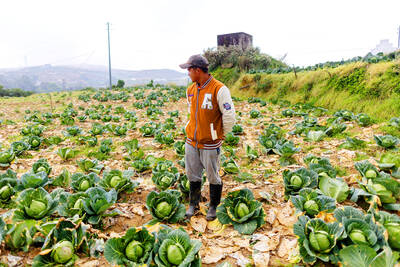
Filipino farmers like Romeo Wagayan have been left with little choice but to let their vegetables rot in the field rather than sell them at a loss, as rising oil prices linked to the Iran war drive up the cost of harvesting, labor and transport. “There’s nothing we can do,” said Wagayan, a 57-year old vegetable farmer in the northern Philippine province of Benguet. “If we harvest it, our losses only increase because of labor, transportation and packing costs. We don’t earn anything from it. That’s why we decided not to harvest at all,” he said. Soaring costs caused by the Middle East

For two decades, researchers observed members of the Ngogo chimpanzee group of Kibale National Park in Uganda spend their days eating fruits and leaves, resting, traveling and grooming in their tropical rainforest abode, but this stable community then fractured and descended into years of deadly violence. The researchers are now describing the first clearly documented example of a group of wild chimpanzees splitting into two separate factions, with one launching a series of coordinated attacks against the other. Adult males and infants were targeted, with 28 deaths. “Biting, pounding the victim with their hands, dragging them, kicking them — mostly adult males,


 RSS
RSS