


Desperate families were searching for loved ones yesterday after a massive train crash in Buenos Aires killed 50 people, injured nearly 700 and left dozens trapped for hours in the wreckage.
Rescuers spent much of the day prying people from the wreckage after the packed train slammed into a wall at a major railway terminus on Wednesday morning, sending cars crashing into each other and crushing the passengers inside.
“The train was full and the impact was tremendous,” a passenger identified only as Ezequiel told local television, adding that medics at the scene appeared overwhelmed by the scale of the disaster.
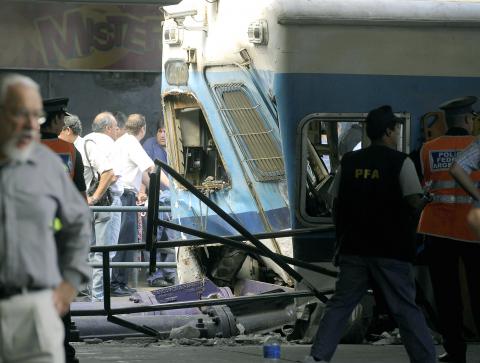
Photo: AFP
Officials late on Wednesday raised the death toll to 50, including one child. Civil defense officials earlier said that at least 675 people had been hurt in the crash, 200 of them seriously.
Families of missing passengers desperately searched hospitals, the morgue and a public cemetery where dozens of bodies were taken.
Authorities handed out lists of hundreds of the injured, but the identities of many of the deceased and wounded remained unknown.
“I was in five hospitals and I couldn’t find my wife,” said a man who gave his name as Jose and said his pregnant wife had been in one of the first cars.
“They told us there are people being operated on and they don’t know who they are. There’s no way to know until they come out of surgery,” said Luisa, looking for her 24-year-old son.
TV channels broadcast photographs of missing people as social networks filled with messages from people searching for information.
Witnesses said the train’s brakes failed as it was arriving at the Once station on the western outskirts of Argentina’s capital.
Survivors described a scene of panic, with Medevac helicopters and ambulances racing in and out of the station to ferry the wounded to hospitals.
“There were people who were crushed and shouting desperately. I saw bodies and blood all over the place,” passenger Alejandro Velazquez said.
Firefighters and rescue workers had to break through skylights in the train’s roofs to reach dozens of people who were trapped in the twisted wreckage of the first and second carriages.
The government called for two days of mourning and suspended Carnival celebrations, including a massive parade planned in Buenos Aires today.
Argentine President Cristina Fernandez suspended a news conference on the dispute with Britain over the Falkland Islands following news of the crash.
Condolences from British Minister of State for Latin America Jeremy Browne were among numerous foreign sympathy messages sent to Argentina.
Argentine Transport Secretary Juan Pablo Schiavi said the train entered the station at a speed of 20kph and failed to stop, crashing into a retaining wall in what he called “a very serious accident.”
The train’s driver was injured, but rescue workers had to pry him loose from the wreckage of his cabin. He was 28 years old and had an excellent record, Schiavi said.
The Sarmiento rail line, owned by private company TBA, links the center of Buenos Aires to a densely populated suburb 70km to the west of the city. It uses rolling stock made in Japan and acquired in the 1960s.
TBA said it did not know the cause of the crash and would bring “all information and videos to the courts.”
Schiavi said officials had a recording of conversations between the driver and the person in charge of the line.
As a probe got under way, rail workers complained about a lack of investment following the privatization of the rail network in the 1990s.
Unionist Roberto Nunez, -speaking on Radio del Plata, cited “irregularities, deficiencies and a situation limited to the provision of services.”

PHISHING: The con might appear convincing, as the scam e-mails can coincide with genuine messages from Apple saying you have run out of storage For a while you have been getting messages from Apple saying “your iCloud storage is full.” They say you have exceeded your storage plan, so documents are no longer being backed up, and photos you take are not being uploaded. You have been resisting Apple’s efforts to get you to pay a minimum of £0.99 (US$1.33) a month for more storage, but it seems that you cannot keep putting off the inevitable: You have received an e-mail which says your iCloud account has been blocked, and your photos and videos would be deleted very soon. To keep them you need
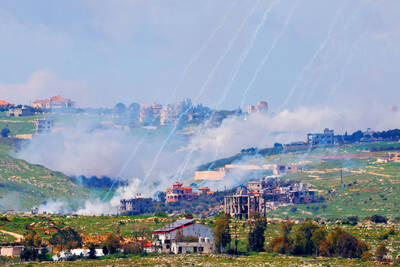
The Israeli military has demolished entire villages as part of its invasion of south Lebanon, rigging homes with explosives and razing them to the ground in massive remote detonations. The Guardian reviewed three videos posted by the Israeli military and on social media, which showed Israel carrying out mass detonations in the villages of Taybeh, Naqoura and Deir Seryan along the Israel-Lebanon border. Lebanese media has reported more mass detonations in other border villages, but satellite imagery was not readily available to verify these claims. The demolitions came after Israeli Minister of Defense Israel Katz called for the destruction of

A US YouTuber who caused outrage for filming himself kissing a statue commemorating Korean wartime sex slaves has been sentenced to six months in prison, a court in Seoul said yesterday. Johnny Somali, 25, gained notoriety several years ago for recording himself doing a series of provocative stunts in South Korea and Japan, and streaming them on platforms such as YouTube and Twitch. South Korean authorities indicted Somali — whose real name is Ramsey Khalid Ismael — in 2024 on public order violations and obstruction of business, and banned him from leaving the country. “The court has sentenced him to six months in
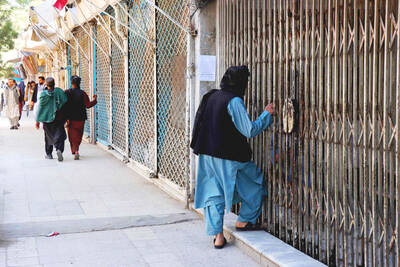
The death toll from a shooting in western Afghanistan rose to 11 on Saturday, after gunmen targeted civilians at a picnic spot in Herat, the provincial authority said. Bullet marks were visible on a wall of the Sayed Mohammad Agha Shia shrine, while bloodstains marked a blanket abandoned at the scene. “Eleven people have been recorded dead and eight others wounded from Friday’s incident, with the condition of two of the wounded reported as critical,” Herat’s information office said in a statement. The update raises a toll of seven killed provided on Friday by the Afghan Ministry of Interior Affairs


 RSS
RSS