


The Chinese military has built landing bridge ships designed to expand its amphibious options for a potential assault on Taiwan, but their combat effectiveness is limited due to their high vulnerability, a defense expert said in an analysis published on Monday.
Shen Ming-shih (沈明室), a research fellow at the Institute for National Defense and Security Research, said that the deployment of such vessels as part of the Chinese People’s Liberation Army (PLA) Navy’s East Sea Fleet signals a strong focus on Taiwan.
However, the ships are highly vulnerable to precision strikes, which means they could be destroyed before they achieve their intended purpose, Shen said.
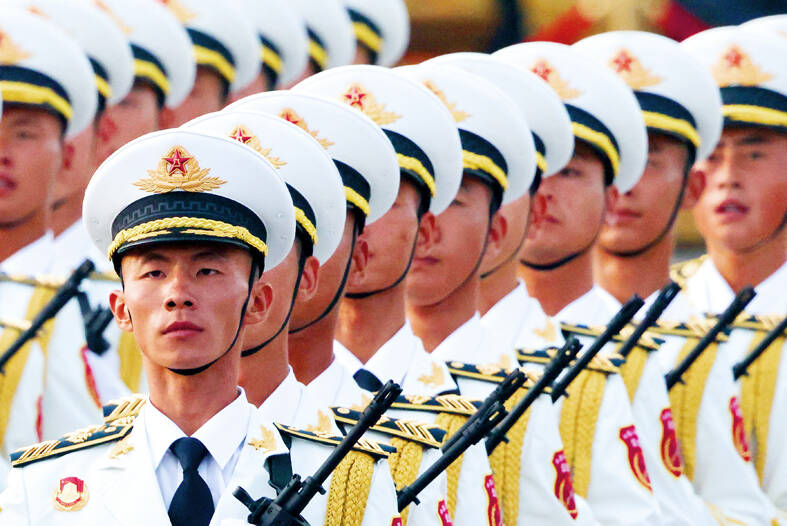
Photo: Reuters
The Chinese landing bridge ship model is typically equipped with a 120m-long bridge-like structure at the bow, allowing heavy vehicles such as tanks to move directly from a barge onto shore, he said.
The stern has a loading ramp that can connect to roll-on/roll-off ferries, creating a continuous landing chain to compensate for the PLA’s shortage of large amphibious ships and to enable faster deployment of armored units, he said.
The Chinese military has three landing bridge ships, the Donggong 401, the Donggong 402 and the Donggong 403, he said.
They are part of the East Sea Fleet of the Eastern Theater Command, the unit tasked with operations against Taiwan, he said.
The ships could be used to deploy reinforcements quickly once a beachhead is established, Shen said.
However, during the transit phase, the large unarmed vessels would be visible targets as soon as they set sail and could be destroyed by anti-ship missiles or airstrikes, he said.
If they are hit at that stage, the ships, the armored vehicles and the personnel on board would be lost, Shen said.
During the landing phase, when the vessels connect to ferries or large amphibious ships, they would become even larger targets, Shen said.
Strikes against their connecting structures would also disrupt landing operations, he added.
Even if the PLA secured a beachhead, Taiwan’s long-range weapons, such as the Thunderbolt-2000 and HIMARS multiple-launch rocket systems, as well as ambushes by special operatives near the landing sites, could cripple the vessels, Shen said.
Their high susceptibility to detection and attack means that they do not have significant operational value, he said.

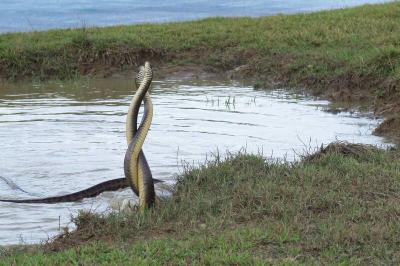
Kenting National Park service technician Yang Jien-fon (楊政峰) won a silver award in World Grand Prix Photography Awards Spring Season for his photograph of two male rat snakes intertwined in combat. Yang’s colleagues at Kenting National Park said he is a master of nature photography who has been held back by his job in civil service. The awards accept entries in all four seasons across six categories: architectural and urban photography, black-and-white and fine art photography, commercial and fashion photography, documentary and people photography, nature and experimental photography, and mobile photography. Awards are ranked according to scores and divided into platinum, gold and
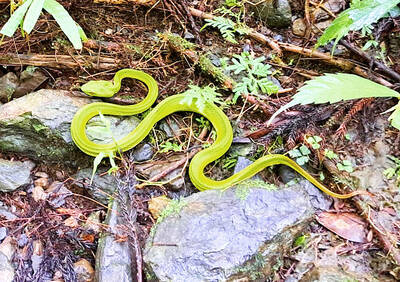
More than half of the bamboo vipers captured in Tainan in the past few years were found in the city’s Sinhua District (新化), while other districts had smaller catches or none at all. Every year, Tainan captures about 6,000 snakes which have made their way into people’s homes. Of the six major venomous snakes in Taiwan, the cobra, the many-banded krait, the brown-spotted pit viper and the bamboo viper are the most frequently captured. The high concentration of bamboo vipers captured in Sinhua District is puzzling. Tainan Agriculture Bureau Forestry and Nature Conservation Division head Chu Chien-ming (朱健明) earlier this week said that the
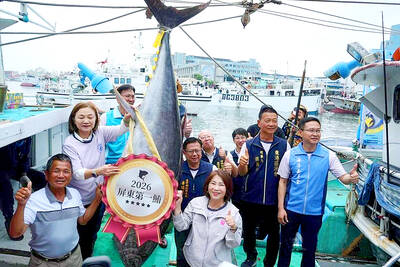
The first bluefin tuna of the season, brought to shore in Pingtung County and weighing 190kg, was yesterday auctioned for NT$10,600 (US$333.5) per kilogram, setting a record high for the local market. The auction was held at the fish market in Donggang Fishing Harbor, where the Siaoliouciou Island-registered fishing vessel Fu Yu Ching No. 2 delivered the “Pingtung First Tuna” it had caught for bidding. Bidding was intense, and the tuna was ultimately jointly purchased by a local restaurant and a local company for NT$10,600 per kilogram — NT$300 ,more than last year — for a total of NT$2.014 million. The 67-year-old skipper
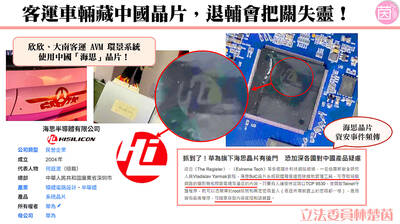
BREACH OF CONTRACT: The bus operators would seek compensation and have demanded that the manufacturer replace the chips with ones that meet regulations Two bus operators found to be using buses with China-made chips are to demand that the original manufacturers replace the systems and provide compensation for breach of contract, the Veterans Affairs Council said yesterday. Democratic Progressive Party Legislator Michelle Lin (林楚茵) yesterday said that Da Nan Bus Co and Shin-Shin Bus Co Ltd have fielded a total of 82 buses that are using Chinese chips. The bus models were made by Tron-E, while the systems provider was CYE Electronics, Lin said. Lin alleged that the buses were using chips manufactured by Huawei subsidiary HiSilicon Co, which presents a national security risk if the


 RSS
RSS