


The questions came thick and fast, but the woman sitting on the podium in a headscarf and high heels took them all in her stride. The Taliban, the Northern Alliance, Afghan President Hamid Karzai, women’s rights: Fawzia Koofi answered fluently and politely, even to the London School of Economics student who wondered if the Taliban didn’t after all bring a degree of stability to Afghanistan.
Then, just as the session was drawing to a close, a member of the audience asked, with a wry smile: “Some people in the West think it’s natural that the president of Afghanistan be a Pashtun and a man. Please discuss.” The room tittered. Koofi smiled.
The question was both playful and pertinent, for there is perhaps no one better placed to answer it than the small, quietly determined 36-year-old woman who found herself speaking on Friday at London’s Chatham House think tank.
Koofi, a former UN employee who studied, lobbied and fought her way to being elected as a member of parliament in 2005 and, subsequently, the Afghan parliament’s first female deputy speaker, now has her sights set on the ultimate political prize: the presidency. And, as unlikely as a female leader might seem in a country that still ranks among the worst places in the world for women to live, she is convinced that it is no longer unthinkable. A significant proportion of Afghan society, she said, was now ready for change.
“I think Afghanistan needs new leaders because the same people have been ruling the country for centuries and decades. But the [ordinary] people have changed,” she said, sitting in a low-lit hotel room in London on Thursday. “The silent majority of people want politicians that are committed, that are close to them, that are at their level.”
All over the world, she said, people were discovering that the best examples of “politicians who deliver” were women. Afghanistan, however, presents female MPs with certain logistical challenges that their counterparts in most other countries do not have to face. In her short career Koofi has been subject to two attempts on her life, one in 2010 when gunmen thought to be Taliban riddled her car with bullets while she was cowering inside. The last threat, she said, came two months ago when the national security team warned that the Haqqani network was trying to assassinate her.
Koofi’s memoir, The Favoured Daughter, is punctuated with letters to her two young daughters urging them to be courageous in case, one day, she does not make it home. Yet she remains undeterred.
“My father was killed, my mother passed away, my brothers were killed,” she said. “We paid a high price for being in politics and I may go for that. This is the way I choose to be; this is the road I choose to go. I knew the risk.”
If she does not scare easily, it is perhaps because life has thrown just about everything it can at her already. The 19th of 23 children her father had with his seven wives, she was left out in the sun to die as a newborn baby because her mother could not bear the shame of having given birth to another girl.
She survived, her mother repenting, but her life has been a battle ever since. She looked on as her father beat her mother; she had to plead with her brother to let her go to school and to marry the man of her choice; and she watched her husband slowly die of tuberculosis contracted in a Taliban jail he was sent to because of his links with her political family.
In the 10 years since the US-led invasion, she said, much had improved for women and — as her remarkable rise shows — attitudes in some parts of society were softening. However, this is all relative. A poll released last year said the country was till the worst place in the world for women. On Friday, the New York Times reported the story of an eight-year-old girl who was abducted and beaten because her uncle had run off with a local strongman’s wife.
Koofi, fighting to get a new law approved in parliament that would criminalize violence against women — from beatings and forced marriage, to honor killings — has to face down critics who accuse her of championing a “Western law,” and describes it as the most challenging part of her political life to date.
What she is most worried about now is that, in its rush to withdraw from the Afghan quagmire and make a deal with the Taliban, the international community will abandon her people to an uncertain fate. At Chatham House, she did not hold back in her warning of what could emerge as a worst-case scenario in the event of an over-hasty withdrawal by the west. Civil war, she said, was a distinct possibility.
And it is for women that she is most concerned. Any involvement of the Taliban in the political running of the country, she said, would affect women to a great extent.
“The fear I have, and the fear many women like me have, is to take the country back to where we started,” she said.
It could not be more different from the hopes that she, as a self-declared Muslim feminist, has for her country.
“My vision for Afghanistan, for my daughters and all the girls and women of Afghanistan is a country where they are respected as a human being regardless of their sex, regardless of their ethnicity, regardless of their religion. Because this was something I was suffering — discrimination and injustice — the whole of my life, even today,” she said. “Every step you take forward, there are hundreds of steps you have to take back because you are a woman. I want my daughters to be respected as human beings; that’s the country I’m fighting for.”

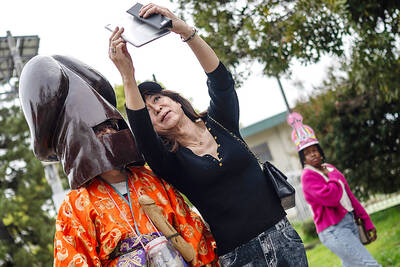
Showcasing phallus-shaped portable shrines and pink penis candies, Japan’s annual fertility festival yesterday teemed with tourists, couples and families elated by its open display of sex. The spring Kanamara Matsuri near Tokyo features colorfully dressed worshipers carrying a trio of giant phallic-shaped objects as they parade through the street with glee. The festival, as legend has it, honors a local blacksmith in the Edo Period (1603-1868) who forged an iron dildo to break the teeth of a sharp-toothed demon inhabiting a woman’s vagina that had been castrating young men on their wedding nights. A 1m black steel phallus sits in the courtyard of

JAN. 1 CLAUSE: As military service is voluntary, applications for permission to stay abroad for over three months for men up to age 45 must, in principle, be granted A little-noticed clause in sweeping changes to Germany’s military service policy has triggered an uproar after it emerged that the law requires men aged up to 45 to get permission from the armed forces before any significant stay abroad, even in peacetime. The legislation, which went into effect on Jan. 1 aims to bolster the military and demands all 18-year-old men fill out a questionnaire to gauge their suitability to serve in the armed forces, but stops short of conscription. If the “modernized” model fails to pull in enough recruits, parliament will be compelled to discuss the reintroduction of compulsory service, German
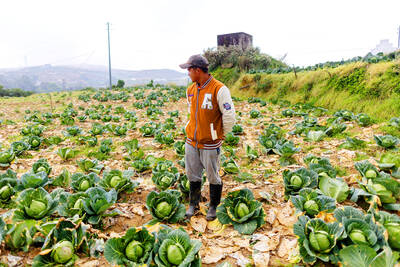
Filipino farmers like Romeo Wagayan have been left with little choice but to let their vegetables rot in the field rather than sell them at a loss, as rising oil prices linked to the Iran war drive up the cost of harvesting, labor and transport. “There’s nothing we can do,” said Wagayan, a 57-year old vegetable farmer in the northern Philippine province of Benguet. “If we harvest it, our losses only increase because of labor, transportation and packing costs. We don’t earn anything from it. That’s why we decided not to harvest at all,” he said. Soaring costs caused by the Middle East
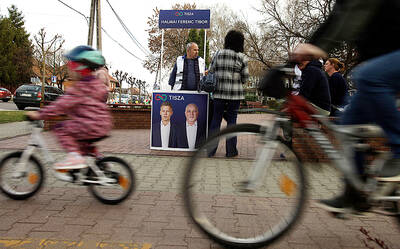
Hungarian Prime Minister Viktor Orban’s officially declared wealth is fairly modest: some savings and a jointly owned villa in Budapest. However, voters in what Transparency International deems the EU’s most corrupt country believe otherwise — and they might make Orban pay in a general election this Sunday that could spell an end to his 16-year rule. The wealth amassed by Orban’s inner circle is fueling the increasingly palpable frustration of a population grappling with sluggish growth, high inflation and worsening public services. “The government’s communication machine worked well as long as our economic situation remained relatively good,” said Zoltan Ranschburg, a political analyst


 RSS
RSS