


Patients treated at Veterans Affairs (VA) hospitals and clinics in the US will be able to use medical marijuana in the 14 states where it’s legal, according to new federal guidelines.
The directive from the Veterans Affairs Department in the coming week is intended to clarify current policy that says veterans can be denied pain medication if they use illegal drugs. Veterans groups have complained for years that this could bar veterans from VA benefits if they were caught using medical marijuana.
The new guidance does not authorize VA doctors to begin prescribing medical marijuana, which is considered an illegal drug under federal law, but it will now make clear that in the 14 states where state and federal law are in conflict, VA clinics generally will allow the use of medical marijuana for veterans already taking it under other clinicians.
“For years, there have been veterans coming back from the Iraq War who needed medical marijuana and had to decide whether they were willing to cut down on their VA medications,” John Targowski, a legal adviser to the group Veterans for Medical Marijuana Access, which worked with the VA on the issue.
Targowski in an interview on Saturday that confusion over the government’s policy might have led some veterans to distrust their doctors or avoid the VA system.
Robert A. Petzel, the VA’s undersecretary for health, sent a letter to Veterans for Medical Marijuana Access this month that spells out the department’s policy. The guidelines will be distributed to the VA’s 900 care facilities around the country in the next week.
Petzel makes clear that a VA doctor could reserve the right to modify a veteran’s treatment plan if there were risks of a bad interaction with other drugs.
“If a veteran obtains and uses medical marijuana in a manner consistent with state law, testing positive for marijuana would not preclude the veteran from receiving opioids for pain management,” in a VA facility, Petzel wrote.

Kouri Richins, a Utah mother who published a children’s book about grief after the death of her husband is to serve a life sentence for his murder without the possibility of parole, a judge ruled on Wednesday. Richins was convicted in March of aggravated murder for lacing a cocktail given to her husband, Eric Richins, with five times the lethal dose of fentanyl at their home near Park City in 2022. A jury also found her guilty of four other felonies, including insurance fraud, forgery and attempted murder for trying to poison her husband weeks earlier on Feb. 14, 2022, with a

‘PERSONAL MISTAKES’: Eileen Wang has agreed to plead guilty to the felony, which comes with a maximum sentence of 10 years in federal prison A southern California mayor has agreed to plead guilty to acting as an illegal agent for the Chinese government and has resigned from her city position, officials said on Monday. Eileen Wang (王愛琳), mayor of Arcadia, was charged last month with one count of acting in the US as an illegal agent of a foreign government. She was accused of doing the bidding of Chinese officials, such as sharing articles favorable to Beijing, without prior notification to the US government as required by law. The 58-year-old was elected in November 2022 to a five-person city council, from which the mayor is selected

DELA ROSA CASE: The whereabouts of the senator, who is wanted by the ICC, was unclear, while President Marcos faces a political test over the senate situation Philippine authorities yesterday were seeking confirmation of reports that a top politician wanted by the International Criminal Court (ICC) had fled, a day after gunfire rang out at the Philippine Senate where he had taken refuge fearing his arrest. Senator Ronald “Bato” dela Rosa, the former national police chief and top enforcer of former Philippine president Rodrigo Duterte’s “war on drugs,” has been under Senate protection and is wanted for crimes against humanity, the same charges Duterte is accused of. “Several sources confirmed that the senator, Senator Bato, is no longer in the Senate premises, but we are still getting confirmation,” Presidential
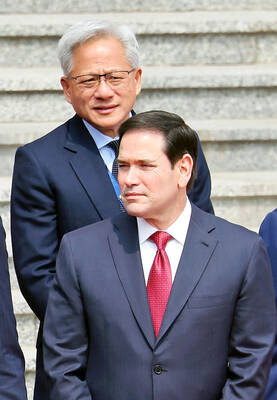
HELP DENIED? The US Department of State said that the Cuban leadership refuses to allow the US to provide aid to Cubans, ‘who are in desperate need of assistance’ US Secretary of State Marco Rubio on Wednesday said that Cuba’s leadership must change, as Washington renewed an offer of US$100 million in aid if the communist nation agrees to cooperate. Cuba has been suffering severe economic tumult led by an energy shortage that plunged 65 percent of the country into darkness on Tuesday. Cuba’s leaders have blamed US sanctions, but Rubio, a Cuban American and critic of the government established by Fidel Castro, said the system was to blame, including corruption by the military. “It’s a broken, nonfunctional economy, and it’s impossible to change it. I wish it were different,” he told


 RSS
RSS