


They filled the cafe night after night.
To the casual observer, it might have looked like a roomful of people in their 20s with enviable amounts of idle time.
Yet the 30 young Muslim men and women who met for 30 days had serving society, not socializing, on their minds. And the group calling itself 30/30 emerged from the meetings with an agenda: to help teens in their community deal with social ills such as drug and alcohol addiction and mental illness — and to teach those on the outside about their faith.
A few goals emerged from the caffeinated conversations, now being fine-tuned in follow-up sessions: Establish mentoring and counseling programs for high school students, offer leadership retreats for young adults and develop brochures that explain Muslim practices — such as women wearing head scarves.
“We had a list of objectives when we first started,” said Mariam Zaiat, 22. “Part of it is to educate. Part of it is there is a void and we need to fill the void. Part of it is that we are capable and what are we doing?”
The quest seems well-suited for the young activists in a community with one of the largest Arab and Muslim populations in the country. Many are the children or grandchildren of immigrants. They are training to be doctors, lawyers, nurses, social workers and therapists. Their sense of mission took root at the Islamic Center of America and affiliated Young Muslim Association.
“I really think that the previous generations, when they came here, they were thinking this is temporary and we’re going back home, so they didn’t want to invest too much in this. Their main goal was survival: ‘We need a job, we don’t speak the language, we’re in a foreign country,’” said Zaiat, who is working toward a master’s degree in occupational therapy.
“With us, people that are born and raised here, and got to school, this is our community. We never think, ‘Oh, we’re going to go back somewhere.’ So that’s another reason why we invest so much is because our hearts are here.”
That investment begins with tackling internal problems, such as substance abuse, mental illness and domestic violence. The 30/30 sessions became a workshop for the nascent Muslim Youth Social Support Network, which will pair young leaders with high school students, and offer an online forum and a hotline.
They aren’t bigger issues for Muslims than for any other ethnic, racial or religious group, members say, but treating them can be trickier in a culture that uses shame to deter socially unacceptable behavior.
“There’s a big stigma around receiving help in this community, so it’s going to be an anonymous forum online,” said Latifeh Sabbagh, a 24-year-old who leads the support network and serves as a social worker in the Dearborn Public Schools.
“When people disclose their information, sometimes there’s shame, embarrassment. If they can do it and it’s anonymous, it’s so much easier for them to open up about what it is,” Sabbagh said.
The area offers many human service programs, but none focusing on youth and led by young adults from a Muslim perspective.
“We’re not reaching out to these kids,” said Ali Dabaja, a medical student who grew up in Dearborn. He spoke by telephone from New York, where he recently started his residency. “They don’t have a good support structure.”
Dabaja, a founder of the Young Muslim Association and networking and advocacy group Allied Muslim Youth of North America, came up with the idea for 30/30.
“I was trying to foster this sense of activism, this sense of taking responsibility for the direction of the community,” he said. “Just one day I was thinking … ‘How about if we just get together for 30 days and bring the best and brightest of the community together?’”
Dabaja said it is important to be apolitical and independent of existing organizations because young people typically seek a less bureaucratic experience. But the group would work with others if that’s what it takes to get something launched.
Another goal is to produce brochures and distribute them nationally to mosques, which would offer them to visitors seeking information about Islam. Jennifer Berry said the idea is to explain why women wear the hijab, or why followers pray five times a day or fast during daylight hours for one month a year.
Islam “is under a lot more scrutiny because it’s under the scrutiny of the media right now,” said Berry, 28, who expects to finish her nursing degree next year. “When you have the media pushing out negative ideas about Islam, people are going to have the same negative ideas.”
On a recent morning, four group members gathered at Caffina Coffee, the site of their meeting marathon back in May. The shop is owned by the family of member Dewnya Bakri, 21, who starts law school in September.
Bakri says enlightening others also can come through conversations — and her group can use the life lessons it’s learned.
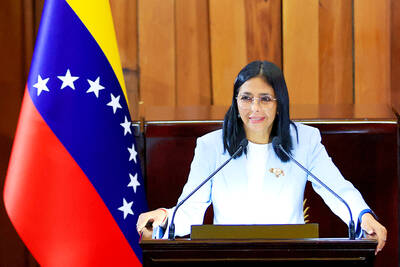
VAGUE: The criteria of the amnesty remain unclear, but it would cover political violence from 1999 to today, and those convicted of murder or drug trafficking would not qualify Venezuelan Acting President Delcy Rodriguez on Friday announced an amnesty bill that could lead to the release of hundreds of prisoners, including opposition leaders, journalists and human rights activists detained for political reasons. The measure had long been sought by the US-backed opposition. It is the latest concession Rodriguez has made since taking the reins of the country on Jan. 3 after the brazen seizure of then-Venezuelan president Nicolas Maduro. Rodriguez told a gathering of justices, magistrates, ministers, military brass and other government leaders that the ruling party-controlled Venezuelan National Assembly would take up the bill with urgency. Rodriguez also announced the shutdown
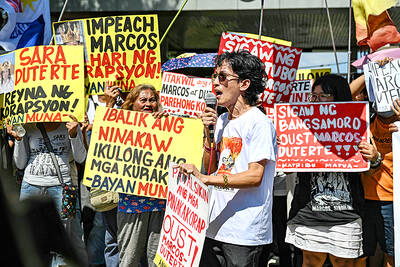
Civil society leaders and members of a left-wing coalition yesterday filed impeachment complaints against Philippine Vice President Sara Duterte, restarting a process sidelined by the Supreme Court last year. Both cases accuse Duterte of misusing public funds during her term as education secretary, while one revives allegations that she threatened to assassinate former ally Philippine President Ferdinand Marcos Jr. The filings come on the same day that a committee in the House of Representatives was to begin hearings into impeachment complaints against Marcos, accused of corruption tied to a spiraling scandal over bogus flood control projects. Under the constitution, an impeachment by the
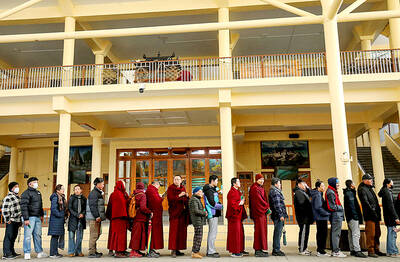
Exiled Tibetans began a unique global election yesterday for a government representing a homeland many have never seen, as part of a democratic exercise voters say carries great weight. From red-robed Buddhist monks in the snowy Himalayas, to political exiles in megacities across South Asia, to refugees in Australia, Europe and North America, voting takes place in 27 countries — but not China. “Elections ... show that the struggle for Tibet’s freedom and independence continues from generation to generation,” said candidate Gyaltsen Chokye, 33, who is based in the Indian hill-town of Dharamsala, headquarters of the government-in-exile, the Central Tibetan Administration (CTA). It

A Virginia man having an affair with the family’s Brazilian au pair on Monday was found guilty of murdering his wife and another man that prosecutors say was lured to the house as a fall guy. Brendan Banfield, a former Internal Revenue Service law enforcement officer, told police he came across Joseph Ryan attacking his wife, Christine Banfield, with a knife on the morning of Feb. 24, 2023. He shot Ryan and then Juliana Magalhaes, the au pair, shot him, too, but officials argued in court that the story was too good to be true, telling jurors that Brendan Banfield set


 RSS
RSS