


Thousands of physicians and scientists are meeting today in Chicago to tackle the growing resistance of germs to antibiotics and the effects of global warming on them at the world's biggest conference on disease-causing microbes.
For the first time at the annual event, "the keynote session is going to be on climate change and the impact on human disease," said Jim Sliwa, spokesman for the American Society for Microbiology, the organizer of the event.
"We know that climate change is going to change the pattern of infectious diseases," he said. "There are so many variables that we don't know what's going to happen."
"As global average temperature increases, we know ... for example, the malaria line in mountainous regions will continue to rise. This is fairly certain because above a certain altitude mosquitoes can't live," Sliwa said.
"We know also in the tropics influenza is year-round. There is no influenza season, so as the temperature rises the tropical areas expand and we'll get more year-round influenza," he said.
Presentations at the conference will address the problem of drug-resistant microbes such as tuberculosis, which kills two million people each year.
Pharmaceutical labs will present research on growing challenges such as the resistance of certain staphylococcus bacteria, known as SARM, to antibiotics -- a source of many in-hospital infections, the association said.
They will also discuss the risks of a possible epidemic of a form of bird flu that is dangerous to humans and that could be passed from person to person.
Also on the agenda will be the results of clinical trials on the effectiveness of anti-retroviral therapies on cancers in people carrying HIV, the virus that causes AIDS.
British researchers are to make a presentation on the antibiotic effects of statin drugs, which reduce cholesterol.
Research seems to have revealed the mechanism by which chemical action of the liver gives the anti-cholesterol drugs anti-microbe properties.
The association will also publish results of a survey on preventive hygiene, which looks at hand-washing habits among Americans.
It examined the number of people who wash their hands after using public restrooms.
Other studies have shown that a worldwide campaign launched in 2005 by the WHO to prompt medical personnel to wash and disinfect themselves before touching a patient yielded encouraging results, the conference program showed.
Inadequate hand-washing among doctors and nurses is responsible for millions of infections in hospitals around the world.
Some 12,000 participants -- including researchers from France, Japan and Britain -- will in Chicago for the event, titled the Interscience Conference on Antimicrobial Agents and Chemotherapy.
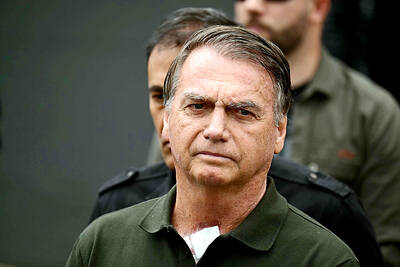
CHARGES: The former president, who maintains his innocence, was sentenced to 27 years and three months in prison for a failed coup bid, as well as an assassination plot Far-right former Brazilian president Jair Bolsonaro is running out of options to avoid prison, after judges on Friday rejected his appeal against a 27-year sentence for a botched coup bid. Bolsonaro lost the 2022 elections and was convicted in September for his efforts to prevent Brazlian President Luiz Inacio Lula da Silva from taking power after the polls. Prosecutors said the scheme — which included plans to assassinate Lula and a top Brazilian Supreme Court judge — failed only due to a lack of support from military top brass. A panel of Supreme Court judges weighing Bolsonaro’s appeal all voted to uphold
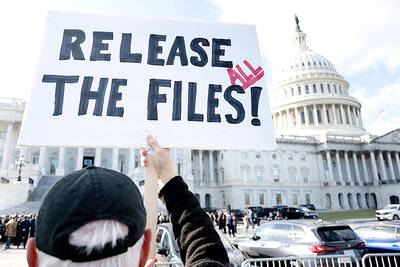
The latest batch from convicted sex offender Jeffrey Epstein’s e-mails illustrates the extraordinary scope of his contacts with powerful people, ranging from a top Trump adviser to Britain’s ex-prince Andrew. The US House of Representatives is expected to vote this week on trying to force release of evidence gathered on Epstein by law enforcement over the years — including the identities of the men suspected of participating in his alleged sex trafficking ring. However, a slew of e-mails released this week have already opened new windows to the extent of Epstein’s network. These include multiple references to US President Donald

Chinese tech giant Alibaba yesterday denied it helps Beijing target the US, saying that a recent news report was “completely false.” The Financial Times yesterday reported that Alibaba “provides tech support for Chinese military ‘operations’ against [US] targets,” a White House memo provided to the newspaper showed. Alibaba hands customer data, including “IP addresses, WiFi information and payment records,” to Chinese authorities and the Chinese People’s Liberation Army, the report cited the memo as saying. The Financial Times said it could not independently verify the claims, adding that the White House believes the actions threaten US security. An Alibaba Group spokesperson said “the assertions

LEFT AND RIGHT: Battling anti-incumbent, anticommunist sentiment, Jeanette Jara had a precarious lead over far-right Jose Antonio Kast as they look to the Dec. 14 run Leftist candidate Jeannette Jara and far-right leader Jose Antonio Kast are to go head-to-head in Chile’s presidential runoff after topping Sunday’s first round of voting in an election dominated by fears of violent crime. With 99 percent of the results counted, Jara, a 51-year-old communist running on behalf of an eight-party coalition, won 26.85 percent, compared with 23.93 percent for Kast, the Servel electoral service said. The election was dominated by deep concern over a surge in murders, kidnappings and extortion widely blamed on foreign crime gangs. Kast, 59, has vowed to build walls, fences and trenches along Chile’s border with Bolivia to


 RSS
RSS