


In mosques from Mecca to Marrakesh, sermons at Friday prayers underscored both the David-versus-Goliath glamour that many Arabs associate with Hezbollah's fight against Israel and their antipathy toward the US and its allies in the region for doing so little to stop another Arab country from collapsing into bloodshed.
"Our brothers are being killed in Lebanon and no one is responding to their cries for help," said Sheik Hazzaa al-Maswari in his Friday sermon at the Mujahid Mosque in Sana, Yemen's capital.
"Where are the Arab leaders?" he said. "Do they have any skill other than begging for a fake peace outside the White House? We don't want leaders who bow to the White House."
The tone of the sermons suggests the fighting in Lebanon is further tarnishing the image of the US in the Arab world as being solely concerned with Israel's welfare and making its allied governments look increasingly like puppets.
"What is creating radicalism in the region is not authoritarian regimes," said Mustafa Hamarneh, director of the Center for Strategic Studies at the University of Jordan. "Mainly it is American policy in the region -- survey after survey shows that."
The attacks against Arab leaders from the pulpit were all the more surprising because so many governments have exerted some manner of control over sermons in recent years.
In Damascus prominent prayer leaders took some Arab countries to task -- although without mentioning by name such critics of Hezbollah as Saudi Arabia, Egypt and Jordan.
"What gives us pain is the Arab position," said Mohamed al-Habash, a cleric at the Al Zahra Mosque. "They are entering a conspiracy against the Arabs, their brothers."
In an interview, he said the US was helping religious extremists by encouraging the Israelis to continue their onslaught. By not working harder to stop the deaths of scores of Lebanese women and children, he said, the US is abetting terrorists' recruiting efforts.
"The United States is creating more Zarqawis, more bin Ladens in the Mideast every day," he said.
The Saudi government has taken a strong public position against Hezbollah's having brought on the crisis by capturing two Israeli soldiers, condemning the organization's "uncalculated adventures."
Yet the senior Saudi imam took an indirect swipe at the US for claiming to promote human rights while leaving the mounting deaths of civilians all but unmentioned.
"Where are those who filled the world with slogans of freedom and democracy?" he asked. "Don't they fear that history will condemn them for their double standards?"
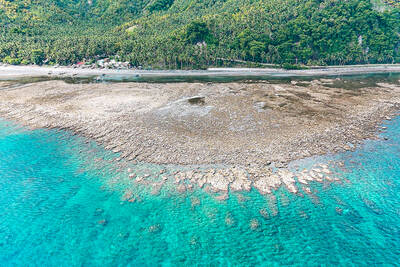
Arsenio Butil Jr fell to his knees and began to pray when last week’s deadly magnitude 7.8 earthquake began shaking his home on the coast of the southern Philippines. When he opened his eyes, he saw a once-familiar shoreline changing in real time, with swathes of previously submerged coral suddenly pushing above the waterline. The June 8 quake, driven by a shifting of the nearby Cotabato Trench, toppled buildings, triggered landslides and killed at least 76 people on the southern island of Mindanao. The tectonic forces at work also thrust chunks of the island’s coastline upward in a phenomenon known as “coastal uplift,”
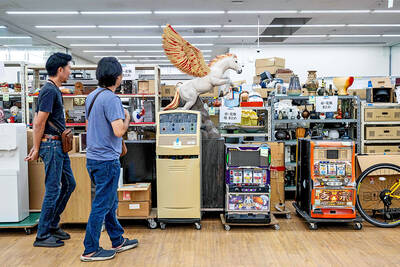
YUCK OR YUM? While it is difficult to sell second-hand goods that are more than seven years old in Japan, they are still popular in foreign markets, an executive said Under a scorching sun in a Bangkok suburb, a whistle blew, and shouts filled the air as dozens of shoppers rushed into a warehouse bearing the sign “Japanese Second-Hand Store.” From bags and bicycles to surfboards and suitcases, the Japanese second-hand market is booming, with quality-conscious buyers in other Asian countries increasingly tapping into the circular economy trend. “What is considered garbage for them can still be useful in Thailand,” said 36-year-old Lookpoo Sathitpanyapon, who runs an online store selling toy keychains. “That bag, that bag,” one shopper shouted while racing through the warehouse, filled with everything from colorful toys
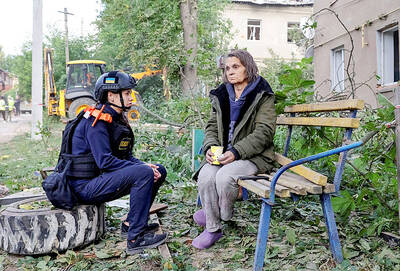
President Volodymyr Zelenskiy on Saturday said that Russian forces were preparing an impending massive attack on Ukraine and warned residents to take special care as Russian strikes in different regions killed at least six people. “Tonight and in the coming hours, it is especially important to pay close attention to air raid warnings,” Zelenskiy said in his nightly video address. “The Russians have prepared for a massive attack. Please take care of yourselves.” Russian forces have staged a series of heavy attacks on Kyiv in the past few weeks and in other major cities. Strikes on Monday last week killed
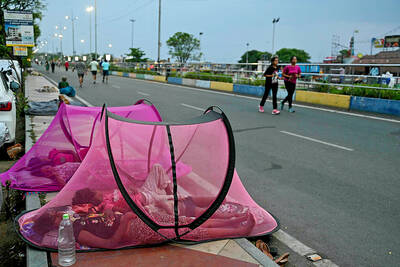
Growing up in Tahiti, Anna-Bella Failloux saw first-hand the threat posed by mosquitoes: Nearly one-third of adults on the picturesque island once had swollen limbs from elephantiasis caused by their bites. She has since dedicated her life to studying mosquitoes and the diseases they transmit — a concern that looms ever larger as climate change expands the area where the insects roam. “You have to accept being bitten by a mosquito from time to time,” the 63-year-old entomologist at France’s Pasteur Institute said. “But we have to avoid too many people getting sick and dying from the infections,” Failloux said, as she observed


 RSS
RSS