


When the atmosphere loosened up at her office, Japanese hospital clerk Makiko Ishikawa knew it was because there was new blood around -- literally.
Fellow workers with Type-O blood had joined the team, she explained, replacing the Type-A types who strictly follow the rules.
"When I meet someone for the first time, like newcomers at work, I usually ask them their blood types. It tells me something about their personality," said 30-year-old Ishikawa.
"You would be amazed to find out how much you can tell about a person by knowing her or his blood type," she said.
Such belief in a link between blood types and human personalities is common currency in Japan and South Korea.
Television networks and magazines are rife with programs on the supposed connection, and many Japanese and Koreans casually ask others about their blood types to predict their inclinations.
While in Western countries many people are completely unaware of their blood types unless they need to provide it to health workers for medical reasons, Japanese are acutely aware what type they are.
But the practice also has a dark side -- discrimination against people, particularly children, based purely on their blood.
The issue has become such a cause of concern that a Japanese industry group has asked major broadcasters to stop presenting blood type shows as science.
To Toshitaka Nomi, a leading researcher of blood-type characterization who has studied the link for three decades, people are undeniably predisposed to certain characteristics due to their blood.
He believes Japan should recognize the fact and make use of it.
"If studies in this area become more advanced, we can apply this to improve product marketing, human resource management, education," said Nomi, a former journalist who heads the non-profit Human Science ABO Center.
In Japan, the four blood types are more evenly distributed than in many countries, although Type-A and Type-O still account for nearly 70 percent of the population.
According to popular belief, Type-A people are organized perfectionists, while Type-Os are strong leaders.
The more rare Type-AB indicates a person is rational and standoffish in public, but in private is creative and full of emotion, typically becoming decorators or gourmands.
Type-B means a person puts personal freedom above community order, a taboo in East Asian culture, leading to the bullying of Type-B children at school.
Only 20 percent of people in highly organized Japan are Type-B, compared with about 40 percent in India, Nomi said.
According to Nomi's research, during the era of Japan's rapid economic growth after World War II, 36 percent of publicly traded firms had Type-O, or strong leaders, as presidents, more than the 31 percent of the general population.
After the 1970s, the percentage of Type-O presidents fell to 29 percent. They were replaced by Type-As, the organized ones whose management skills kept up Japan's stable growth, Nomi said.
Former US president Ronald Reagan was Type O, while the slain John F. Kennedy was AB, said Nomi, who has published some 100 books in Japan, some of which have been translated into other languages.
"These findings are all statistically significant, not a result of a one-off survey," said Nomi, himself a Type-A.
But Daisuke Nakanishi, a social psychologist at Hiroshima Shudo University, warned of danger if people believed such ideas were science rather than just entertainment.
"It is an immensely interesting field of study for us scholars, that many people actually believe in blood type characterization even after many scientists have dismissed it," he said.
Human genes have been linked with human characters, but it is too "radical" to say blood types affect character, said Nakanishi, who is among many scholars who keep Internet sites against the concept.
"Those who believe in blood type characterization think they know about people just by learning their blood types. It is dangerous to casually believe that," he said.

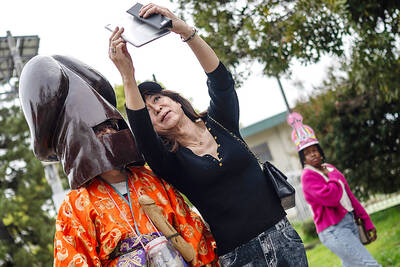
Showcasing phallus-shaped portable shrines and pink penis candies, Japan’s annual fertility festival yesterday teemed with tourists, couples and families elated by its open display of sex. The spring Kanamara Matsuri near Tokyo features colorfully dressed worshipers carrying a trio of giant phallic-shaped objects as they parade through the street with glee. The festival, as legend has it, honors a local blacksmith in the Edo Period (1603-1868) who forged an iron dildo to break the teeth of a sharp-toothed demon inhabiting a woman’s vagina that had been castrating young men on their wedding nights. A 1m black steel phallus sits in the courtyard of

JAN. 1 CLAUSE: As military service is voluntary, applications for permission to stay abroad for over three months for men up to age 45 must, in principle, be granted A little-noticed clause in sweeping changes to Germany’s military service policy has triggered an uproar after it emerged that the law requires men aged up to 45 to get permission from the armed forces before any significant stay abroad, even in peacetime. The legislation, which went into effect on Jan. 1 aims to bolster the military and demands all 18-year-old men fill out a questionnaire to gauge their suitability to serve in the armed forces, but stops short of conscription. If the “modernized” model fails to pull in enough recruits, parliament will be compelled to discuss the reintroduction of compulsory service, German
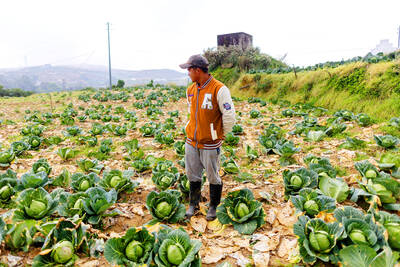
Filipino farmers like Romeo Wagayan have been left with little choice but to let their vegetables rot in the field rather than sell them at a loss, as rising oil prices linked to the Iran war drive up the cost of harvesting, labor and transport. “There’s nothing we can do,” said Wagayan, a 57-year old vegetable farmer in the northern Philippine province of Benguet. “If we harvest it, our losses only increase because of labor, transportation and packing costs. We don’t earn anything from it. That’s why we decided not to harvest at all,” he said. Soaring costs caused by the Middle East
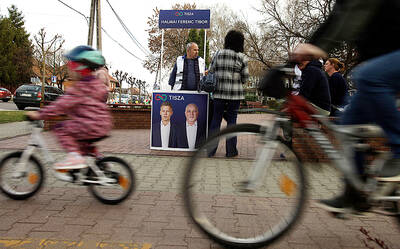
Hungarian Prime Minister Viktor Orban’s officially declared wealth is fairly modest: some savings and a jointly owned villa in Budapest. However, voters in what Transparency International deems the EU’s most corrupt country believe otherwise — and they might make Orban pay in a general election this Sunday that could spell an end to his 16-year rule. The wealth amassed by Orban’s inner circle is fueling the increasingly palpable frustration of a population grappling with sluggish growth, high inflation and worsening public services. “The government’s communication machine worked well as long as our economic situation remained relatively good,” said Zoltan Ranschburg, a political analyst


 RSS
RSS