


London Mayor Ken Livingstone on Friday faced the double ignominy of suspension from office and becoming liable for at least ?80,000 (US$136,000) in costs after a disciplinary tribunal found him guilty of bringing his position into disrepute by likening a Jewish reporter to a concentration camp guard.
More than a year after his late night confrontation with Oliver Finegold, a reporter for the London Evening Standard newspaper, Livingstone was told he must stand down for a month from March 1 for his "unnecessarily insensitive and offensive" behavior towards the journalist.
But the ruling triggered a constitutional row as Livingstone's allies and independent observers railed against the idea of a politician with the biggest personal mandate in Europe being deposed, albeit temporarily, by unelected officials.
The decision to suspend Livingstone, who was elected with sizeable majorities in 2000 and 2004, was taken by the Adjudication Panel, the UK government body which deals with serious disciplinary cases involving local government.
"This decision strikes at the heart of democracy. Elected politicians should only be able to be removed by the voters or for breaking the law," Livingstone said.
"Three members of a body that no one has ever elected should not be allowed to overturn the votes of millions of Londoners," he said.
He said he will decide next week whether to challenge the decision at the high court.
David Laverick, chairman of the disciplinary panel to which the matter was referred, said the punishment was solely at his panel's discretion.
He concluded: "The mayor does seem to have failed, from the outset of this case, to have appreciated that his conduct was unacceptable, was a breach of the code [the Greater London Authority code of conduct] and did damage to the reputation of his office ... it is the mayor who must take responsibility for this."
The ruling was welcomed by the London Jewish Forum. Its chairman, Adrian Cohen, said: "It should never have reached this point when a simple apology could have avoided all the pain caused to so many Jewish Londoners who have been affected by the Holocaust."
The incident occurred last February as Livingstone left a party marking the 20 years since former UK culture secretary Chris Smith became Britain's first openly gay MP. In a tape-recorded exchange, he asked Finegold whether he had ever been a "German war criminal."
On being told that the reporter objected to the remark and was Jewish, the mayor said: "Ah, well you might be but actually you are just like a concentration camp guard, you are just doing it because you are paid to, aren't you?"
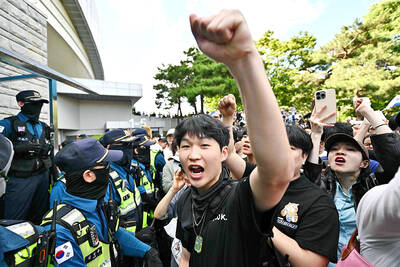
‘ABSURD MISTAKE’: The election commission said that there had been a failure to anticipate turnout after 14 polling stations ran short of ballot papers South Korean riot police yesterday cleared protesters from a Seoul polling station after a 35-hour blockade sparked by a shortage of ballot papers during local elections earlier this week. Wednesday’s election was the first nationwide vote since South Korean President Lee Jae-myung took office following the ouster of Yoon Suk-yeol over his short-lived martial law declaration. Lee’s ruling Democratic Party swept most races, but failed to flip the crucial Seoul mayoral seat. The South Korean National Election Commission apologized, blaming a failure to anticipate turnout after 14 polling stations in Seoul ran short of ballot papers. Some polling stations stayed open until 10pm to

France experienced its hottest spring on record, the French weather service said on Tuesday, after an exceptional early heat wave that also broke highs for the season in England and Wales. Meteo-France said the average nationwide temperature over March to May was 13.8°C — about 1.7°C above the norm, and surpassing records set in 2011 and 2020. “The warmest spring since records began in 1900,” it said in a bulletin. All three months were warmer than average, but the onset of an “unprecedented heatwave” late last month pushed the mercury to highs typically seen at the height of the summer. “Our country had never
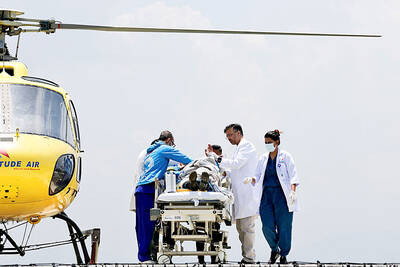
A Sherpa guide was found crawling to base camp on Mount Everest a week after he went missing and was reunited with his family, who had given up hope he would return. Dawa Sherpa was last seen on Friday last week descending the mountain, but he did not reach base camp even though his client did. The pair were among the last climbers on the mountain as the climbing season came to an end and the route was dismantled. Dawa was located by a cleaning crew on Thursday morning as he was crawling down the snowy slopes around the Khumbu Icefall, just above
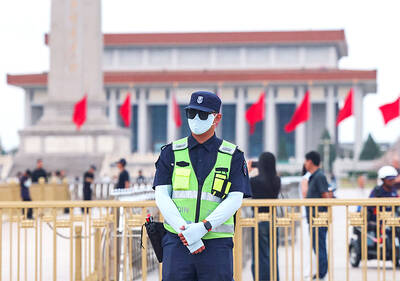
Chinese authorities are snuffing out any remembrance of the deadly 1989 military crackdown on student-led pro-democracy protests in Tiananmen Square, which happened 37 years ago yesterday, in a further tightening of a years-long campaign to erase what happened from public memory. Police told relatives of the victims they would not be allowed to visit a cemetery in Beijing on the anniversary of the crackdown, a person with knowledge of the matter said. Relatives of the victims visited the cemetery on the anniversary for more than 30 years to read memorial statements with police keeping watch, Amnesty International said. Hundreds of people,


 RSS
RSS