


With parade names like Pegasus, Caesar, Mona Lisa and Sparta, a reviving New Orleans kicked off its Mardi Gras celebrations on Saturday -- the start of the city's official comeback from its devastation by Hurricane Katrina six months ago.
There were some hiccups: the Atlas and "Bards of Bohemia" parades, slated for Friday and Saturday respectively, were canceled "due to insurance problems", the Times Picayune newspaper reported online.
But the weekend's 16 remaining parades moved through the streets of the French Quarter and nearby Jefferson Parish with Bugs Bunny-and-Carrot figures, orange-clad bands swinging their instruments, and riders on large floats tossing beads into the thin crowds, according to broadcast video footage from the city.

PHOTO: AFP
The Mardi Gras celebrations will culminate on Feb. 28, or Fat Tuesday, the last day of a period of revelry, feasting and dancing before Ash Wednesday that marks the beginning of Christian Lent leading up to Easter.
New Orleans is struggling to stand on its feet after Hurricane Katrina swamped the region last August, killing more than 1,300 people and driving the city's 462,000 people out of town to safety.
Only one-third have returned because there's no place to live: the debris of their destroyed homes, where some bodies are still expected to be found, has still not been removed, and there is no electricity or drinking water in large sections of the city.
Some of the 300,000 evacuees still waiting to return, or making new lives for themselves, however, have been organizing their own celebrations from their dispersed lives across the country, according to Web blogs on the Times Picayune Web site.
"Like icing spreading out over a king cake the size of America, new and old Mardi Gras traditions have travelled with displaced New Orleanians," the Web blog said.
Among the cities celebrating new festivals are Louisville, Kentucky, and Chicago, Illinois -- where the Children's Museum was hosting a party for displaced kids.
Most of the celebrations in New Orleans center on the renowned French Quarter, whose higher ground helped it survive with less damage, and where clubs like the Cats Meow just barely got operations going again in time for Mardi Gras.
The club is symbolic of recovery because it sits at the geographical center of the French Quarter, at the corner of famous Bourbon Street and St. Peter.
"The relighting of the Cats Meow sign ... is a special sign of renewal," the Web blog said.
The city has trimmed down the celebration this year from 12 days to eight days, and for the first time in Mardi Gras' 150-year-history, was searching for a corporate sponsor to help cover the US$2.7 million in police overtime and fire protection for the festival.
A city law bans such private sponsorship under normal conditions. But a search by a private firm -- MediaBuys -- engaged to find one came up empty-handed because the effort didn't begin until late last year.
Getting approval for such sponsorships often takes six months, the Times Picayune reported.
Some of Katrina's victims are angry about the push to celebrate Mardi Gras when the losses are so fresh.
"We don't need Mardi Gras, we need to rebuild the city," said MacArthur Samuels, who recently visited Washington to petition the federal government to help his city.
"Don't put up lights for Mardi Gras if there is no lights in my neighborhood," he said.
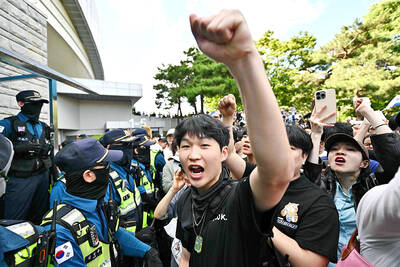
‘ABSURD MISTAKE’: The election commission said that there had been a failure to anticipate turnout after 14 polling stations ran short of ballot papers South Korean riot police yesterday cleared protesters from a Seoul polling station after a 35-hour blockade sparked by a shortage of ballot papers during local elections earlier this week. Wednesday’s election was the first nationwide vote since South Korean President Lee Jae-myung took office following the ouster of Yoon Suk-yeol over his short-lived martial law declaration. Lee’s ruling Democratic Party swept most races, but failed to flip the crucial Seoul mayoral seat. The South Korean National Election Commission apologized, blaming a failure to anticipate turnout after 14 polling stations in Seoul ran short of ballot papers. Some polling stations stayed open until 10pm to

France experienced its hottest spring on record, the French weather service said on Tuesday, after an exceptional early heat wave that also broke highs for the season in England and Wales. Meteo-France said the average nationwide temperature over March to May was 13.8°C — about 1.7°C above the norm, and surpassing records set in 2011 and 2020. “The warmest spring since records began in 1900,” it said in a bulletin. All three months were warmer than average, but the onset of an “unprecedented heatwave” late last month pushed the mercury to highs typically seen at the height of the summer. “Our country had never

A Sherpa guide was found crawling to base camp on Mount Everest a week after he went missing and was reunited with his family, who had given up hope he would return. Dawa Sherpa was last seen on Friday last week descending the mountain, but he did not reach base camp even though his client did. The pair were among the last climbers on the mountain as the climbing season came to an end and the route was dismantled. Dawa was located by a cleaning crew on Thursday morning as he was crawling down the snowy slopes around the Khumbu Icefall, just above
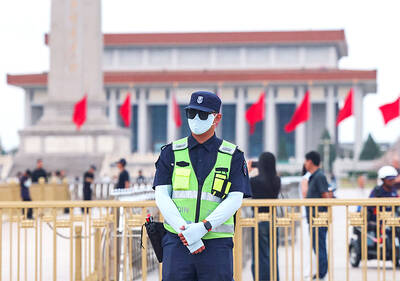
Chinese authorities are snuffing out any remembrance of the deadly 1989 military crackdown on student-led pro-democracy protests in Tiananmen Square, which happened 37 years ago yesterday, in a further tightening of a years-long campaign to erase what happened from public memory. Police told relatives of the victims they would not be allowed to visit a cemetery in Beijing on the anniversary of the crackdown, a person with knowledge of the matter said. Relatives of the victims visited the cemetery on the anniversary for more than 30 years to read memorial statements with police keeping watch, Amnesty International said. Hundreds of people,


 RSS
RSS