


President Mahinda Rajapakse yesterday called for immediate talks with the Tamil Tiger rebels to halt spiraling violence threatening Sri Lanka's four-year-old cease fire and taking the tropical island again toward the brink of war.
But in an interview, Rajapakse also had a warning for anyone who might take his wish for peace as a sign that the government was unable to take on the Tigers.
"Don't take my patience as my weakness," Rajapakse said, one day before Norwegian peace broker Erik Solheim was to arrive to try to bring the two parties back to the negotiating table.
"Let us sit down together and talk and from there we can pick the thread up and carry on," Rajapakse said, who won the Nov. 17 presidential election on pledges that he would not divide this island of 19 million people along ethnic lines.
About two weeks after Rajapakse won the election, Vellupillai Prabhakaran, the reclusive rebel leader, announced that he would intensify the struggle for an independent homeland if the minority Tamils' grievances were not adequately addressed.
The rebels' Nov. 27 statement was followed by a sharp surge in violence, with suspected rebels attacking Sri Lankan security forces almost daily.
"Yes, 78 of our brave men have been killed by the LTTE," Rajapakse said of the Liberation Tigers of Tamil Eelam guerrilla force.
The rebels are considered a formidable military machine. They recruit boys as young as 13 and make members wear cyanide capsules around their necks so they can commit suicide if captured.
They run training camps and equip their 3,000-4,000 fighters, including women, with tiger-striped uniforms and sophisticated weaponry. They also have tens of thousands of sympathizers for their cause.
The rebels, who differ from the majority Sinhalese in language, culture and religion, have fought for almost two decades for an independent homeland in the northeast of Sri Lanka. The conflict has cost some 65,000 lives.
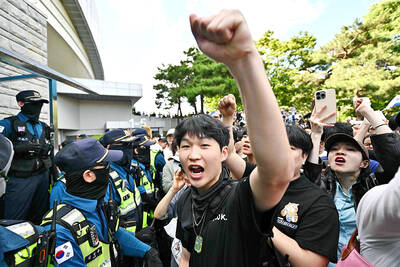
‘ABSURD MISTAKE’: The election commission said that there had been a failure to anticipate turnout after 14 polling stations ran short of ballot papers South Korean riot police yesterday cleared protesters from a Seoul polling station after a 35-hour blockade sparked by a shortage of ballot papers during local elections earlier this week. Wednesday’s election was the first nationwide vote since South Korean President Lee Jae-myung took office following the ouster of Yoon Suk-yeol over his short-lived martial law declaration. Lee’s ruling Democratic Party swept most races, but failed to flip the crucial Seoul mayoral seat. The South Korean National Election Commission apologized, blaming a failure to anticipate turnout after 14 polling stations in Seoul ran short of ballot papers. Some polling stations stayed open until 10pm to

France experienced its hottest spring on record, the French weather service said on Tuesday, after an exceptional early heat wave that also broke highs for the season in England and Wales. Meteo-France said the average nationwide temperature over March to May was 13.8°C — about 1.7°C above the norm, and surpassing records set in 2011 and 2020. “The warmest spring since records began in 1900,” it said in a bulletin. All three months were warmer than average, but the onset of an “unprecedented heatwave” late last month pushed the mercury to highs typically seen at the height of the summer. “Our country had never

A Sherpa guide was found crawling to base camp on Mount Everest a week after he went missing and was reunited with his family, who had given up hope he would return. Dawa Sherpa was last seen on Friday last week descending the mountain, but he did not reach base camp even though his client did. The pair were among the last climbers on the mountain as the climbing season came to an end and the route was dismantled. Dawa was located by a cleaning crew on Thursday morning as he was crawling down the snowy slopes around the Khumbu Icefall, just above
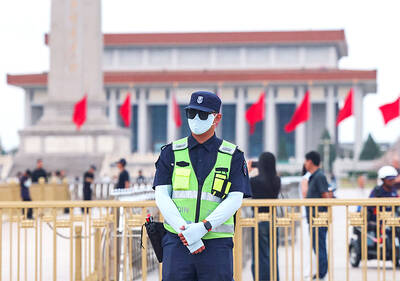
Chinese authorities are snuffing out any remembrance of the deadly 1989 military crackdown on student-led pro-democracy protests in Tiananmen Square, which happened 37 years ago yesterday, in a further tightening of a years-long campaign to erase what happened from public memory. Police told relatives of the victims they would not be allowed to visit a cemetery in Beijing on the anniversary of the crackdown, a person with knowledge of the matter said. Relatives of the victims visited the cemetery on the anniversary for more than 30 years to read memorial statements with police keeping watch, Amnesty International said. Hundreds of people,


 RSS
RSS