

A Durban businessman with close ties to the governing African National Congress was found guilty on Thursday of paying US$186,000 in bribes to the deputy president, Jacob Zuma, South Africa's second in command and heir apparent, in some eyes, to President Thabo Mbeki.
The verdict brought demands from the ANC's critics for Zuma to resign or to abandon any quest for the presidency when Mbeki leaves office in 2007.
But it remained unclear whether government prosecutors even intended to press charges against Zuma for what the trial judge called "overwhelming" evidence of corruption.
A Durban High Court judge found the businessman, Schabir Shaik, guilty of two counts of corruption and one of fraud, all involving payments to Zuma from 1995 to 2002.
The centerpiece was Shaik's role as a middleman between Zuma and the French arms company Thomson-CSF, which agreed to pay Zuma about US$150,000 while it sought a US$69 million contract to supply ships to the South African navy. Both Thomson and Shaik's company, Nkobi Holdings Proprietary Ltd, were shareholders in a group that won the contract.
Shaik argued that the payments were donations to an educational charity that Zuma had established in KwaZulu-Natal but the judge, Hillary Squires, dismissed that explanation as "ridiculous."
In his ruling, Squires said the evidence, including an encrypted fax in Thomson files and coded letters between Shaik and Zuma, established beyond a doubt that the payments were bribes.
Other evidence, outlined in a 259-page forensic audit, indicated that Shaik's company had sought government help on projects like a Durban hotel and a Malaysian arms deal, and that Shaik had paid for everything from service on Zuma's Mercedes to Armani suits.
During the period in which the payments were made, Zuma served first as the ANC's national chairman and then as Mbeki's appointed deputy president. For much of that time, the audit contended, Zuma was in dire financial straits. On occasion, Shaik's company also ran up large debts to continue the payments.
Although Thursday's verdict affects only Shaik, Squires made it clear that Zuma was compliant in an arrangement that allowed him to "maintain a lifestyle beyond what he could afford."
Squires' verdict sets up a test of South Africa's commitment to the rule of law and the independence of its legal institutions.
The inquiry into the arms deal at the root of Shaik's troubles has already led to the arrest of an ANC legislator who headed parliament's defense committee, and the resignation of a government arms buyer -- Shaik's brother Chippy -- accused of a conflict of interest.
But the much-acclaimed National Prosecuting Authority that made the case against Shaik, nicknamed the Scorpions, has suffered withering political attacks that culminated in the resignation last year of its director and raised questions about its continued existence as an independent arm of government.
The agency declined to say whether prosecutors would now pursue a corruption case against Zuma. "If there is anything to be done about it," said a spokesman, Makhosini Nkosi, "it will be done."
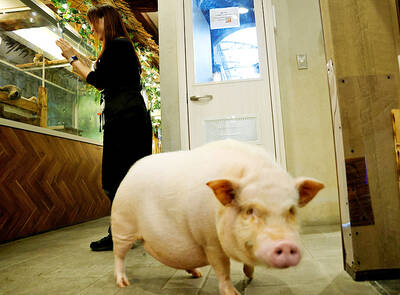
Japan has started its first nationwide survey of animal cafes amid concerns over animal welfare, hygiene and public health, a government official said, bringing greater scrutiny to the popular but lightly regulated sector. The desktop survey, which began this month, will examine the number of facilities, the types of animals they house and the conditions they are held in, and how visitors interact with the animals. Exotic animal cafes, where visitors can interact with species ranging from otters to owls and marmots, have become popular attractions for Japanese and foreign tourists. However, researchers say some facilities keep threatened species, raising

OLD WOUNDS: Protestant marchers seized on an overturned injunction to stage a march, which drew thousands of counterprotesters to block the road in Portadown UK leaders called for calm as a tense standoff with residents seeking to halt a pro-British Protestant march through a primarily Catholic area stretched into the night on Sunday, in one of the worst crises for Northern Ireland in the past few years. The tensions were triggered after a Belfast appeal court overturned a High Court injunction in the early hours of Sunday to clear the march by the Orange Order to go ahead for the first time since 1997. The Parades Commission, Northern Ireland’s independent body regulating contentious processions, had authorized 35 Orangemen to march silently along Garvaghy Road in Portadown,
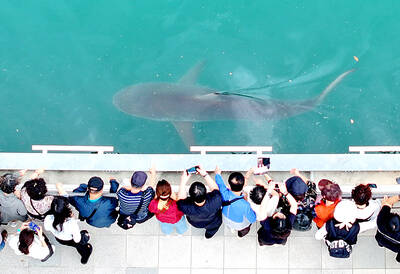
A shark stranded in a canal in the South Korean port of Busan has become the country’s latest wildlife sensation, with the city saying about 600,000 people have flocked to see it over the past two weeks. The 3.5m shark was first spotted in a narrow waterway in North Port on Sept. 18. As the days passed without the shark finding its way back to the ocean, authorities on Tuesday launched a rescue operation to guide it out, but the effort failed. The South Korean Coast Guard and other agencies deployed vessels to spray jets of water behind the shark
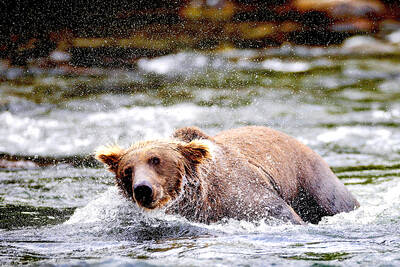
The winner of this year’s Fat Bear Week has been crowned after a nail-biting final — and it’s the son of a former champion. Backpack, a 20-year-old male beloved by rangers in Alaska for his quiet determination, edged out female fellow finalist Dancing Queen in the annual ursine eating competition at Katmai National Park. More than 2.3 million people voted in the week-long competition that sees bears unwittingly jostle in a series of head-to-head contests to decide which one of them has most impressively piled on the pounds ahead of hibernation. Viewers watch a livestream of the enormous animals as they scoop salmon


 RSS
RSS